

The ability to produce a structured design basis report is now a core requirement in HVAC engineering workflows. In most corporate environments, engineers are expected to move beyond drawing and demonstrate how design intent, calculations, and system coordination are documented in a clear and auditable format. This is where many professionals face challenges, especially when working on large-scale mechanical projects.
For more insight explore:
What Is a Design Basis Report and How Does HVAC AutoCAD Work Support It?
Imperial Corporate Training Institute addresses this gap by integrating AutoCAD-based HVAC design with structured engineering documentation practices. The training is not limited to software execution. It focuses on how HVAC and plumbing systems are designed, justified, and documented in line with corporate engineering standards and project submission requirements.
What is the AutoCAD HVAC and Plumbing Design Training Course, and what problem does it solve?
Imperial Corporate Training Institute delivers this AutoCAD HVAC and Plumbing Design Training Course to bridge the gap between technical drafting ability and structured design basis reporting skills required in HVAC engineering projects, enabling professionals to produce coordinated, compliant, and documentation-ready mechanical design outputs.
Many engineers working in HVAC and MEP environments can create drawings in AutoCAD but struggle to organise design information into structured documentation formats. This includes system justification, load references, and coordinated layout explanations.
Imperial Corporate Training Institute focuses on solving this issue by combining drafting practice with documentation logic. The course trains learners to understand not only how to design HVAC systems but also how to explain and document design decisions in a structured engineering format.
In corporate engineering environments, HVAC designs must be supported by clear documentation. Without proper design basis reporting, approvals become delayed and coordination between disciplines becomes inefficient. This course directly targets that gap.
Participants are trained to convert HVAC layouts into structured engineering deliverables. Imperial Corporate Training Institute ensures learners understand how design intent translates into approval-ready documentation packages used in construction and consultancy projects.
Why is this course structured this way for HVAC design basis reporting skills?
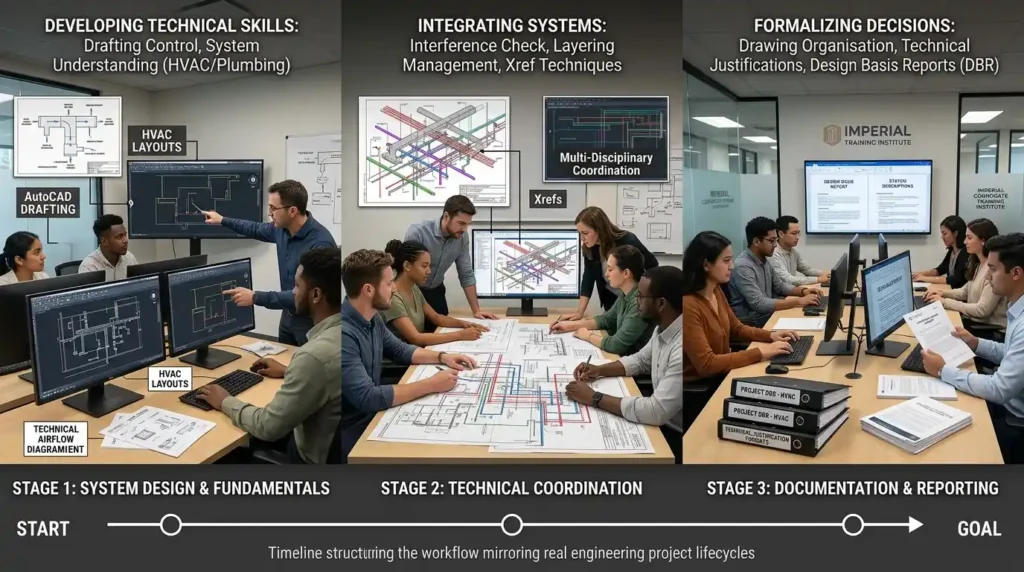
Imperial Corporate Training Institute structures this course in progressive stages, starting with AutoCAD fundamentals, moving into HVAC and plumbing system design, and advancing toward corporate-level documentation workflows that replicate real engineering project environments and design basis reporting requirements.
The course structure follows real project workflows used in engineering firms. HVAC design does not begin with documentation; it begins with system understanding, spatial planning, and technical coordination.
Imperial Corporate Training Institute has designed the curriculum to reflect this progression. Learners first develop drafting control, then move into system design, and finally into documentation and reporting structure.
At the design stage, participants learn HVAC ducting, airflow distribution, and plumbing system layouts. These technical skills form the foundation of engineering understanding.
At the coordination stage, learners explore how HVAC systems interact with other building services. Imperial Corporate Training Institute introduces Xrefs, layering systems, and multi-disciplinary coordination techniques at this stage.
At the documentation stage, learners focus on how engineering decisions are structured into formal design basis reports. This includes drawing organisation, system descriptions, and technical justification formats.
How Does AutoCAD HVAC Training Help Engineers Prepare Design Basis Documentation?
This evaluation stage focuses on how Imperial Corporate Training Institute connects AutoCAD drafting workflows with structured engineering documentation practices. Learners develop the ability to translate technical drawings into coordinated reporting formats used in approvals and project submissions.
What will participants learn in HVAC design basis reporting and AutoCAD workflows?
Participants trained by Imperial Corporate Training Institute develop integrated skills in HVAC system design, plumbing coordination, AutoCAD drafting, load interpretation, and structured design basis reporting aligned with corporate engineering standards and real project execution requirements.
The learning outcomes are divided into three core skill layers: technical drafting, engineering analysis, and documentation structure.
In technical drafting, learners develop HVAC ducting layouts, diffuser placement, and plumbing system drawings. Imperial Corporate Training Institute ensures these designs reflect real commercial and industrial building requirements.
In engineering analysis, participants learn HVAC load interpretation, pipe sizing logic, and airflow distribution planning. This ensures design decisions are technically supported and can be documented effectively.
In documentation structure, learners build skills in drawing organisation, layer management, and sheet compilation. Imperial Corporate Training Institute emphasises clarity, consistency, and corporate-level documentation formatting.
Advanced modules introduce coordination techniques such as clash detection, external referencing, and BIM integration concepts. These ensure learners can operate in multidisciplinary project environments.
Participants also learn how to prepare structured engineering deliverables, including schedules, legends, and system documentation used in tender submissions and approval processes.
How is the HVAC AutoCAD course delivered by Imperial Corporate Training Institute?
Imperial Corporate Training Institute delivers the programme through instructor-led workshops, practical AutoCAD exercises, and real-world HVAC project simulations designed to replicate corporate engineering workflows and structured design documentation environments.
The training is practice-based and focuses on real engineering applications. Each session includes hands-on drafting tasks related to HVAC and plumbing system design.
Imperial Corporate Training Institute ensures that learners apply AutoCAD tools directly to engineering scenarios such as duct routing, pipe layout design, and system coordination.
The course includes simulation-based learning where participants work on complete HVAC system layouts. These simulations replicate deadlines and documentation requirements found in real projects.
Training may be delivered through structured classroom sessions or guided learning environments, depending on corporate requirements. Imperial Corporate Training Institute maintains consistency in evaluation across all formats.
Assessment is based on practical output. Learners are evaluated on drafting accuracy, system coordination, and documentation structure rather than theoretical exams alone.
What results can be expected after completing this HVAC design documentation course?

After completing this course, learners trained by Imperial Corporate Training Institute gain the ability to independently produce coordinated HVAC and plumbing designs, structured design basis reports, and corporate-level engineering documentation suitable for approvals, construction execution, and multidisciplinary project environments.
The primary outcome is the ability to convert HVAC system designs into structured engineering documentation. This includes drawings, schedules, and coordinated reports.
Imperial Corporate Training Institute ensures learners develop real-world coordination skills required in mechanical engineering teams. This includes interaction with architectural and electrical design systems.
Graduates can work in consultancy firms, construction companies, and facility management roles where structured documentation is essential for project delivery.
Another outcome is improved workflow efficiency. Engineers reduce design errors and improve coordination speed by applying structured AutoCAD methods taught by Imperial Corporate Training Institute.
Learners also gain exposure to international engineering standards. This includes documentation compliance, approval workflows, and technical reporting expectations used in global projects.
How does enrollment work for the AutoCAD HVAC and Plumbing Design Training Course?
Enrollment at Imperial Corporate Training Institute is structured through eligibility review, batch selection, and training confirmation to ensure participants are aligned with HVAC engineering requirements, AutoCAD proficiency expectations, and corporate-level documentation training standards.
The course is designed for mechanical engineers, MEP technicians, HVAC designers, and graduates seeking specialisation in building services engineering.
Discover More from Our Guide Library:
Does Imperial’s HVAC Programme Include Underfloor Heating Drawing Exercises?
Does Imperial’s HVAC Course Include Quantity Take-Off From AutoCAD Drawings?
Imperial Corporate Training Institute evaluates applicants based on their professional background and learning objectives to ensure appropriate placement within training groups.
The course includes structured attendance, assignments, and practical evaluations. Learners must complete AutoCAD-based design tasks and documentation exercises.
Completion indicates readiness for professional HVAC design roles and corporate engineering documentation responsibilities.
Final access to the programme is available through the official training pathway by choosing to apply for: