
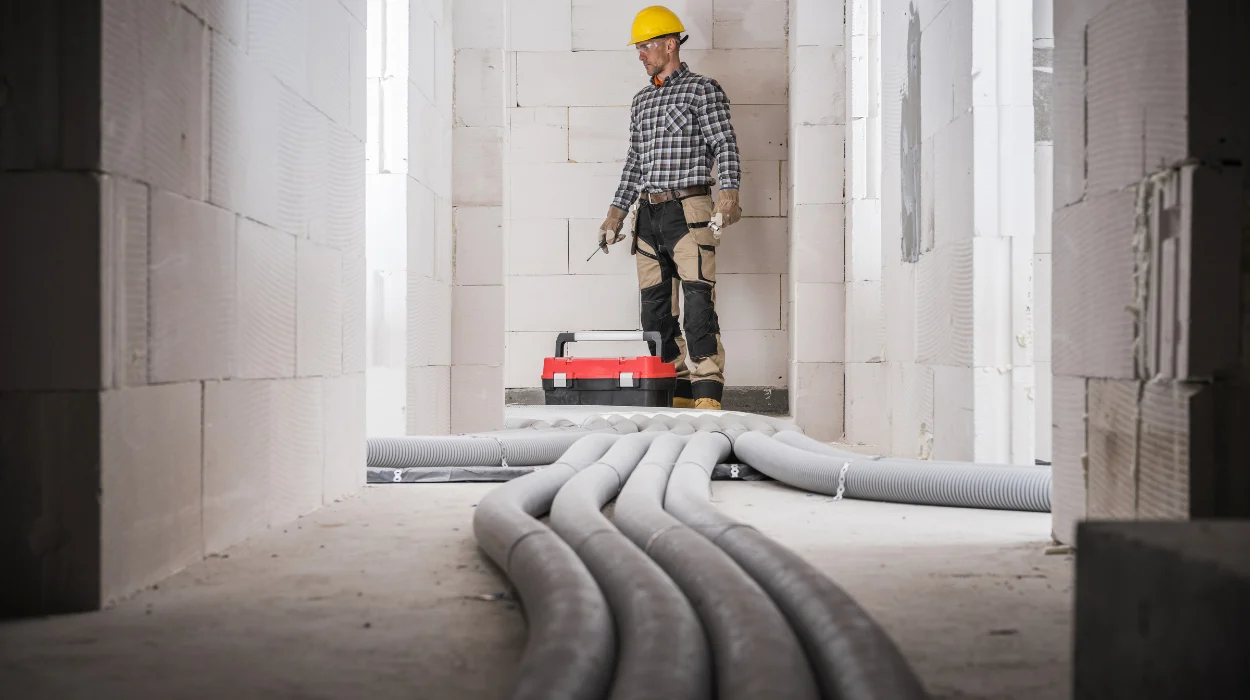
Underfloor heating systems have become a common component of modern residential, commercial, and mixed-use developments. As building services projects become more integrated, mechanical engineers, HVAC designers, MEP coordinators, and AutoCAD technicians are expected to understand how underfloor heating layouts are represented, coordinated, and documented within complete HVAC and plumbing design packages.
Many professionals can read basic HVAC drawings but struggle when projects require coordinated floor heating layouts, manifold positioning, piping routes, zoning arrangements, and integration with broader MEP systems. This creates a practical skills gap between theoretical system knowledge and the production of project-ready engineering drawings.
Professionals seeking foundational knowledge of the topic can first review:
How underfloor heating system design is represented in AutoCAD drawings to understand the drafting principles commonly used in building services documentation.
The AutoCAD HVAC and Plumbing Design Training Course from Imperial Corporate Training Institute addresses this challenge through a structured curriculum that develops HVAC drafting capability, plumbing coordination skills, and advanced AutoCAD proficiency. Within this framework, participants frequently evaluate how specialised systems such as underfloor heating are represented, coordinated, and documented as part of professional MEP workflows.
What Does Imperial’s HVAC Programme Include Regarding Underfloor Heating Drawing Exercises?
Yes. Underfloor heating drawing concepts are addressed through HVAC drafting, plumbing coordination, MEP documentation, and project simulation activities. Participants learn how heating distribution systems integrate within building layouts while producing coordinated AutoCAD drawings that reflect professional engineering documentation standards.
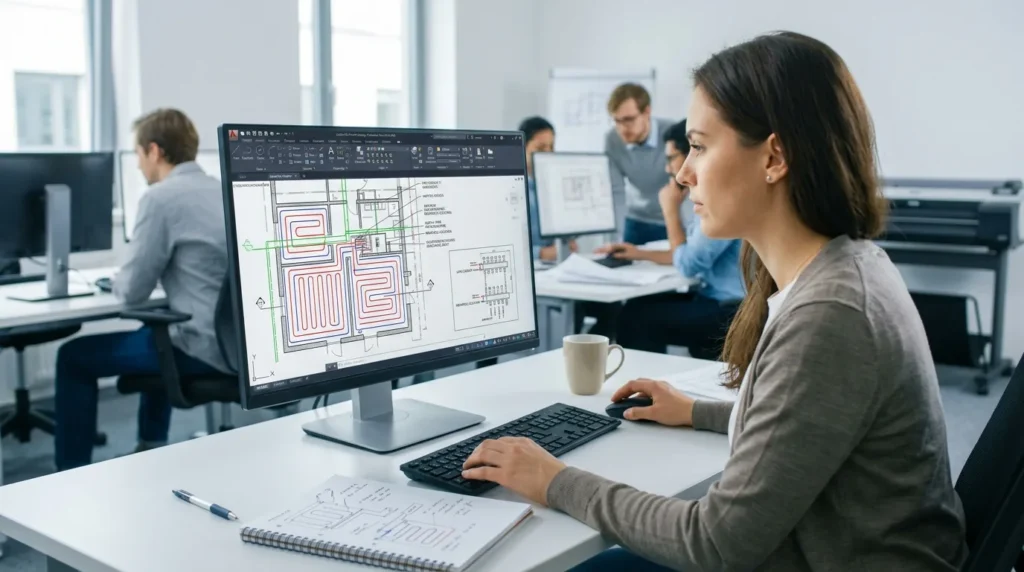
The AutoCAD HVAC and Plumbing Design Training Course is not designed as a standalone underfloor heating certification programme. Instead, it develops comprehensive HVAC and plumbing design capability applicable to multiple building services systems.
Underfloor heating systems form part of the wider mechanical services environment that participants encounter throughout the programme. Learners examine how heating circuits interact with HVAC equipment, plumbing infrastructure, architectural constraints, and project documentation requirements.
Imperial Corporate Training Institute structures the course around real engineering workflows rather than isolated software functions. This means participants learn how design elements are coordinated across complete project environments.
Drawing exercises focus on drafting accuracy, layer management, equipment representation, piping layouts, schematic development, annotation standards, and multidisciplinary coordination. These skills directly support the production of underfloor heating layouts where such systems are included within project requirements.
By approaching underfloor heating within a broader MEP design framework, Imperial Corporate Training Institute enables learners to understand both the drawing requirements and the engineering coordination challenges associated with these systems.
Why Is the Course Structured Around Complete HVAC and Plumbing Systems Instead of One Heating Technology?
The curriculum prioritises transferable design competencies that apply across commercial and industrial projects. Rather than focusing on a single technology, the programme develops drafting, coordination, documentation, and engineering communication skills that support multiple HVAC and plumbing applications.
Engineering employers rarely recruit professionals solely to design one mechanical system. Most organisations require personnel capable of working across integrated building services environments.
A commercial office development may include ventilation systems, chilled water systems, domestic water services, drainage infrastructure, heating equipment, and underfloor heating zones within the same project. Design professionals must understand how these systems interact.
Imperial Corporate Training Institute reflects this reality through a modular learning structure.
Progressive Skill Development
Participants begin with AutoCAD fundamentals and corporate drafting standards before advancing into HVAC layouts, plumbing systems, MEP coordination, documentation procedures, and project implementation.
This progression ensures learners understand why systems are represented in particular ways rather than simply copying drawing elements.
Corporate Project Alignment
The programme is designed for engineers, designers, consultants, draftsmen, facility professionals, and technical coordinators working within structured project environments.
When underfloor heating systems appear within projects, learners can apply established drafting principles to produce coordinated layouts that align with wider project requirements.
Imperial Corporate Training Institute therefore develops capability that remains relevant regardless of specific heating technologies used by future employers or clients.
How Do the Course Modules Support Underfloor Heating Layout and Manifold Design Skills?
Several modules contribute directly to the knowledge required for underfloor heating representation. Participants develop piping layout skills, coordination techniques, documentation methods, and drawing management practices that support accurate floor heating design and manifold placement exercises.
Professionals evaluating training programmes often want to understand exactly where specialised skills are developed within the curriculum.
Module 2: Fundamentals of HVAC Design Drafting
This module introduces HVAC layouts, airflow routing principles, schematic conventions, layer management, and equipment representation.
Participants learn how mechanical systems are organised and communicated through engineering drawings.
These competencies help support future work involving heating distribution systems and coordinated floor layouts.
Module 3: Plumbing and Drainage Design Using AutoCAD
This module is particularly relevant because underfloor heating systems depend heavily on piping design principles.
Participants develop skills in pipe routing, sizing considerations, riser representation, and coordination with other building services.
Understanding piping documentation is essential when preparing floor heating layouts and manifold connections.
Module 4: Advanced AutoCAD Tools for MEP Coordination
Underfloor heating systems frequently require coordination with structural elements, electrical services, architectural layouts, and HVAC infrastructure.
Participants learn to manage Xrefs, coordinate multidisciplinary drawings, and organise complex design information.
These skills are essential when integrating manifold locations and heating loops into larger project environments.
Module 6: Plumbing System Detailing and Documentation
Participants produce schedules, schematic layouts, legends, and detailed documentation.
These deliverables are often required when documenting heating distribution systems within professional engineering projects.
Module 10: Corporate-Level Project Execution
The programme concludes with project simulation activities.
Learners create complete system layouts while managing deliverables, standards, timelines, and documentation requirements.
This environment provides practical opportunities to apply coordinated design principles that can include underfloor heating-related layouts where project scenarios require them.
Those comparing training options may also benefit from reviewing:
How AutoCAD HVAC training covers underfloor heating layout and manifold design to evaluate the relationship between HVAC drafting skills and specialised heating system documentation.
What Will Participants Learn Beyond Underfloor Heating Drawing Exercises?
Participants gain comprehensive HVAC and plumbing design capability. Learning outcomes extend beyond specific heating systems and include AutoCAD proficiency, MEP coordination, technical documentation, design optimisation, quality assurance, and multidisciplinary project collaboration skills.
Decision-stage learners often focus on one technical requirement but should evaluate the broader value of a programme.
Imperial Corporate Training Institute structures learning outcomes around professional responsibilities rather than isolated software functions.
Technical Drafting Capability
Participants learn to produce professional HVAC and plumbing drawings that comply with engineering documentation standards.
This includes layout preparation, annotation, layer management, scaling, documentation organisation, and drawing control.
HVAC Design Understanding
Learners develop knowledge of airflow distribution, equipment placement, load calculation concepts, duct routing, and system optimisation.
These competencies support more informed drafting decisions.
Plumbing Coordination Skills
Participants learn how plumbing systems interact with mechanical infrastructure and building requirements.
This improves their ability to create coordinated design packages.
MEP Integration
Modern projects require collaboration between multiple disciplines.
Imperial Corporate Training Institute emphasises coordination methods that reduce clashes, improve constructability, and support project delivery.
Documentation Management
Participants learn revision control, drawing standards, sheet organisation, schedules, legends, and project documentation workflows.
These capabilities are frequently required by employers operating within structured engineering environments.
How Is the Course Delivered and Assessed?
The programme combines instructor-led learning, practical drafting exercises, project-based activities, design simulations, and technical assessments. Participants demonstrate competency through applied tasks that mirror workplace engineering and documentation requirements.
Training effectiveness depends on more than curriculum content.
Delivery methodology determines whether learners can transfer knowledge into workplace performance.
Practical Workshop Approach
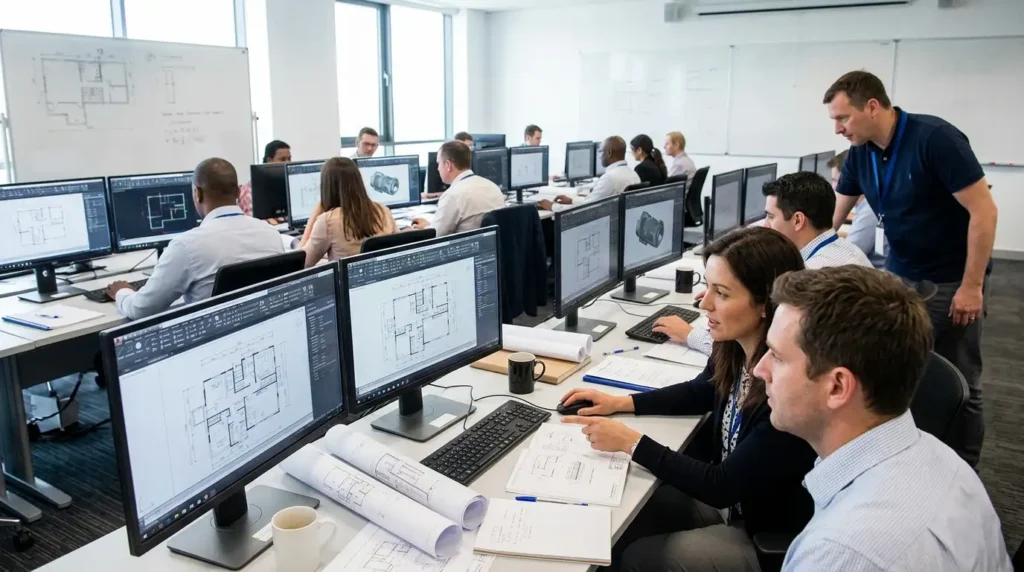
Imperial Corporate Training Institute emphasises applied learning rather than theoretical discussion alone.
Participants work with AutoCAD tools in practical design environments that replicate real project conditions.
Drawing exercises form a central component of the learning process.
Project-Based Learning
Engineering documentation requires repetition and application.
Learners therefore complete tasks that involve creating layouts, managing revisions, coordinating services, and preparing deliverables.
This develops operational competence rather than software familiarity alone.
Design Simulation Activities
Corporate engineering projects involve deadlines, standards, coordination requirements, and documentation controls.
The programme incorporates project simulation activities that expose participants to these realities.
Assessment Structure
Assessment methods may include practical assignments, design reviews, drawing evaluations, technical exercises, and project-based deliverables.
These assessment approaches help verify that participants can apply concepts rather than simply recall information.
Imperial Corporate Training Institute aligns assessment activities with workplace expectations to support measurable skill development.
What Workplace Results Can Participants Expect After Completion?
Participants can expect improved drafting accuracy, stronger MEP coordination capability, enhanced documentation quality, and greater confidence managing engineering design workflows. These outcomes support improved project delivery, reduced design errors, and stronger professional performance within technical teams.
Training decisions should be based on measurable workplace outcomes.
The programme is designed to address practical organisational requirements.
Improved Engineering Documentation
Technical teams rely on accurate drawings to communicate design intent.
Participants learn processes that support clearer documentation and reduced ambiguity.
Better Coordination Between Departments
Mechanical, plumbing, architectural, and electrical teams frequently work from shared project information.
Improved coordination skills help reduce conflicts and rework.
Increased Design Productivity
Understanding AutoCAD workflows, layer management, templates, standards, and documentation procedures can improve efficiency.
Participants learn methods that support faster production of engineering deliverables.
Enhanced Quality Control
Imperial Corporate Training Institute includes quality assurance and design review concepts throughout the programme.
Participants learn how to identify discrepancies before drawings progress through approval processes.
Stronger Professional Capability
Mechanical engineers, MEP coordinators, AutoCAD technicians, project engineers, and facility professionals benefit from structured skill development that aligns with industry expectations.
These capabilities remain valuable across multiple sectors including construction, infrastructure, facilities management, engineering consultancy, and property development.
Who Should Enrol and How Does the Enrollment Process Work?
The programme is intended for engineering and construction professionals seeking advanced AutoCAD HVAC and plumbing design capability. Suitable participants include engineers, draftsmen, consultants, coordinators, graduates, and technical personnel responsible for mechanical system documentation.
Imperial Corporate Training Institute has designed the course for professionals working within technical and corporate project environments.
Suitable Participants
The programme is particularly relevant for:
- Mechanical design engineers
- HVAC professionals
- MEP engineers
- AutoCAD technicians
- Design coordinators
- Project engineers
- Building services consultants
- Facility management professionals
- Engineering graduates seeking specialisation
Entry Considerations
Participants benefit from having an engineering, construction, technical drafting, or building services background.
Previous AutoCAD exposure may be helpful, although the programme develops capability progressively through structured modules.
Completion Path
Learners progress through ten integrated modules covering drafting fundamentals, HVAC design, plumbing systems, coordination practices, quality assurance processes, BIM integration, and corporate project execution.
Imperial Corporate Training Institute uses this progression to ensure participants build foundational skills before advancing to more complex design activities.
Making an Enrollment Decision
Professionals evaluating whether underfloor heating drawing exercises are included should consider the broader objective of the programme.
Discover More from Our Guide Library:
Does Imperial’s HVAC Course Include Quantity Take-Off From AutoCAD Drawings?
How Does Imperial Help Participants Produce Client-Ready HVAC Drawing Sets?
The course develops comprehensive HVAC and plumbing design competence rather than focusing exclusively on a single system type. Underfloor heating-related drawing activities are supported through piping design, HVAC drafting, MEP coordination, documentation, and project simulation modules that reflect real engineering workflows.