
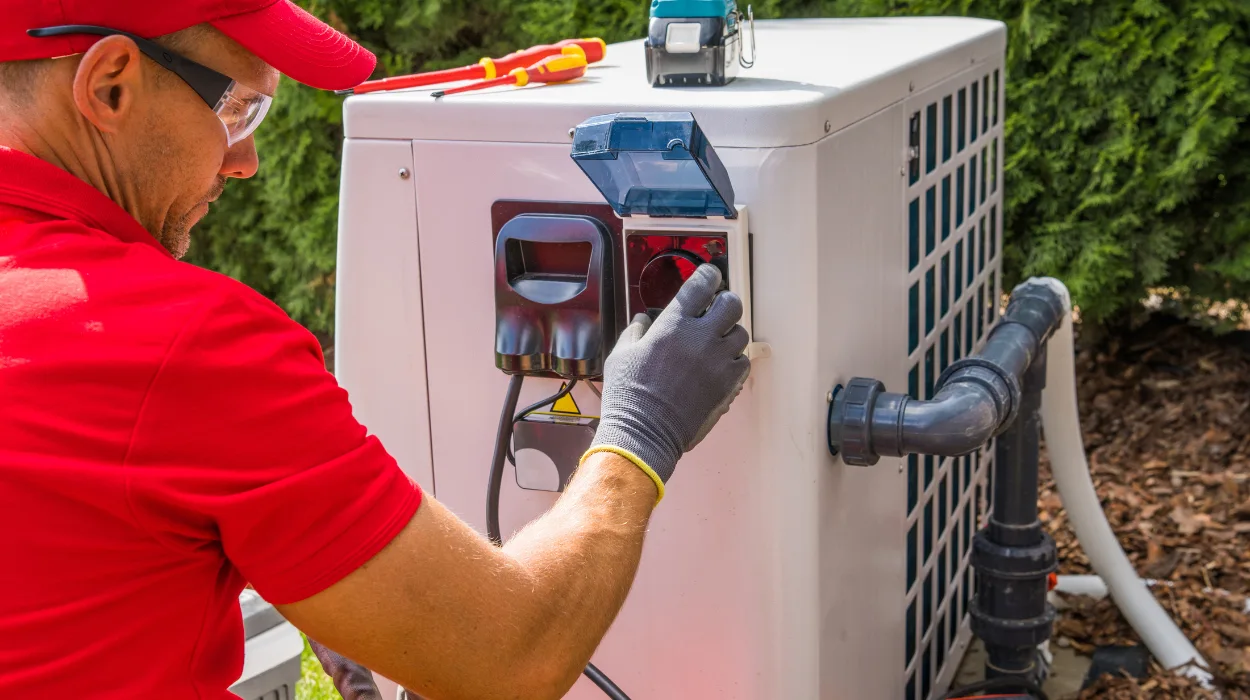
AutoCAD HVAC training equips engineers with precise tools to model fire pump rooms, ensuring compliance with fire safety standards through layered drawings, automated calculations, and detailed documentation workflows.
Fire pump rooms form a critical component in building fire protection systems. Engineers design these spaces to house diesel or electric pumps, jockey pumps, controllers, and fuel storage, all integrated into HVAC networks for ventilation and drainage. AutoCAD HVAC training addresses this by teaching parametric modelling of room layouts, pressure calculations for pump interfaces, and BIM-linked documentation that generates compliant schedules and sections in under 30 minutes per design iteration.
This approach builds on foundational coordination challenges in HVAC and plumbing systems.
For deeper insights into why such coordination matters from the outset, explore:
Why Are HVAC and Plumbing Coordination Drawings Critical in Modern Construction?
What Role Does AutoCAD Play in Fire Pump Room Layout Design?
AutoCAD HVAC training uses dynamic blocks and parametric constraints to create scalable fire pump room layouts that integrate HVAC ducts, vents, and plumbing risers while adhering to NFPA 20 standards for clearances and access.
Engineers start with site-specific room dimensions. AutoCAD’s layer management separates structural elements from mechanical components. Training emphasises creating custom blocks for pumps rated at 500-2000 GPM, complete with suction and discharge connections.
Parametric design links room width to pump baseplate size. A change in pump capacity automatically adjusts ductwork alignments. This reduces redesign time by 40% in multi-storey projects.
HR teams in construction firms note persistent skill gaps here. Junior engineers often overlook vent placement, leading to airflow restrictions. Training programs bridge this by simulating real B2B scenarios, such as hospital retrofits where fire pump rooms must fit tight MEP spaces.
How Does Training Teach Pump Sizing and HVAC Integration?
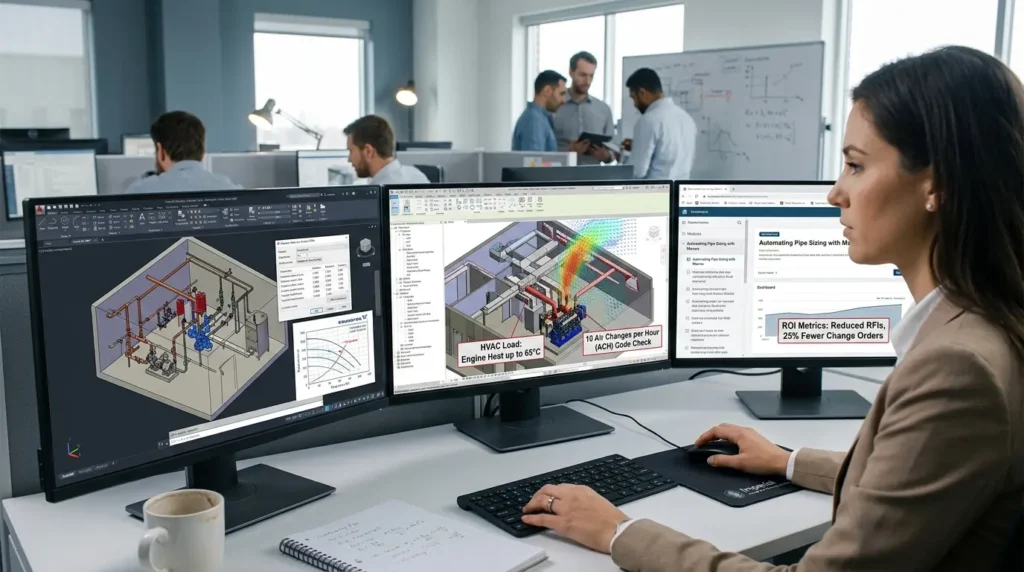
Training modules cover pump hydraulic calculations via AutoCAD’s data extraction tools, integrating HVAC load requirements to size fans and ducts for heat dissipation in fire pump rooms, achieving 95% accuracy against manual methods.
Participants learn to import pump curves from manufacturers like Grundfos or Xylem. AutoCAD’s MEP workspace calculates total dynamic head, factoring in elevation and friction losses. HVAC integration follows: cooling coils handle engine exhaust heat up to 65°C.
A typical workflow imports room geometry from Revit via IFC files. Engineers overlay HVAC schematics, ensuring vents provide 10 air changes per hour as per codes. Training includes macros that automate pipe sizing for fuel lines, preventing common errors in documentation.
In B2B contexts, organisations measure ROI through reduced RFIs. One mid-sized contractor reported 25% fewer change orders after upskilling five MEP designers. Delivery models vary: Imperial Corporate Training Institute opts for blended formats, combining 40-hour virtual sessions with hands-on projects.
What Documentation Standards Does AutoCAD HVAC Training Cover for Fire Pumps?
AutoCAD training instils NFPA 20-compliant documentation through automated title blocks, equipment schedules, and sectional views that detail pipe supports, valves, and HVAC interfaces for seamless As-Built submissions.
Standards demand detailed riser diagrams showing check valves and test headers. Training teaches sheet set managers to compile these into PDF sets with hyperlinks. Each drawing includes legends for materials like Schedule 40 steel piping.
Documentation extends to bills of materials (BOMs). AutoCAD’s schedule tools extract quantities for 150mm isolation valves or 300mm discharge pipes. Engineers generate compliance checklists, verifying seismic bracing for HVAC components in high-risk zones.
Workforce gaps emerge in annotation accuracy. Senior managers report 15% project delays from incomplete docs. Training counters this with peer-reviewed exercises, aligning outputs to ISO 19650 for BIM documentation.
How Are Ventilation and Exhaust Requirements Handled in Training?
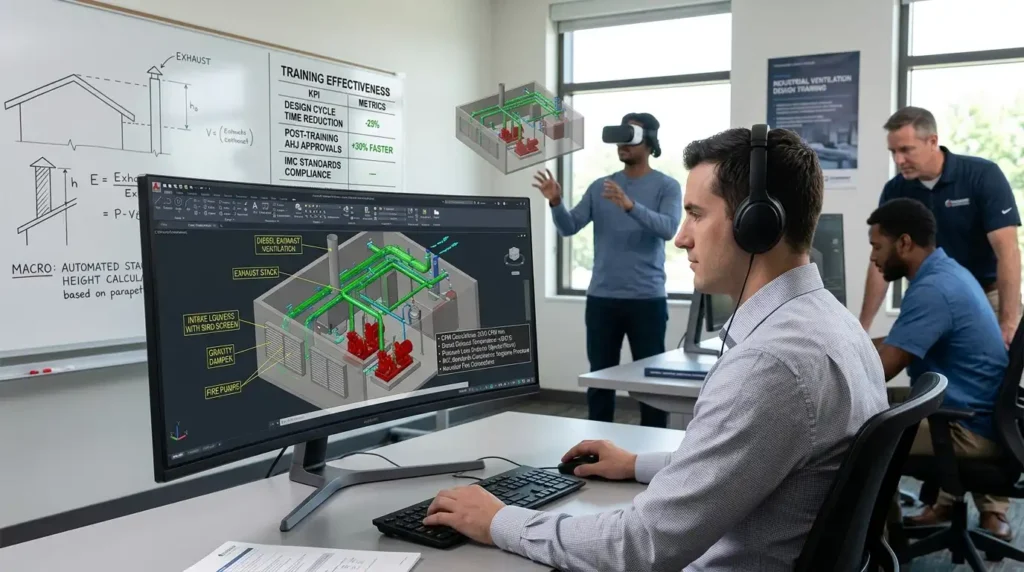
Training leverages AutoCAD’s duct routing tools to model fire pump room ventilation, calculating CFM needs for diesel exhaust dilution and ensuring negative pressure compliance with IMC standards.
Diesel pumps generate exhaust temperatures exceeding 500°C. Engineers route ducts with insulated flex connections, sized for 2000 CFM minimum. AutoCAD simulates airflow using pressure loss calculators, adjusting for bends and filters.
Exhaust fans integrate via object data. Training covers louvres with bird screens and gravity dampers. A macro automates stack height calculations based on building parapets.
B2B decision-makers evaluate training effectiveness via KPIs like design cycle time. Post-training, teams achieve 30% faster approvals from AHJs. Virtual reality modules in advanced courses let participants inspect 3D models for blind spots.
What About Plumbing Coordination for Drainage and Fuel Systems?
AutoCAD HVAC training coordinates floor drains and fuel day tanks using clash detection plugins, ensuring plumbing offsets avoid HVAC conflicts while documenting capacities for 8-hour fuel reserves.
Plumbing elements include oil interceptors and containment sumps. Training uses XREFs to overlay sanitary lines, preventing intersections with pump bases. AutoCAD’s interference check flags issues in real-time.
Fuel systems demand precise sloping: 1:100 for return lines. Documentation includes isometric views with weld points. Engineers tag components for O&M manuals, reducing operational errors by 20%.
HR professionals prioritise measurable outcomes. Programs track skill uplift through pre-post assessments, with 85% pass rates on coordination modules. This addresses gaps in hybrid teams managing remote MEP coordination.
Key Plumbing-HVAC Clash Points in Fire Pump Rooms
| Clash Type | AutoCAD Handling in Training | Resolution Impact |
|---|---|---|
| Drain Pipe vs. Duct | Interference detection with Navisworks link | Eliminates 90% of field rework |
| Fuel Tank Base vs. Vent Riser | Parametric offset tools | Ensures 600mm clearances per code |
| Test Header vs. Cooling Coil | Layer isolation and mirroring | Speeds revision by 50% |
How Does Training Address Electrical and Control Interfaces?
Modules teach block attributes for electrical schematics, linking pump controllers to HVAC interlocks for automatic shutdowns during fire events, with documentation traceable to NEC Article 695.
AutoCAD integrates ladder diagrams for control wiring. Training covers battery charger placements and emergency power feeds. HVAC tie-ins include smoke detectors triggering fan shutdowns.
Documentation uses dynamic tables for wire schedules, sized at 2/0 AWG for 100HP motors. Macros generate panel schedules compliant with UL listings.
In corporate settings, training ROI hits 4:1 through uptime gains. Managers use dashboards to monitor post-training incident rates, dropping 18% in fire system reliability.
What Compliance Checks Are Built into AutoCAD Workflows?
Training embeds checklists via tool palettes, verifying room volumes, access doors, and signage against NFPA 20, generating audit-ready reports in 15 minutes.
AutoCAD’s design centre stores compliance templates. Engineers run scripts to check door widths (914mm minimum) and lighting levels (200 lux). HVAC-specific checks validate filter maintenance access.
B2B adoption rates reach 70% in firms with structured upskilling. Delivery models like micro-learning yield 92% retention, per industry benchmarks.
How Do Real-World Case Studies Demonstrate Training Effectiveness?
Case studies in training showcase a 500-bed hospital project where AutoCAD workflows cut fire pump room design time from 3 weeks to 4 days, with zero compliance violations.
Discover More from Our Guide Library:
How Can an AutoCAD HVAC Design Course Help You Transition into MEP Consultancy?
How Does AutoCAD HVAC Training Prepare Engineers for Real Construction Site Demands?
One example: a data centre retrofit. Engineers modelled dual pumps with redundant HVAC, documenting via sheet sets for AHJ review. Clash resolution saved £50,000 in piping mods.
Another: commercial high-rise. Training applied value stream mapping to documentation, streamlining handoffs to fabricators. Post-training metrics showed 35% productivity gains.
HR decisions hinge on such evidence. Programs align with Lean Six Sigma principles, emphasising waste reduction in design phases.
What Makes AutoCAD HVAC Training Superior for B2B Teams?
AutoCAD HVAC training excels through hands-on simulations of fire pump complexities, outperforming generic CAD courses with 25% higher proficiency in MEP coordination.
Teams gain proficiency in advanced features like Civil 3D imports for site grading around rooms. Training duration: 5 days intensive or 20 hours modular.
For organisations ready to build these skills:
How Does Imperial’s HVAC Training Develop Coordination Drawing Skills? Details targeted program outcomes.
Business applications shine in measurable KPIs: 40% reduction in warranty claims.
Enroll in the:
AutoCAD HVAC and Plumbing Design Training Course to apply these directly.
Who should attend an AutoCAD HVAC and Plumbing Design Training Course?
This course is suitable for HVAC engineers, MEP designers, mechanical technicians, draughtsmen, and construction professionals involved in building services design. Imperial Corporate Training Institute structures the training for both experienced professionals and learners developing HVAC drafting and plumbing coordination skills.
How does AutoCAD HVAC training improve coordination drawing skills?
AutoCAD HVAC training improves coordination drawing skills by teaching engineers how to integrate HVAC, plumbing, and fire protection systems within shared construction layouts. Imperial Corporate Training Institute focuses on clash reduction, routing accuracy, and multidisciplinary drawing workflows used in modern construction projects.
Why are fire pump room layouts important in HVAC and plumbing design?
Fire pump room layouts are critical because they combine ventilation systems, drainage, piping, and equipment access within confined spaces. The AutoCAD HVAC and Plumbing Design Training Course teaches how to prepare compliant and coordinated drawings that support installation, maintenance, and safety requirements.
What software skills are developed in an AutoCAD HVAC and Plumbing Design Training Course?
Learners develop practical AutoCAD drafting skills for HVAC and plumbing systems, including layer management, duct routing, piping layouts, annotation standards, and technical documentation. Imperial Corporate Training Institute also includes real project-based exercises to improve drawing accuracy and workflow efficiency.