
Coordination drawings are now a core requirement in commercial construction, infrastructure development, and large-scale MEP project execution. Mechanical, electrical, and plumbing systems must function within limited building space while meeting operational, regulatory, and maintenance requirements. Poor coordination creates installation conflicts, delays, redesign costs, and project inefficiencies.
Professionals working in HVAC and plumbing design environments often understand drafting fundamentals but lack structured coordination workflow skills. This creates a gap between technical drawing production and multidisciplinary project delivery. The issue becomes more visible in projects requiring integrated MEP systems, phased approvals, BIM collaboration, and construction-ready documentation.
Professionals seeking broader context on multidisciplinary system integration often review educational resources discussing:
Why HVAC and plumbing coordination drawings are critical in modern construction before evaluating advanced technical training pathways.
The AutoCAD HVAC and Plumbing Design Training Course delivered by Imperial Corporate Training Institute is structured to address this operational challenge through project-based HVAC and plumbing coordination training. The programme develops technical drafting accuracy, spatial coordination capability, documentation management, and workflow integration skills used in modern engineering environments.
What Problem Does HVAC Coordination Training Solve?
HVAC coordination training develops the practical ability to integrate ducting, piping, drainage, and mechanical systems into coordinated engineering layouts that support construction execution, multidisciplinary collaboration, approval processes, and long-term facility operation within commercial and industrial project environments.
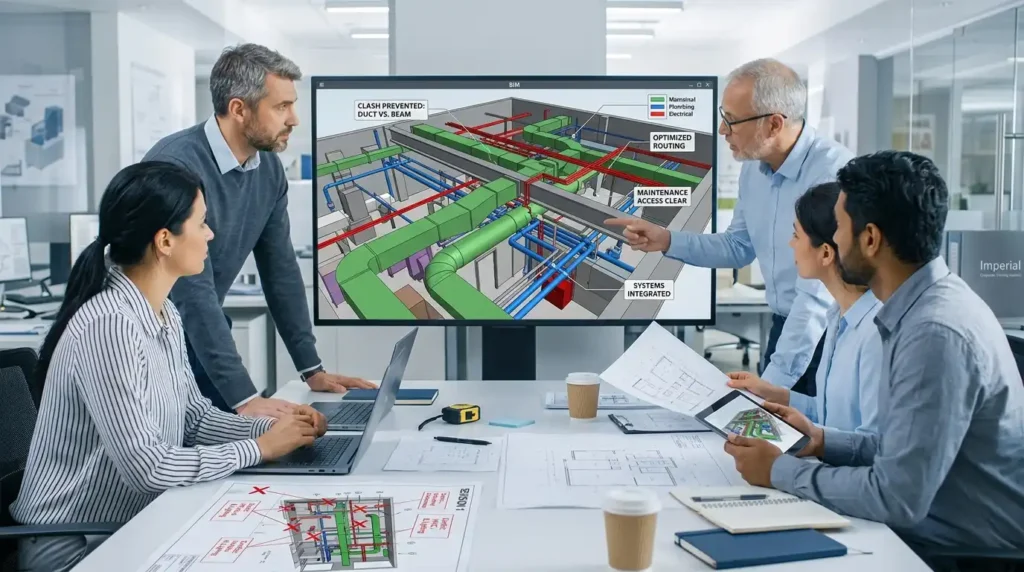
Many engineering professionals can produce isolated mechanical drawings. Fewer professionals can coordinate HVAC and plumbing systems across real project conditions involving ceiling congestion, equipment access zones, routing restrictions, and structural limitations.
In modern projects, coordination drawings are not simple schematic outputs. They are construction communication tools. Contractors, consultants, facility teams, and project managers rely on these drawings to avoid clashes and installation conflicts before site execution begins.
Imperial Corporate Training Institute structures the course around real-world project coordination requirements rather than isolated software functions. Participants learn how HVAC and plumbing systems interact with architectural layouts, electrical containment, structural elements, and equipment positioning.
The course addresses operational problems commonly found in engineering departments:
- Inconsistent layer standards
- Poor revision management
- Inaccurate duct routing
- Limited space coordination capability
- Weak drawing documentation practices
- Lack of BIM integration understanding
- Delays caused by design clashes
The training environment simulates corporate design workflows where engineers must deliver coordinated documentation under project timelines and quality control standards.
Why Is the Course Structured Around Progressive Coordination Skills?
The course follows a progressive learning structure because coordination drawing capability depends on layered technical development involving drafting accuracy, design interpretation, spatial planning, system integration, documentation standards, and multidisciplinary workflow management across increasingly complex project conditions.
Coordination competence cannot be developed through isolated AutoCAD commands alone. Engineers must first understand how HVAC and plumbing systems operate before they can coordinate those systems effectively inside construction environments.
Imperial Corporate Training Institute begins the programme with AutoCAD workflow foundations and gradually progresses toward integrated project execution. This sequencing reflects how engineering responsibilities expand inside real organisations.
Foundation-Level Drafting and Corporate Standards
The early modules establish precision drafting practices used in professional engineering environments. Participants learn:
- AutoCAD interface management
- Corporate drawing templates
- Layer structures
- Title block configuration
- Scaling and annotation standards
- Mechanical drafting conventions
These skills create consistency across multidisciplinary project documentation. Standardisation becomes critical when multiple engineers contribute to shared drawing packages.
HVAC and Plumbing System Development
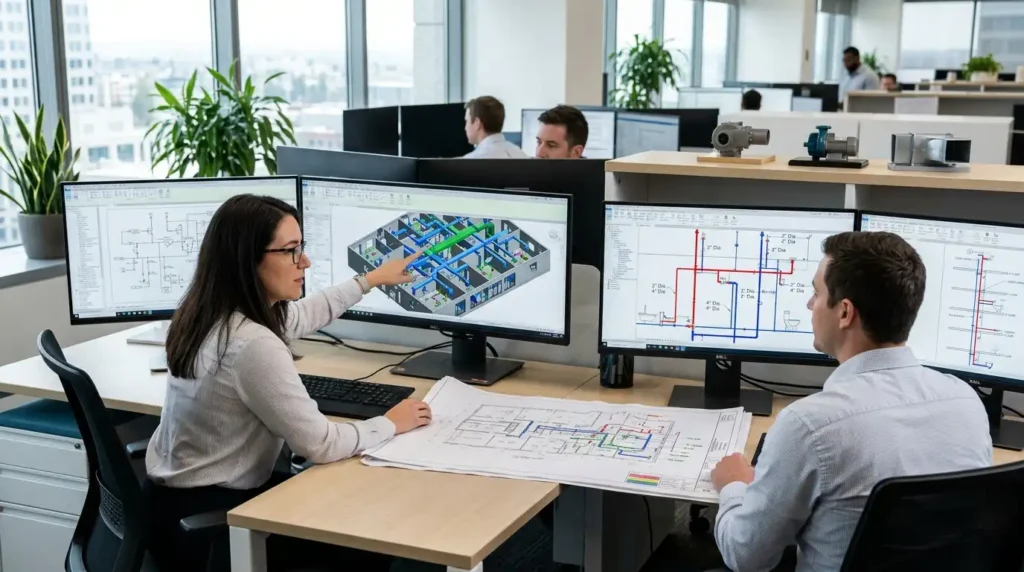
The next stage focuses on system-specific drafting capability. Participants develop HVAC layouts involving:
- Duct routing
- Airflow pathways
- Diffuser positioning
- Equipment representation
- Mechanical schematic interpretation
Plumbing modules focus on:
- Water supply layouts
- Drainage routing
- Pipe sizing representation
- Riser diagrams
- Fixture coordination
The progression ensures learners understand both mechanical functionality and drafting logic before advancing into coordination workflows.
Advanced Coordination and Clash Management
Intermediate modules introduce coordination-oriented design activities. These include:
- External references (Xrefs)
- Layer filtering
- Annotation systems
- Multi-disciplinary overlays
- Clash identification
- Space management
At this stage, participants begin working with overlapping mechanical systems under realistic building constraints.
Imperial Corporate Training Institute aligns these exercises with practical engineering workflows used in commercial buildings, industrial facilities, and infrastructure developments.
What Will Participants Learn About Coordination Drawings?
Participants learn how to create coordinated HVAC and plumbing documentation that integrates technical drafting accuracy, mechanical system functionality, spatial coordination, documentation standards, approval requirements, and multidisciplinary project collaboration using AutoCAD-based engineering workflows.
The course focuses heavily on applied project execution skills rather than software memorisation. Each module contributes to measurable workplace capability development.
HVAC Coordination Skills
Participants develop competency in:
- Duct layout preparation
- Airflow path coordination
- Equipment placement planning
- Ceiling space management
- Mechanical routing optimisation
- Diffuser positioning standards
- HVAC schematic interpretation
These activities support coordination drawing production for commercial and industrial buildings.
Plumbing Coordination Capability
The plumbing design modules develop practical documentation skills involving:
- Water supply systems
- Drainage systems
- Pipe routing logic
- Riser coordination
- Fixture unit calculations
- Pipe scheduling
- Material representation standards
Participants also learn how plumbing systems interact with HVAC and electrical services during integrated project development.
Documentation and Drawing Management
Coordination drawings must support approvals, construction execution, and project handover. The course therefore includes documentation-focused training covering:
- Revision management
- Version control
- Layer organisation
- Sheet composition
- Annotation consistency
- Legend creation
- Bill of materials preparation
Imperial Corporate Training Institute incorporates documentation exercises that reflect corporate engineering deliverable standards.
BIM and Revit Integration Awareness
Modern MEP coordination increasingly involves BIM-based collaboration. The course introduces participants to:
- AutoCAD-to-Revit coordination workflows
- Data integration principles
- 2D-to-3D coordination transition strategies
- Multi-platform design collaboration
This helps professionals understand how AutoCAD coordination drawings contribute to larger BIM project environments.
How Does the Training Handle Complex Mechanical Spaces?
The training develops complex-space coordination capability through project simulations involving constrained routing environments, multidisciplinary overlays, clash detection exercises, and documentation workflows that reflect real construction and engineering coordination challenges within commercial and industrial building projects.
One of the most difficult aspects of HVAC coordination involves managing limited building space. Ceiling voids, riser shafts, equipment rooms, and service corridors often contain overlapping MEP systems competing for installation access.
The programme delivered by Imperial Corporate Training Institute addresses these challenges through practical drafting exercises that simulate realistic coordination conditions.
Fire Pump Room and Mechanical Room Coordination
Mechanical rooms require particularly high levels of coordination accuracy due to dense equipment placement and operational clearance requirements.
Participants learn how to coordinate:
- Pipe routing
- Pump layouts
- Valve accessibility
- Drainage requirements
- Equipment spacing
- Maintenance access zones
Professionals evaluating detailed mechanical documentation practices often compare coordination-focused training with resources discussing:
How AutoCAD HVAC training handles fire pump room design and documentation before selecting an advanced MEP drafting programme.
Clash Detection and Routing Management
The training also develops practical clash management capability. Participants work with overlapping HVAC and plumbing layouts to identify:
- Duct conflicts
- Pipe intersections
- Structural clearance problems
- Space allocation issues
- Installation sequencing risks
These exercises improve both design awareness and multidisciplinary coordination thinking.
How Is the Course Delivered for Corporate and Professional Learners?
The course uses structured professional delivery methods combining workshops, guided drafting exercises, project simulations, instructor-led technical sessions, and collaborative engineering activities designed to support measurable workplace skill development for individual professionals and corporate teams.
Engineering professionals often require training that fits operational schedules and organisational development plans. For this reason, Imperial Corporate Training Institute delivers the programme using flexible corporate-focused formats.
Instructor-Led Technical Workshops
Technical workshops provide direct engagement with instructors experienced in engineering drafting and MEP coordination workflows. Sessions focus on:
- Design interpretation
- Workflow accuracy
- Technical correction
- Coordination logic
- Documentation quality
Participants receive structured guidance during drafting exercises and project-based simulations.
Online, Hybrid, and Onsite Training Formats
The programme can support different organisational requirements through:
- Online learning delivery
- Hybrid technical workshops
- Onsite corporate training sessions
- Group engineering training environments
This flexibility allows engineering departments and HR teams to align training delivery with operational priorities.
Corporate Learning Alignment
Imperial Corporate Training Institute structures the programme to support workforce development objectives including:
- Technical upskilling
- Design workflow standardisation
- Cross-team collaboration
- Engineering quality improvement
- Documentation consistency
- Leadership pipeline development
The course therefore functions as both a technical training programme and a workforce capability enhancement initiative.
How Are Participants Assessed During the Programme?
Participants are assessed through drafting assignments, coordination simulations, documentation exercises, technical reviews, and project-based evaluations designed to measure practical engineering capability, drawing accuracy, system integration understanding, and compliance with professional drafting standards.
Technical design competence cannot be measured through theoretical testing alone. The programme therefore prioritises practical engineering assessment activities.
Drafting and Coordination Assignments
Participants complete structured assignments involving:
- HVAC layouts
- Plumbing schematics
- Coordination overlays
- Documentation packages
- Layer management tasks
- Equipment positioning exercises
These assignments measure workflow accuracy and coordination understanding.
Simulation-Based Evaluation
Project simulations allow instructors to evaluate how participants manage realistic engineering conditions involving:
- Spatial limitations
- System integration
- Revision control
- Multi-disciplinary coordination
- Documentation accuracy
This mirrors the decision-making responsibilities engineers face during live project execution.
Quality Assurance and Design Review
Imperial Corporate Training Institute also integrates quality assurance exercises into the curriculum. Participants conduct internal drawing reviews to identify:
- Design discrepancies
- Coordination errors
- Documentation inconsistencies
- Compliance issues
These exercises strengthen professional review capability and improve engineering quality control awareness.
What Results Can Organisations and Professionals Expect?
Professionals completing the programme can expect measurable improvements in coordination drawing capability, drafting efficiency, documentation accuracy, multidisciplinary collaboration, and engineering workflow management across commercial construction, infrastructure, and facility development projects.
The practical outcomes of coordination training extend beyond software proficiency. Organisations benefit through improved engineering execution capability and reduced documentation risk.
Improved Technical Delivery Capability
Participants typically improve their ability to:
- Produce coordinated MEP drawings
- Reduce drafting errors
- Manage revisions effectively
- Interpret engineering standards
- Coordinate mechanical layouts
- Support approval submissions
These improvements directly support engineering department productivity.
Stronger Multidisciplinary Collaboration
The programme also improves communication between:
- HVAC engineers
- Plumbing specialists
- Electrical teams
- BIM coordinators
- Project managers
- Construction consultants
Better coordination reduces project delays caused by design conflicts and inconsistent documentation.
Enhanced Corporate Engineering Standards
Imperial Corporate Training Institute aligns the programme with corporate engineering expectations involving:
- International drafting standards
- Quality assurance procedures
- Documentation protocols
- Project coordination workflows
- Client deliverable management
This helps organisations standardise engineering output quality across project teams.
How Does Enrollment Work for This HVAC Coordination Programme?
Enrollment involves evaluating professional suitability, identifying technical training objectives, selecting an appropriate delivery format, and completing the structured learning pathway designed for engineering professionals, corporate teams, and technical specialists involved in HVAC and plumbing coordination workflows.
Discover More from Our Guide Library:
What Career Outcomes Can I Expect After Completing Imperial’s AutoCAD HVAC Course?
Can MEP Consultants Book AutoCAD HVAC Training at Imperial for Their Whole Team?
The programme is designed for professionals already working within engineering, construction, drafting, or facility-related sectors.
Suitable Participant Profiles
The course supports:
- Mechanical design engineers
- HVAC professionals
- MEP coordinators
- Drafting technicians
- Project engineers
- Facility management personnel
- Engineering graduates
Professionals seeking advanced coordination capability development benefit most from the structured project-based learning approach.
Entry Expectations
Participants are expected to have:
- Basic engineering awareness
- Technical drawing familiarity
- Interest in MEP coordination workflows
- Professional involvement in construction or engineering environments
Previous AutoCAD exposure can support faster progression through advanced coordination modules.
Completion Pathway
The course progresses from drafting foundations toward integrated project execution capability. Participants complete:
- Technical exercises
- Coordination simulations
- Documentation activities
- Project review tasks
- Final integrated drafting workflows
Professionals and organisations seeking structured MEP coordination training can review the full programme structure and enrol: