

Efficient block management is a critical requirement in corporate HVAC drafting environments where design teams must maintain drawing consistency, reduce drafting time, and coordinate mechanical systems accurately across large-scale projects. Many organisations struggle with inconsistent CAD standards, duplicated components, unstructured layer systems, and inefficient annotation workflows that delay project delivery and increase coordination errors.
For professionals evaluating technical upskilling options, understanding how structured HVAC AutoCAD training addresses these operational issues is essential before course enrollment. Imperial Corporate Training Institute developed its AutoCAD HVAC and Plumbing Design Training Course specifically to improve drafting precision, MEP coordination, and workflow efficiency within real corporate engineering environments.
Professionals researching the fundamentals of AutoCAD drafting efficiency often begin with educational resources explaining how blocks and attributes improve design workflows in MEP projects.
A useful reference is:
How Do MEP Draughtsmen Use AutoCAD Blocks and Attributes Efficiently? This introduces the operational role of AutoCAD blocks in engineering documentation.
What Problem Does Efficient Block Management Solve in HVAC AutoCAD Projects?
Efficient block management reduces drafting inconsistencies, improves coordination between engineering disciplines, standardises reusable HVAC components, and supports faster drawing revisions across commercial and industrial building projects. Structured block usage also improves documentation quality, design accuracy, and project delivery timelines within corporate engineering environments.
HVAC and plumbing projects contain repetitive design elements including duct fittings, diffusers, valves, pumps, piping accessories, air terminals, and plumbing fixtures. Without structured block management, design teams repeatedly redraw components, apply inconsistent symbols, and create documentation errors that affect coordination across disciplines.
In many engineering organisations, separate teams manage HVAC layouts, plumbing schematics, and electrical coordination simultaneously. Unstructured CAD workflows create layer conflicts, duplicate symbols, inconsistent scaling, and annotation problems. These issues affect tender documentation, project approvals, and final construction deliverables.
Imperial Corporate Training Institute addresses these operational gaps through a specification-driven training structure focused on practical drafting workflows rather than isolated software demonstrations. Participants learn how corporate engineering teams organise AutoCAD environments to maintain consistency across large projects.
The AutoCAD HVAC and Plumbing Design Training Course teaches participants how reusable blocks improve productivity while maintaining engineering drawing standards. Learners develop methods for organising component libraries, applying attributes correctly, and coordinating MEP systems efficiently.
The programme also connects drafting practices to operational engineering requirements. This includes design revisions, drawing audits, version control, equipment schedules, and interdisciplinary coordination processes used in commercial construction environments.
Why Is the HVAC AutoCAD Programme Structured Around Workflow Progression?
The programme follows a progressive workflow structure because HVAC and plumbing drafting require sequential competency development across design standards, system layout creation, coordination management, documentation control, and multidisciplinary engineering collaboration within real project environments and corporate engineering delivery systems.
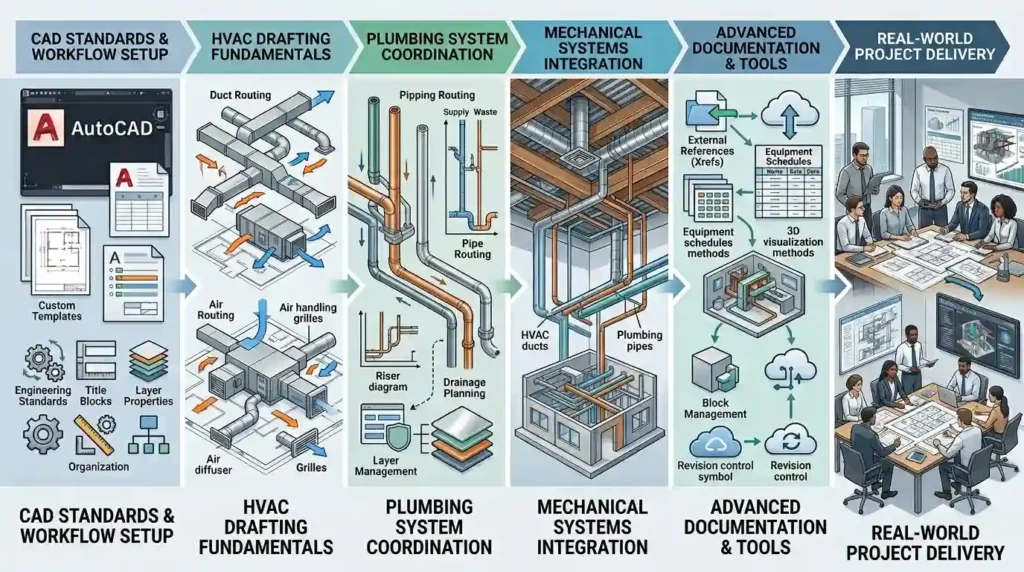
Imperial Corporate Training Institute structures the programme to reflect how engineering teams operate during real project execution. Participants first establish drafting fundamentals before progressing toward complex coordination and documentation activities.
The programme begins with AutoCAD configuration, template setup, title block preparation, and CAD standard implementation. This stage establishes consistency across future project work. Participants learn how organisations maintain standardisation across multiple engineering departments.
The curriculum then transitions into HVAC drafting fundamentals including duct routing, airflow planning, diffuser placement, and equipment coordination. Learners apply AutoCAD blocks within practical design layouts rather than isolated software exercises.
Plumbing system drafting follows next because mechanical coordination requires simultaneous management of HVAC and plumbing layouts. Participants learn pipe routing, riser diagrams, drainage planning, and layer management strategies while coordinating multiple services within shared spaces.
Imperial Corporate Training Institute integrates progressive workflow learning because corporate engineering projects rarely isolate systems individually. Design teams must coordinate interconnected services while maintaining drafting accuracy and compliance with engineering standards.
As participants advance through the course, block management becomes integrated with annotation systems, external references, scheduling workflows, and drawing revision procedures. This structure reflects actual engineering project execution processes.
The programme also introduces advanced AutoCAD coordination tools including Xrefs, 3D visualisation methods, and multidisciplinary layout integration. These modules prepare participants for environments where mechanical systems must coordinate with structural, architectural, and electrical services.
How Does Imperial Teach AutoCAD Blocks and Dynamic Components in HVAC Drafting?
Imperial Corporate Training Institute teaches block management through applied HVAC drafting exercises, reusable component libraries, dynamic block creation, annotation systems, and coordinated project simulations that replicate corporate MEP design workflows used in commercial engineering environments and infrastructure development projects.
The training methodology focuses on practical drafting implementation rather than isolated theoretical instruction. Participants work with realistic HVAC and plumbing layouts throughout the course structure.
Module 2 introduces HVAC drafting fundamentals where learners create duct layouts and equipment placements using structured block libraries. Participants learn how reusable symbols improve drafting speed while maintaining consistency across multiple drawing sheets.
Dynamic block functionality becomes important when mechanical components require adjustable dimensions or configuration variations. Participants learn how dynamic blocks reduce repetitive drafting tasks while supporting scalable project coordination.
Imperial Corporate Training Institute integrates block management into broader drafting operations. This includes layer assignment, annotation consistency, data extraction, and schedule preparation. Learners understand how engineering documentation systems connect with construction deliverables and project management requirements.
Participants also develop block naming standards and library organisation systems suitable for corporate environments. These practices improve collaboration across design departments and reduce confusion during project revisions.
The programme emphasises practical application through project-based drafting exercises. Learners manage HVAC equipment layouts, plumbing symbols, airflow indicators, and piping components within coordinated mechanical plans.
Advanced coordination workflows are introduced through Xrefs and multidisciplinary integration exercises. Participants learn how reusable AutoCAD assets support large-scale engineering coordination across multiple consultants and departments.
Professionals comparing technical drafting methodologies and training depth may also review:
How are Blocks, Attributes, and Dynamic Components Taught in AutoCAD HVAC Training? This explains how structured HVAC AutoCAD instruction develops practical drafting efficiency.
What Will Participants Learn During the AutoCAD HVAC and Plumbing Design Training Course?
Participants learn HVAC drafting, plumbing system coordination, AutoCAD block management, documentation standards, MEP integration, project workflow control, and multidisciplinary collaboration methods required for corporate engineering projects, infrastructure development, commercial construction, and technical building services design environments globally.
Imperial Corporate Training Institute organises the curriculum into structured modules that align with progressive competency development.
Introduction to Corporate AutoCAD Workflows
Participants learn AutoCAD interface configuration, drawing setup procedures, title block management, and company drafting standards. This module establishes the operational foundation for corporate engineering documentation.
Learners also develop understanding of scaling principles, CAD precision requirements, and structured layer management strategies used within professional engineering environments.
HVAC Design Drafting and Airflow Layout Development
The HVAC drafting module focuses on duct routing, airflow coordination, diffuser placement, and schematic interpretation. Participants produce practical layouts aligned with commercial building requirements.
Block creation and reusable equipment libraries are introduced during this stage. Learners understand how efficient component management supports drafting consistency across multiple projects.
Plumbing and Drainage System Coordination
Participants create cold water systems, hot water layouts, drainage plans, and riser diagrams using structured drafting methodologies. Pipe sizing, slope calculations, and fixture coordination are incorporated into project-based exercises.
Imperial Corporate Training Institute also teaches coordination strategies between plumbing and HVAC systems to improve multidisciplinary integration.
Advanced AutoCAD Coordination Tools
The programme includes Xrefs, annotation systems, 3D coordination methods, clash detection strategies, and space management procedures.
Participants learn how engineering teams manage complex building layouts involving multiple services within constrained mechanical spaces.
HVAC Load Calculations and Design Optimisation
Learners explore airflow planning, equipment positioning, and energy-efficiency considerations relevant to HVAC project development.
This module also explains how AutoCAD workflows integrate with external design calculation tools used in engineering practice.
Documentation and Engineering Standards
Participants develop schedules, legend sheets, material documentation, and revision management systems. The course emphasises international drafting standards and engineering compliance requirements.
Imperial Corporate Training Institute integrates documentation workflows because corporate projects require traceable drawing management and quality assurance procedures.
BIM and Revit Coordination
The programme introduces BIM integration principles and AutoCAD-to-Revit coordination workflows. Participants understand how 2D drafting environments connect with modern multidisciplinary modelling systems.
This module prepares professionals for organisations transitioning toward integrated digital engineering environments.
Corporate Project Simulation
The final module combines HVAC drafting, plumbing coordination, documentation management, and project review processes within realistic engineering simulations.
Participants complete coordinated project exercises that reflect commercial building service delivery expectations.
How Is the Course Delivered and Assessed?
The course is delivered through workshops, instructor-led technical sessions, practical drafting simulations, coordinated project exercises, and structured assessments designed to evaluate drafting accuracy, workflow efficiency, system coordination, and engineering documentation competency within realistic corporate project environments and operational standards.
Imperial Corporate Training Institute delivers the programme using flexible learning structures suitable for engineering professionals and corporate teams.
Training formats may include onsite workshops, hybrid delivery, instructor-led online learning, or corporate group sessions depending on organisational requirements and participant availability.
The programme prioritises applied drafting activities. Participants work directly within AutoCAD environments throughout the training process rather than relying solely on theoretical presentations.
Assessment methods include technical drafting assignments, coordinated HVAC layout exercises, plumbing documentation tasks, and project simulation activities. Learners demonstrate competency through practical engineering outputs.
Imperial Corporate Training Institute also incorporates review sessions focused on drawing accuracy, coordination quality, annotation consistency, and compliance with engineering standards.
Participants receive structured guidance during project exercises to improve workflow efficiency and reduce drafting errors. These exercises reflect realistic corporate design expectations rather than simplified software demonstrations.
The training environment also supports collaborative learning. Teams coordinate shared layouts, manage multidisciplinary revisions, and apply structured documentation practices during group exercises.
Completion requirements generally involve successful participation in drafting exercises, submission of coordinated project layouts, and demonstration of practical AutoCAD competency relevant to HVAC and plumbing engineering environments.
What Results Can Organisations and Professionals Expect After Completion?
Participants improve drafting speed, design coordination, documentation quality, workflow consistency, and technical communication skills while organisations benefit from reduced design errors, improved project delivery efficiency, stronger MEP coordination, and more standardised engineering documentation practices across teams and departments.
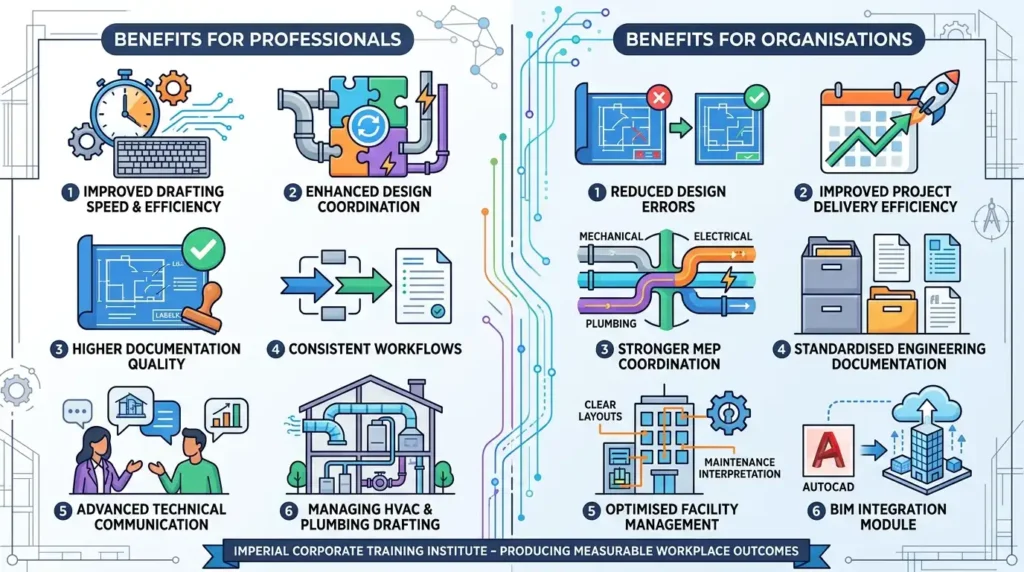
Imperial Corporate Training Institute designed the programme to produce measurable workplace outcomes rather than isolated software familiarity.
Professionals completing the course can typically manage HVAC and plumbing drafting activities with greater efficiency and accuracy. They develop improved competency in producing coordinated mechanical layouts aligned with engineering standards.
Participants also gain stronger understanding of project documentation workflows including schedules, revision tracking, and multidisciplinary coordination procedures.
For engineering organisations, efficient block management and standardised drafting methods reduce repetitive design work and improve consistency across project deliverables.
MEP teams benefit from improved coordination between HVAC, plumbing, and electrical systems because structured CAD workflows reduce conflicts during design integration.
Facility management departments also benefit when technical documentation follows organised drafting standards. Clear layouts improve maintenance interpretation, renovation planning, and operational system reviews.
Imperial Corporate Training Institute aligns the programme with workplace engineering requirements including international drafting standards, collaborative design processes, and project coordination expectations.
Graduates entering corporate engineering environments can contribute more effectively to commercial building projects, infrastructure developments, and multidisciplinary engineering teams.
The BIM integration module additionally supports professionals transitioning into modern digital engineering workflows where AutoCAD coordination remains essential within broader modelling environments.
How Does Enrollment Work for the HVAC AutoCAD Programme?
Enrollment involves professional eligibility review, programme selection, delivery format confirmation, and structured participation planning designed for engineers, MEP professionals, draftsmen, consultants, technical graduates, and organisations seeking practical HVAC and plumbing AutoCAD competency development within corporate engineering environments and project delivery systems.
Imperial Corporate Training Institute developed the programme for professionals involved in engineering, drafting, construction, and technical building services operations.
The target audience includes mechanical engineers, HVAC professionals, MEP draftsmen, AutoCAD technicians, project coordinators, consultants, and facility management personnel responsible for mechanical system documentation.
Engineering and construction organisations may also enrol teams seeking standardised drafting procedures and coordinated project workflow improvement.
Graduates in mechanical or civil engineering can use the programme to develop specialised HVAC and plumbing drafting capabilities aligned with corporate project requirements.
Imperial Corporate Training Institute structures enrollment pathways according to participant background, technical objectives, and preferred delivery format. This allows organisations to align workforce development with operational project needs.
Discover More from Our Guide Library:
Does Imperial’s AutoCAD HVAC Programme Cover P&ID Concepts for MEP Systems?
Does Imperial’s HVAC Programme Include Hot Water System Drawing Exercises?
Participants should possess basic technical understanding of engineering drawings and computer-based drafting environments before entering advanced workflow modules.
The programme progression supports both individual professional development and broader organisational technical upskilling strategies.
Course completion prepares participants for drafting responsibilities involving HVAC coordination, plumbing layouts, MEP documentation, and multidisciplinary engineering collaboration within commercial project environments.
Professionals and organisations seeking structured HVAC drafting competency development can review the full programme structure and enrol in: