
Commercial HVAC projects require more than basic drafting ability. Engineering teams must produce coordinated ventilation layouts, manage multi-service drawing standards, and deliver accurate documentation under project timelines. The Imperial Corporate Training Institute structures its AutoCAD HVAC and plumbing training around these operational requirements, including commercial ventilation drawing projects that simulate real engineering workflows.
Professionals evaluating HVAC drafting training often begin by understanding how ventilation schematics are created within professional environments.
A useful technical overview is available in this educational guide on:
How ventilation system drawings are created for commercial spaces in AutoCAD, which explains the foundational drafting principles used in large building projects.
What Problem Does Imperial’s HVAC Programme Solve for Commercial Design Teams?
Imperial Corporate Training Institute developed this programme to address the gap between theoretical AutoCAD knowledge and the practical drafting standards required in commercial HVAC and plumbing projects. The course focuses on coordinated ventilation layouts, project documentation accuracy, and workflow integration used within construction and engineering environments.
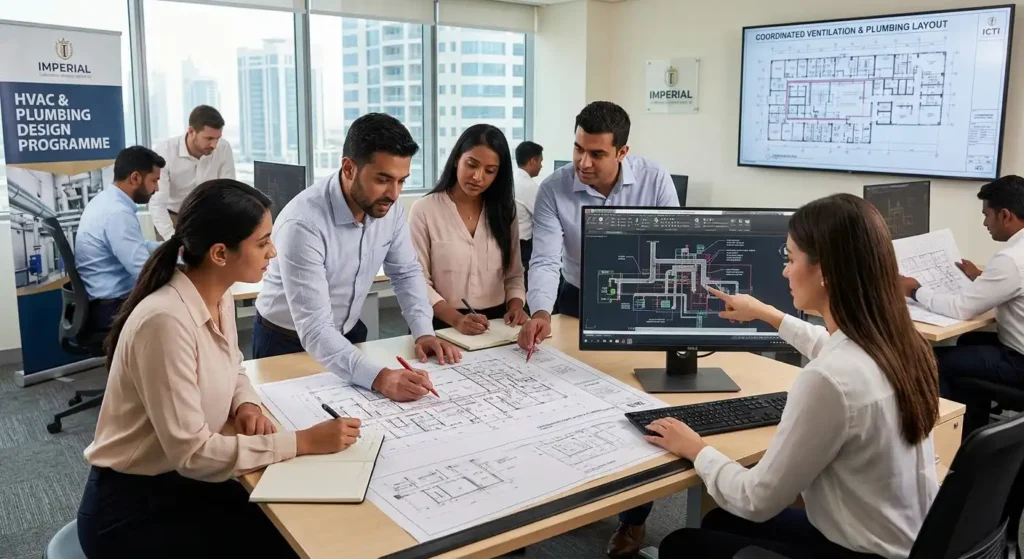
Many professionals entering HVAC drafting roles understand AutoCAD commands but lack experience in applying those tools to commercial ventilation systems. Corporate engineering projects involve detailed coordination between duct routing, airflow planning, equipment placement, and multidisciplinary documentation standards. Errors in layout development can create clashes between mechanical, plumbing, and electrical systems.
Commercial organisations also require standardised documentation workflows. Design teams must maintain layer structures, revision control, annotation systems, and drawing templates aligned with internal engineering procedures. Basic CAD training rarely addresses these operational requirements.
The AutoCAD HVAC and Plumbing Design Training Course from Imperial Corporate Training Institute is structured to close this gap. Participants work on drafting scenarios that reflect large-scale building conditions. Ventilation layouts are developed using practical project standards rather than isolated software exercises.
The programme also supports professionals responsible for project coordination. Mechanical engineers, MEP technicians, project consultants, and facility teams frequently need to interpret and modify HVAC drawings across different project phases. The training addresses these collaborative design responsibilities through coordinated workflow exercises.
Why Does the Programme Include Commercial Ventilation Drawing Projects?
Commercial ventilation drawing projects are included because professional HVAC drafting requires applied coordination skills, not only software familiarity. Imperial Corporate Training Institute uses project-based training to develop competency in duct routing, airflow planning, equipment integration, and multidisciplinary drawing coordination within realistic building environments.
Ventilation systems in commercial buildings involve complex layout requirements. Air distribution networks must support occupant comfort, regulatory compliance, energy efficiency, and service accessibility. Designers must also coordinate ventilation layouts with plumbing systems, structural components, and electrical services.
The programme uses commercial drawing projects to expose learners to these operational conditions. Instead of producing isolated sample drawings, participants develop complete ventilation layouts using professional drafting methodologies. This includes:
HVAC Duct Routing and Layout Planning
Participants learn how airflow systems are distributed through commercial structures. Training activities include diffuser placement, branch duct configuration, riser coordination, and routing optimisation for space efficiency.
Large commercial projects require consistent airflow distribution across multiple building zones. The course demonstrates how AutoCAD drafting workflows support these design objectives through structured drawing practices.
Coordination with Other Building Services
Commercial ventilation projects cannot be developed independently from other MEP systems. The programme teaches participants how to coordinate HVAC layouts with plumbing and electrical systems using Xrefs, layered documentation, and clash management techniques.
Imperial Corporate Training Institute integrates multidisciplinary coordination exercises into the training process to simulate corporate engineering workflows.
Documentation Standards and Drawing Organisation
Engineering companies require standardised documentation structures. Participants learn how to manage title blocks, annotations, schedules, revisions, and company CAD standards within commercial project environments.
These skills are essential for producing professional deliverables suitable for client review, tender submissions, and construction documentation.
How Is the Curriculum Structured to Develop Commercial HVAC Drafting Skills?
The curriculum follows a progressive technical structure beginning with AutoCAD drafting fundamentals and advancing towards complete commercial HVAC and plumbing project execution. Each module builds operational competency through coordinated drafting tasks, design simulations, and project-based engineering documentation exercises.
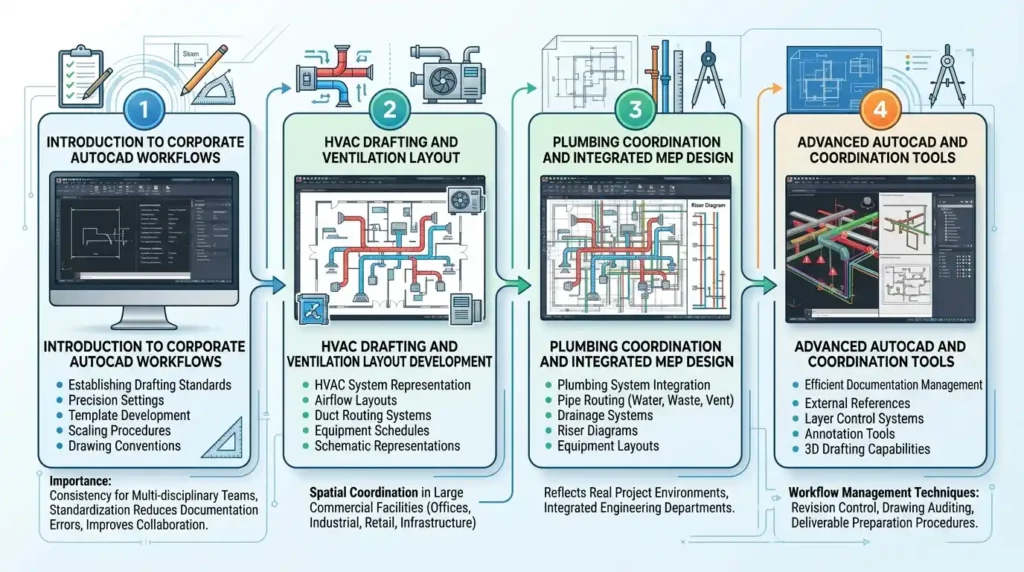
The course structure is organised around practical engineering workflows rather than disconnected software functions. Each module supports the next stage of technical development.
Introduction to Corporate AutoCAD Workflows
The first module establishes drafting standards used in commercial engineering environments. Participants learn precision settings, template development, scaling procedures, and company drawing conventions.
This stage is important because commercial projects depend on consistency across multidisciplinary teams. Standardisation reduces documentation errors and improves collaboration.
HVAC Drafting and Ventilation Layout Development
The ventilation drafting modules focus specifically on HVAC system representation within commercial buildings. Participants create airflow layouts, duct routing systems, equipment schedules, and schematic representations aligned with industry practice.
The training includes ventilation planning for large commercial facilities where spatial coordination becomes critical. These exercises replicate the drafting requirements encountered in office buildings, industrial facilities, retail developments, and infrastructure projects.
Plumbing Coordination and Integrated MEP Design
The course extends beyond ventilation drafting to include plumbing system integration. Participants coordinate pipe routing, drainage systems, riser diagrams, and equipment layouts alongside HVAC documentation.
This integrated structure reflects how engineering departments operate in real project environments. Mechanical systems rarely function independently during project development.
Advanced AutoCAD and Coordination Tools
Commercial HVAC projects require efficient documentation management. Participants work with external references, layer control systems, annotation tools, and 3D drafting capabilities.
The programme also introduces workflow management techniques used within corporate engineering teams. These include revision control, drawing auditing, and deliverable preparation procedures.
What Commercial Ventilation Skills Will Participants Learn?
Participants develop practical ventilation drafting skills, including duct system layout, airflow coordination, HVAC documentation management, load calculation integration, clash detection, and multidisciplinary project coordination using AutoCAD within commercial engineering scenarios and structured project simulations.
The learning outcomes focus on measurable technical capability rather than general software familiarity.
Ventilation Layout Drafting
Participants learn to produce detailed ventilation schematics for commercial spaces. This includes:
- Duct routing strategies
- Airflow zoning
- Diffuser placement
- Equipment coordination
- Ventilation annotation standards
- Layout optimisation techniques
Commercial layouts often involve limited ceiling space and multiple building services. The programme trains participants to develop efficient drafting solutions under these constraints.
HVAC Coordination Workflows
Engineering documentation must support collaboration between departments. Participants learn how HVAC drawings integrate with architectural, plumbing, and electrical plans.
This coordination process is particularly important in large building projects where design changes occur throughout construction phases.
Technical Documentation Management
The course teaches drawing organisation procedures required in corporate environments. Participants manage schedules, legends, sheet structures, and revision documentation according to engineering standards.
Imperial Corporate Training Institute uses documentation-focused exercises to strengthen operational drafting accuracy.
Quality Assurance and Design Review
Commercial engineering companies depend on internal review procedures to reduce drafting errors. The training includes quality assurance exercises where participants identify discrepancies, revise layouts, and verify documentation standards.
These review processes improve design accuracy before project submission stages.
How Does Imperial Corporate Training Institute Deliver the Programme?
Imperial Corporate Training Institute delivers the programme through structured technical workshops, guided drafting sessions, project simulations, and instructor-led demonstrations designed to replicate commercial engineering workflows across corporate, onsite, hybrid, and online learning environments.
Training delivery is structured around practical participation rather than lecture-only instruction.
Instructor-Led Technical Workshops
Participants receive guided instruction on HVAC drafting processes and AutoCAD functionality. Each technical topic is connected to real project scenarios.
This workshop structure helps participants understand how drafting decisions affect construction coordination and engineering documentation quality.
Hands-On Commercial Drafting Exercises
The programme emphasises applied drafting activities. Participants create ventilation layouts, coordinate MEP systems, and organise project documentation using commercial design standards.
These exercises help learners move from theoretical understanding to operational drafting competency.
Corporate and Team-Based Learning Formats
Imperial Corporate Training Institute provides flexible delivery models for organisations and individual professionals. Training may be delivered through:
- Onsite corporate workshops
- Hybrid learning structures
- Instructor-led online sessions
- Team-focused technical development programmes
This flexibility supports organisations seeking workforce development without disrupting operational schedules.
Project Simulation and Workflow Practice
The course includes simulation-based activities where participants complete integrated HVAC and plumbing design tasks. These simulations mirror project coordination processes used within engineering firms.
Participants manage documentation standards, layout revisions, and drawing approvals throughout these exercises.
How Are Participants Assessed During the Programme?
Assessment methods focus on technical application, drafting precision, workflow management, and project coordination capability. Imperial Corporate Training Institute evaluates participants through practical assignments, ventilation layout exercises, project simulations, documentation reviews, and coordinated engineering drafting activities.
Commercial drafting competency cannot be measured through theory examinations alone. The programme therefore uses applied technical assessment methods.
Practical Drafting Assignments
Participants complete ventilation and plumbing drafting tasks using AutoCAD. These assignments evaluate layout accuracy, documentation structure, and coordination quality.
Exercises are aligned with operational engineering requirements rather than simplified classroom examples.
Integrated Project Simulations
Assessment activities include commercial project simulations where learners produce coordinated HVAC documentation within structured project conditions.
Participants demonstrate their ability to manage revisions, coordinate layouts, and maintain engineering drafting standards.
Design Review and Quality Evaluation
The programme incorporates review procedures similar to those used within engineering firms. Participants analyse drawings for inconsistencies, spacing conflicts, and documentation errors.
This process strengthens technical accuracy and supports professional drafting discipline.
What Workplace Outcomes Can Organisations Expect?
Organisations can expect improved drafting accuracy, better coordination between engineering departments, reduced documentation errors, stronger project workflow consistency, and enhanced technical communication across HVAC and plumbing design teams following programme completion.
Commercial engineering projects rely heavily on accurate technical documentation. Small drafting errors can create installation conflicts, project delays, and coordination failures during construction stages.
The programme supports workforce development in several operational areas.
Improved Project Coordination
Participants gain practical understanding of multidisciplinary MEP coordination processes. This improves collaboration between engineering departments during project delivery.
Reduced Documentation Errors
Structured drafting standards help reduce inconsistencies in ventilation layouts, annotations, schedules, and revision tracking.
Faster Technical Workflow Execution
Professionals trained in standardised AutoCAD procedures can produce and modify HVAC documentation more efficiently within project deadlines.
Better Alignment with Industry Standards
Imperial Corporate Training Institute aligns training activities with commercial engineering expectations and international drafting practices.
This alignment supports organisations seeking standardised technical capability across project teams.
Professionals comparing training options may also review this detailed evaluation resource on:
How AutoCAD HVAC training covers ventilation layout for large commercial buildings, which explains how advanced layout coordination is developed during HVAC drafting instruction.
Who Should Enrol in This Programme?
The programme is designed for mechanical engineers, MEP professionals, HVAC draftsmen, project coordinators, facility management personnel, AutoCAD technicians, and engineering graduates seeking practical commercial ventilation drafting capability aligned with corporate project delivery standards and multidisciplinary engineering workflows.
The course is particularly relevant for professionals working within:
- Construction companies
- Engineering consultancies
- Infrastructure development projects
- Building services departments
- Mechanical design teams
- Facility management operations
Graduates entering the MEP sector may also benefit from the structured drafting approach because it introduces commercial documentation practices early in their technical development.
Corporate organisations frequently use the programme for workforce upskilling where engineering teams require consistent HVAC documentation capability across departments.
How Does Enrolment and Completion Work?
Enrolment follows a structured professional training pathway including registration, technical participation, project-based learning, drafting assessments, and completion evaluation aligned with commercial HVAC and plumbing documentation competencies used in engineering project environments.
Participants typically require basic familiarity with engineering concepts or AutoCAD fundamentals before joining advanced HVAC drafting modules. Mechanical engineering graduates, MEP technicians, and drafting professionals are appropriate candidates for the programme.
Discover More from Our Guide Library:
How Does Imperial’s HVAC Course Help Graduates Meet MEP Firm Hiring Requirements?
How Does Imperial Teach Efficient Block Management in Its HVAC AutoCAD Programme?
The learning process progresses through structured technical modules covering:
- AutoCAD drafting standards
- HVAC ventilation layouts
- Plumbing coordination
- Advanced MEP documentation
- Quality assurance procedures
- BIM and Revit integration workflows
- Commercial project simulation
Completion is based on participation, drafting assignments, project activities, and technical assessment performance.
The programme concludes with integrated commercial project execution exercises where participants produce coordinated HVAC and plumbing layouts aligned with engineering documentation standards.