

Engineering teams often face delays, design inconsistencies, and compliance issues when HVAC and plumbing documentation is not coordinated correctly. The AutoCAD HVAC and Plumbing Design Training Course from Imperial Corporate Training Institute is structured to help professionals strengthen drafting accuracy, MEP coordination, and corporate project documentation standards within commercial and industrial environments.
Professionals evaluating this programme are usually comparing intake schedules, delivery structure, technical depth, and workplace relevance before making an enrolment decision. The course is designed for engineers, MEP professionals, draftsmen, facility teams, and technical coordinators who require measurable AutoCAD HVAC and plumbing design capability aligned with corporate engineering workflows.
Professionals new to HVAC drafting workflows can first understand:
How AutoCAD supports compliant plumbing design drawings before evaluating the programme.
What Is the AutoCAD HVAC and Plumbing Design Training Course and What Problem Does It Solve?
The programme addresses the operational gap between basic AutoCAD drafting skills and the advanced HVAC and plumbing coordination requirements expected in corporate engineering environments, construction projects, and multidisciplinary MEP workflows where accuracy, compliance, documentation control, and system coordination directly affect project performance and delivery quality.
Many engineering professionals understand basic CAD drafting but struggle when producing coordinated HVAC and plumbing layouts for real commercial projects. Problems often appear during duct routing, pipe coordination, layer management, clash avoidance, and documentation preparation.
Corporate engineering environments require more than drawing production. Teams must follow standardised workflows, international drafting protocols, and organised revision systems. Drawings also need to support coordination between mechanical, electrical, plumbing, and architectural departments.
The AutoCAD HVAC and Plumbing Design Training Course developed by Imperial Corporate Training Institute focuses on this operational requirement. The programme is structured around real engineering workflows rather than isolated software demonstrations.
Participants learn how HVAC and plumbing systems are drafted, coordinated, reviewed, revised, and delivered within commercial and industrial projects. The course also supports professionals responsible for preparing technical submissions, tender drawings, and as-built documentation.
The programme is particularly relevant for organisations managing large-scale construction projects where engineering coordination failures can increase cost, delay approvals, or create installation conflicts.
Professionals comparing drafting methodologies can review:
Drawing standards and layer conventions taught in AutoCAD HVAC course before making an enrollment decision.”
Why Is the Programme Structured Around Progressive Technical Modules?
The course follows a progressive engineering workflow structure because HVAC and plumbing drafting competence depends on sequential learning, where participants first understand AutoCAD standards, then system drafting, then multidisciplinary coordination, documentation control, quality assurance, and final project implementation procedures used within corporate engineering operations.
The curriculum structure reflects how real engineering projects develop from concept drawings into coordinated deliverables. This progression allows participants to build technical confidence gradually while applying each skill within practical design scenarios.
Foundation Stage: Corporate CAD Standards and Workflow Preparation
The opening modules establish the drafting environment used within professional engineering organisations. Participants learn template setup, title block configuration, scaling systems, annotation practices, and corporate drawing standards.
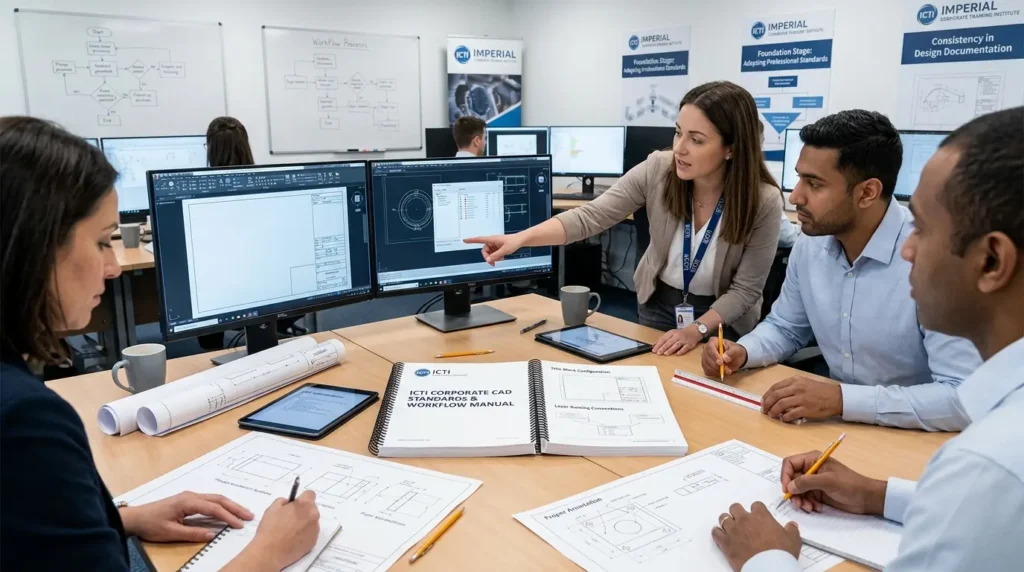
This stage is important because many design inconsistencies originate from poor layer organisation, inconsistent drawing structures, and incorrect documentation standards.
Imperial Corporate Training Institute incorporates workflow standardisation early in the programme to ensure that all later design exercises follow professional documentation procedures.
Technical HVAC Drafting Development
The HVAC section introduces duct layouts, airflow routing, equipment placement, diffuser positioning, and mechanical drafting conventions.
Participants learn how to organise HVAC systems using structured layers, reusable blocks, and coordinated annotations. The training also explains airflow planning principles and the relationship between schematic intent and installation practicality.
Real project examples demonstrate how HVAC layouts are prepared for corporate buildings, industrial facilities, and commercial developments.
Plumbing and Drainage Coordination
The plumbing modules expand into water supply systems, drainage layouts, riser diagrams, and piping coordination.
Participants practise:
- Pipe sizing
- Slope calculations
- Plumbing fixture coordination
- Drainage system organisation
- Layer-based plumbing documentation
The course also addresses coordination challenges between plumbing systems and other MEP services within restricted ceiling and plant room spaces.
Advanced Coordination and Documentation
The later modules focus on professional project execution. This includes:
- External references (Xrefs)
- 3D AutoCAD tools
- Clash detection
- Revision control
- Data extraction
- Drawing issue management
- Quality assurance reviews
These sections are especially relevant for engineering departments managing multidisciplinary coordination across multiple teams.
What Technical Skills and Measurable Outcomes Will Participants Gain?
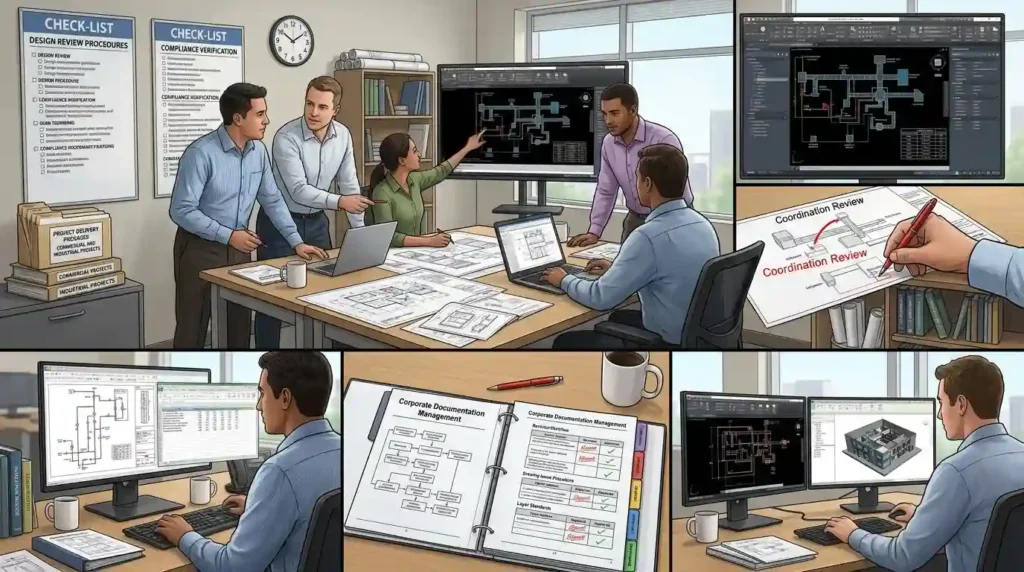
Participants develop measurable capability in HVAC drafting, plumbing system coordination, AutoCAD documentation standards, multidisciplinary MEP workflows, drawing revision management, and project delivery preparation, enabling them to produce technically organised engineering documentation suitable for commercial construction, industrial infrastructure, and corporate facility development projects.
The learning outcomes focus on applied workplace performance rather than theoretical software familiarity.
HVAC Design Drafting Capability
Participants learn how to:
- Create duct routing systems
- Produce airflow layouts
- Configure diffuser placement
- Organise HVAC equipment blocks
- Apply drafting standards consistently
- Coordinate HVAC systems with architectural layouts
These skills support professionals working within MEP design offices, engineering consultancies, and construction coordination departments.
Plumbing System Documentation Skills
The programme develops competence in:
- Hot and cold water systems
- Drainage drafting
- Plumbing riser diagrams
- Pipe coordination
- Pressure drop analysis
- Fixture unit calculations
Participants also learn how to optimise layouts for corporate design efficiency and construction practicality.
Corporate Documentation Management
A major focus of the programme is engineering documentation quality.
Imperial Corporate Training Institute integrates revision workflows, drawing issue procedures, and deliverable standards directly into the training structure.
Participants practise:
- Layer management
- Drawing revisions
- Sheet organisation
- Annotation standards
- Version control
- Client submission preparation
These processes are critical within corporate engineering teams managing multiple project stages simultaneously.
BIM and Revit Coordination Awareness
The course also introduces integration concepts between AutoCAD workflows and BIM coordination environments.
Participants learn how AutoCAD HVAC and plumbing drawings interact with Revit-based project coordination systems. This is useful for organisations transitioning from traditional CAD drafting into integrated BIM workflows.
Quality Assurance and Design Review Skills
Engineering documentation must pass internal reviews before approval and construction release.
Participants therefore learn:
- Design review procedures
- Compliance verification
- Internal auditing methods
- Coordination checking
- Drawing discrepancy correction
This improves project reliability and reduces technical coordination problems during implementation stages.
How Is the Training Delivered Within Corporate Learning Environments?
The programme is delivered through structured technical workshops, guided drafting exercises, workflow simulations, and instructor-led project coordination sessions designed to replicate real engineering environments where participants apply AutoCAD HVAC and plumbing skills through practical corporate documentation and multidisciplinary design activities.
The delivery model prioritises applied learning instead of passive instruction.
Instructor-Led Technical Workshops
The programme includes structured workshops focused on real drafting scenarios. Participants complete guided exercises using HVAC layouts, plumbing systems, and coordinated engineering drawings.
This allows professionals to practise within a controlled technical environment while receiving direct feedback from instructors.
Imperial Corporate Training Institute structures sessions around practical engineering workflows rather than isolated software commands.
Corporate and Team-Based Learning Formats
The course can support multiple delivery environments including:
- Onsite corporate training
- Hybrid technical workshops
- Instructor-led classroom sessions
- Professional engineering group training
- Organisational workforce development programmes
This flexibility allows engineering firms and corporate HR teams to align technical upskilling with operational schedules.
Workflow Simulation Exercises
Participants complete project-style simulations involving:
- HVAC layout preparation
- Plumbing coordination
- Design review procedures
- Drawing corrections
- Multidisciplinary coordination tasks
These simulations replicate practical engineering responsibilities commonly encountered in construction and building services industries.
Assessment and Skill Validation
Learning outcomes are evaluated through:
- Drafting assignments
- Technical drawing reviews
- Coordination exercises
- Documentation tasks
- Workflow simulations
- Project-based assessments
The assessment structure ensures participants can demonstrate operational drafting capability rather than theoretical understanding alone.
What Workplace Results Can Organisations and Professionals Expect?
The training supports measurable operational improvement by increasing drafting accuracy, reducing coordination errors, strengthening documentation consistency, improving multidisciplinary collaboration, and helping engineering teams align HVAC and plumbing deliverables with corporate project standards, technical compliance expectations, and construction coordination requirements.
Engineering organisations often invest in technical training to improve project consistency and reduce operational inefficiencies.
Improved Engineering Coordination
Poorly coordinated MEP systems frequently create installation conflicts during construction.
The programme helps professionals improve coordination between:
- HVAC systems
- Plumbing systems
- Electrical layouts
- Structural elements
- Architectural drawings
This reduces drawing discrepancies and supports smoother project implementation.
Faster Documentation Workflows
Structured layer systems, reusable drafting standards, and organised templates improve drafting efficiency.
Participants learn how to standardise documentation procedures so engineering departments can produce deliverables more consistently.
Imperial Corporate Training Institute incorporates workflow organisation principles specifically for corporate engineering teams managing multiple concurrent projects.
Reduced Revision and Rework Cycles
The course places strong emphasis on revision management and quality assurance.
Professionals learn how to identify drafting inconsistencies before submission stages. This reduces unnecessary design revisions and improves documentation accuracy during approval processes.
Better Technical Communication Across Departments
Engineering projects require communication between designers, consultants, project managers, contractors, and facility teams.
Participants improve their ability to produce technically clear drawings, organised documentation sets, and coordinated deliverables suitable for collaborative project environments.
Career and Departmental Development
The programme also supports professional development for:
- Mechanical engineers
- HVAC designers
- MEP coordinators
- CAD technicians
- Facility management professionals
- Construction consultants
For HR departments, the training contributes to technical workforce development and engineering capability improvement within infrastructure and building services teams.
Who Should Enrol in the Programme?
The course is designed for engineering professionals, technical coordinators, MEP specialists, CAD technicians, construction consultants, and corporate teams who require structured HVAC and plumbing drafting capability aligned with commercial project standards, multidisciplinary engineering coordination requirements, and professional AutoCAD documentation workflows.
The programme supports both experienced professionals and technical graduates seeking industry-specialised drafting capability.
Mechanical and HVAC Engineers
Mechanical engineers working on HVAC system layouts benefit from the programme’s focus on airflow coordination, duct routing, and engineering documentation standards.
MEP Draftsmen and AutoCAD Technicians
Drafting professionals strengthen their ability to produce coordinated HVAC and plumbing documentation suitable for large-scale construction environments.
Project Engineers and Design Coordinators
Project-based professionals improve coordination workflows, revision management processes, and technical submission preparation.
Facility and Infrastructure Teams
Facility professionals responsible for system interpretation and maintenance documentation gain stronger understanding of HVAC and plumbing design structures.
Engineering Graduates
Graduates entering corporate engineering sectors can develop practical drafting workflows that align with professional MEP documentation standards.
Imperial Corporate Training Institute positions the programme as a corporate-focused technical training pathway rather than a general software introduction course.
How Does the Intake and Enrolment Process Work?
Participants typically evaluate intake schedules, delivery formats, eligibility requirements, and technical suitability before enrolment, with the programme structured to support both individual professionals and corporate teams seeking organised HVAC and plumbing AutoCAD capability development within practical engineering environments.
Discover More from Our Guide Library:
Who Are the Trainers Delivering Imperial’s AutoCAD HVAC and Plumbing Course?
What Certification Do You Receive After Imperial’s AutoCAD HVAC Course?
Training intake schedules may vary depending on delivery format, corporate demand, and regional programme availability.
Entry Expectations
Participants are generally expected to possess:
- Basic engineering knowledge
- Familiarity with technical drawings
- Introductory AutoCAD understanding
- Interest in HVAC or plumbing coordination workflows
The programme accommodates professionals from multiple engineering and construction backgrounds.
Course Progression Path
The training progression moves through:
- AutoCAD workflow setup
- HVAC drafting fundamentals
- Plumbing coordination
- Advanced MEP coordination
- Documentation management
- Quality assurance
- BIM integration awareness
- Final project implementation
This structure helps participants build technical capability incrementally while applying skills through realistic engineering tasks.
Completion and Skill Application
Upon completion, participants can apply the training within:
- Commercial building projects
- Industrial engineering environments
- Construction coordination departments
- Facility management operations
- MEP consultancy workflows
- Infrastructure development projects
Imperial Corporate Training Institute integrates practical engineering documentation standards throughout the programme to support direct workplace implementation.