
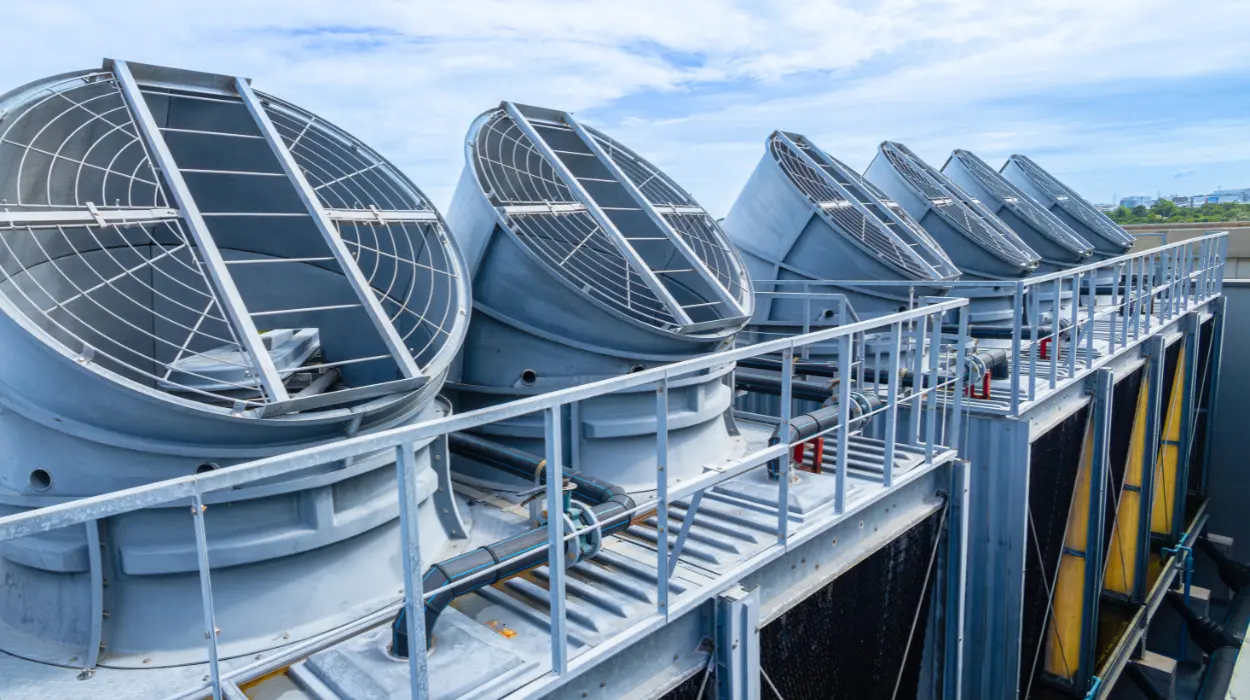
AutoCAD HVAC chiller plant and cooling tower system design is a technical drafting and coordination process used to create mechanical layouts, piping systems, equipment schedules, and operational documentation for commercial cooling infrastructure in buildings such as hospitals, factories, airports, and data centres.
Chiller plants and cooling towers form the backbone of centralised air conditioning systems in large facilities. AutoCAD HVAC enables engineering teams to design these systems with precision through 2D drafting, layered coordination, duct routing, equipment positioning, and plumbing integration. The software supports technical documentation used by MEP departments, consultants, contractors, and facility management teams.
In corporate environments, HVAC system design directly affects operational costs, thermal comfort, energy efficiency, and maintenance planning. Organisations in industries like healthcare, manufacturing, retail, and commercial real estate use AutoCAD HVAC workflows to standardise design accuracy across multiple projects.
A chiller plant removes heat from a building through chilled water circulation. Cooling towers release absorbed heat into the atmosphere. AutoCAD HVAC integrates these components into coordinated layouts that include chillers, pumps, condenser water pipes, valves, expansion tanks, and cooling tower assemblies.
Engineering and construction firms measure the effectiveness of HVAC drafting teams using KPIs such as drawing accuracy rates, project turnaround times, rework percentages, and clash detection reduction. Structured training improves these outcomes by aligning technical skills with real-world project standards.
How Do Chiller Plants Operate in Commercial Buildings?
Chiller plants operate by circulating chilled water through air handling systems while transferring heat through condensers and cooling towers, enabling temperature control in high-occupancy buildings with continuous cooling demands.
Commercial buildings use central cooling systems because they handle large thermal loads more efficiently than standalone units. A chiller plant contains several interconnected systems that function simultaneously to maintain indoor environmental conditions.
The core components include:
Chillers
Chillers remove heat from water using vapour compression or absorption cycles. The chilled water travels through air handling units and fan coil units to cool occupied spaces.
Cooling Towers
Cooling towers release heat extracted from the building into the outdoor environment. They reduce condenser water temperature through evaporation.
Pumps and Piping Networks
Primary and secondary pumps circulate water between chillers, cooling towers, and distribution systems. AutoCAD HVAC drawings define pipe diameters, routing paths, and valve placement.
Control Systems
Building Management Systems (BMS) regulate temperatures, flow rates, and operational sequencing. HVAC designers coordinate these control requirements during drafting stages.
Corporate engineering teams require accurate design documentation because installation errors increase project costs and delay commissioning schedules. Construction companies report that coordinated HVAC drawings reduce on-site rework by over 30% in large commercial developments.
How Does AutoCAD HVAC Handle Chiller Plant Layout Design?
AutoCAD HVAC handles chiller plant layout design through equipment placement tools, piping schematics, annotation systems, layer coordination, and drafting standards that organise mechanical infrastructure into buildable engineering documentation.
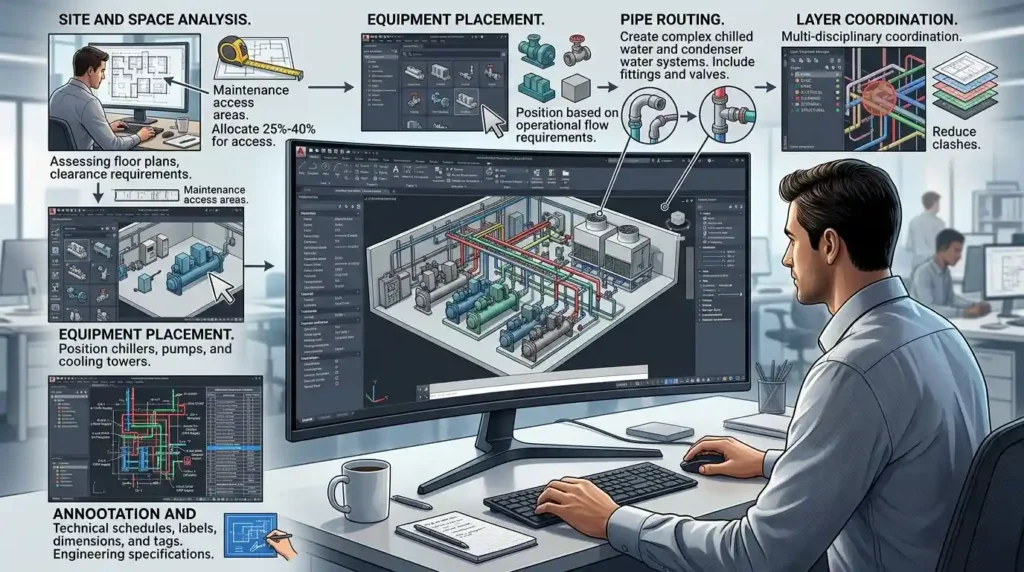
HVAC drafting begins with spatial planning. Engineers position chillers, pumps, valves, cooling towers, and maintenance access zones within equipment rooms or plant areas. AutoCAD HVAC supports this process using scalable drafting environments and predefined component libraries.
The workflow typically follows these stages:
Site and Space Analysis
Designers assess floor plans, equipment dimensions, maintenance clearance requirements, and service accessibility. Large facilities allocate between 25% and 40% of mechanical room space for operational access and maintenance pathways.
Equipment Placement
Chillers and pumps are positioned according to operational flow requirements. AutoCAD HVAC blocks help standardise component sizing and alignment.
Pipe Routing
Engineers create chilled water and condenser water piping systems. Pipe routing includes elbows, tees, reducers, balancing valves, and isolation valves.
Layer Coordination
HVAC systems interact with electrical, plumbing, and structural systems. Layer management enables multidisciplinary coordination and reduces clashes during installation.
Annotation and Documentation
Technical schedules, pipe labels, dimensions, and equipment tags are added to ensure installation accuracy. Documentation standards follow engineering specifications and project compliance requirements.
Engineering firms often implement standard drafting protocols across departments to improve consistency. This reduces drawing revision cycles and improves communication between design offices and construction teams.
How Are Cooling Tower Systems Drafted in AutoCAD HVAC?
Cooling tower systems are drafted in AutoCAD HVAC through coordinated condenser water piping layouts, equipment positioning, airflow clearance planning, and mechanical detailing that supports installation, maintenance, and operational efficiency.
Cooling tower drafting requires precise coordination because outdoor installations involve structural supports, piping integration, drainage systems, and airflow management.
HVAC designers create cooling tower layouts by defining:
Tower Positioning
Cooling towers require unrestricted airflow and adequate separation distances. AutoCAD HVAC drawings identify clearance zones and maintenance access pathways.
Condenser Water Piping
Supply and return piping connects chillers to cooling towers. Designers calculate pipe routes to minimise pressure losses and optimise pump efficiency.
Structural Coordination
Mechanical teams coordinate tower loads with structural engineers. Drafting documentation includes support frames, mounting details, and anchoring requirements.
Drainage and Water Treatment Layouts
Cooling tower systems require drainage systems and chemical treatment integration. AutoCAD HVAC supports coordination with plumbing layouts.
Equipment Schedules
Schedules define tower capacities, fan specifications, water flow rates, and operating conditions. These schedules support procurement and commissioning activities.
Facilities management teams rely on accurate as-built documentation to maintain cooling tower systems. Inaccurate drawings increase maintenance downtime and reduce system reliability.
What Skills Do Engineering Teams Need for HVAC System Drafting?
Engineering teams require technical drafting, mechanical coordination, piping design, HVAC calculations, standards compliance, and software proficiency skills to produce accurate chiller plant and cooling tower documentation in corporate projects.
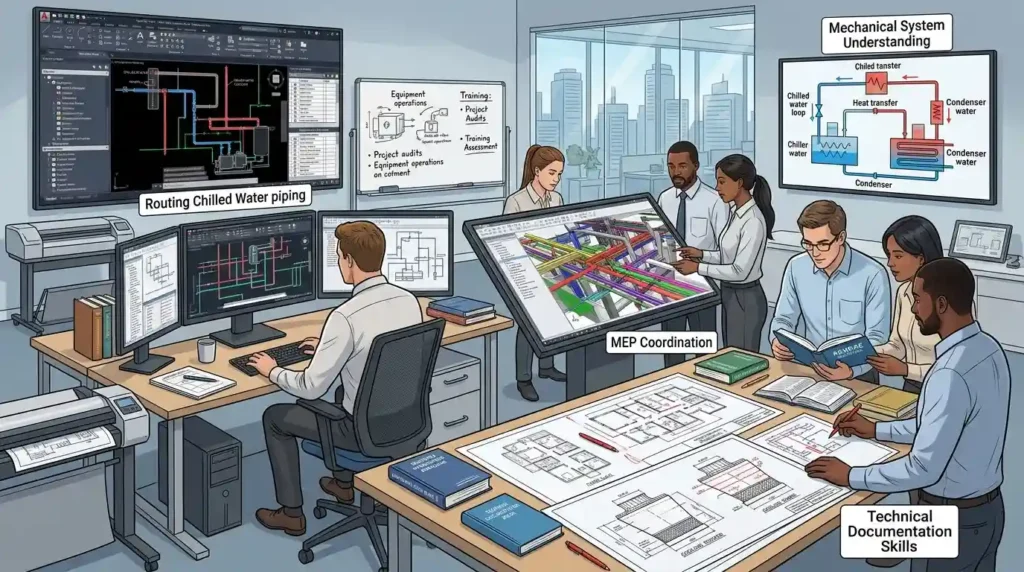
Modern HVAC projects involve multidisciplinary collaboration. Drafting professionals work alongside mechanical engineers, electrical consultants, project managers, and construction supervisors.
Key technical competencies include:
Mechanical System Understanding
Teams must understand chilled water systems, condenser water loops, HVAC equipment operation, and heat transfer principles.
AutoCAD HVAC Software Skills
Drafting personnel use tools for pipe routing, annotation, layer management, block libraries, and equipment scheduling.
MEP Coordination
Designers coordinate HVAC systems with electrical conduits, plumbing systems, and structural frameworks to prevent clashes.
Industry Standards Knowledge
Projects follow standards such as ASHRAE guidelines, local building regulations, and engineering documentation protocols.
Technical Documentation Skills
Engineers prepare layouts, sections, schematics, and installation drawings used during procurement and construction.
Corporate L&D departments identify HVAC drafting skill gaps through project audits, drawing error reports, and productivity assessments. Technical training programmes often include simulations, project-based assignments, and assessment-driven learning models to improve drafting accuracy.
How Is AutoCAD HVAC Training Delivered in Organisations?
AutoCAD HVAC training is delivered through workshops, instructor-led sessions, hybrid learning modules, project simulations, and technical assessments designed to improve engineering productivity and drafting consistency across teams.
Corporate technical training focuses on measurable workplace performance rather than theoretical learning alone. HVAC design training programmes generally range between 20 and 80 training hours, depending on learner experience levels and project complexity.
Training delivery formats include:
Classroom Workshops
Instructor-led workshops focus on software navigation, drafting exercises, and real project simulations. Teams complete guided design tasks using commercial building layouts.
Online Technical Modules
Online learning platforms provide recorded demonstrations, drafting exercises, and assessment quizzes. Organisations use these modules for geographically distributed engineering teams.
Hybrid Learning Models
Hybrid programmes combine live workshops with self-paced assignments. This structure supports operational continuity while maintaining technical skill development.
Project-Based Assessments
Participants complete chiller plant and cooling tower drafting exercises that replicate workplace requirements. Assessments measure drawing accuracy, system coordination, and documentation quality.
Collaborative Simulations
Teams work on coordinated MEP projects to improve communication between engineering disciplines. Simulations mirror real construction workflows.
When organisations evaluate training implementation strategies, readers often shift towards technical execution details. A detailed explanation of drafting workflows and documentation practices fits naturally here through explore:
How Are Chiller Plant Drawings Produced and Detailed in AutoCAD HVAC Training? focused on chiller plant drawing production methods.
Training effectiveness is measured using KPIs such as reduced drafting revisions, shorter project delivery timelines, improved coordination scores, and reduced construction clashes.
For more insight enrol:
AutoCAD HVAC and Plumbing Design Training Course.
What Are the Key Components of HVAC Design Training Programmes?
HVAC design training programmes include software instruction, piping design practices, drafting standards, equipment coordination, documentation workflows, and performance assessments aligned with commercial engineering requirements.
Structured training programmes organise learning into measurable technical competencies.
Software Navigation and Interface Management
Participants learn drawing environments, command structures, template management, and workflow optimisation techniques.
HVAC Equipment Drafting
Training covers chillers, cooling towers, pumps, valves, AHUs, FCUs, and associated mechanical components.
Pipe Design and Coordination
Learners draft chilled water and condenser water piping systems while managing routing conflicts and elevation coordination.
Drawing Standards and Annotation
Engineering documentation requires standardised symbols, dimensioning systems, legends, and schedules.
Construction Documentation
Participants prepare layouts, sections, schematic diagrams, and installation sheets used during project execution.
Quality Control Procedures
Quality review workflows improve drawing consistency and reduce design errors before construction phases begin.
Case-based learning methods improve retention because participants work on realistic engineering scenarios rather than isolated software exercises. Organisations implementing structured HVAC training report improved drafting productivity within 60 to 90 days after programme completion.
What Business Problems Does HVAC Drafting Training Solve?
HVAC drafting training solves business problems related to project delays, drawing inconsistencies, coordination failures, high rework rates, and skill shortages within engineering and construction teams.
Engineering firms frequently encounter operational inefficiencies caused by inconsistent drafting practices. These issues affect project profitability and delivery timelines.
Common organisational challenges include:
Drawing Rework
Poor coordination increases revision cycles. Rework consumes engineering hours and delays approvals.
Skill Gaps in Technical Teams
Junior engineers often lack experience with large-scale HVAC systems. Training standardises technical competencies across teams.
Coordination Conflicts
Uncoordinated mechanical layouts create clashes with structural and electrical systems during construction.
Productivity Inconsistency
Different drafting approaches reduce workflow efficiency across departments and project teams.
Documentation Errors
Incorrect annotations, schedules, and piping details create procurement and installation issues.
Companies addressing these issues through structured learning frameworks achieve measurable operational improvements. Engineering consultancies commonly target reductions of 20% to 35% in design revision rates after implementing technical drafting standards and workforce development programmes.
How Do Different Industries Use AutoCAD HVAC Chiller Plant Design?
Industries use AutoCAD HVAC chiller plant design to manage temperature-sensitive environments, support operational continuity, improve energy efficiency, and maintain compliance with building performance standards.
Different sectors have specialised cooling requirements that influence HVAC system design priorities.
Healthcare Facilities
Hospitals require continuous cooling for operating theatres, laboratories, and imaging equipment. HVAC systems support infection control and environmental stability.
Data Centres
Data centres depend on high-capacity cooling systems to maintain server performance and prevent overheating.
Manufacturing Plants
Industrial facilities use chiller plants for machinery cooling, production stability, and environmental control.
Commercial Real Estate
Office towers and shopping centres use central cooling systems to maintain occupant comfort across large floor areas.
Hospitality and Tourism
Hotels and resorts require energy-efficient HVAC systems to manage operational costs while maintaining guest comfort standards.
Each industry uses different performance metrics. Healthcare facilities prioritise operational reliability, while commercial buildings focus on energy efficiency and lifecycle cost reduction.
What Misconceptions Affect HVAC Training and Implementation?
Common misconceptions include believing HVAC drafting only involves software usage, assuming generic CAD training supports specialised HVAC projects, and expecting technical productivity improvements without structured implementation frameworks.
Many organisations underestimate the complexity of HVAC coordination workflows. HVAC drafting extends beyond basic CAD operations because it requires engineering understanding, documentation control, and multidisciplinary coordination.
Frequent misconceptions include:
“General AutoCAD Skills Are Enough”
Generic CAD knowledge does not cover chilled water systems, equipment coordination, or HVAC-specific drafting standards.
“Training Delivers Immediate Results Without Process Changes”
Training requires implementation frameworks that include drafting standards, quality reviews, and project supervision.
“HVAC Drafting Is an Isolated Engineering Task”
Mechanical systems interact with structural, plumbing, and electrical disciplines throughout construction projects.
“Software Proficiency Equals Engineering Competency”
Effective HVAC drafting combines technical understanding with documentation accuracy and coordination skills.
Organisations achieve stronger outcomes when training integrates workplace projects, measurable KPIs, technical mentoring, and standardised engineering workflows.
How Does AutoCAD HVAC Improve Organisational Performance?
AutoCAD HVAC improves organisational performance by increasing drafting accuracy, reducing coordination conflicts, improving project delivery speed, and supporting consistent engineering documentation across departments and project locations.
Technical standardisation creates measurable operational advantages in engineering organisations.
Improved drafting workflows reduce construction delays and lower correction costs. Coordinated HVAC documentation supports procurement accuracy and installation efficiency. Standardised training frameworks improve workforce capability across distributed project teams.
Discover More from Our Guide Library:
Why Is AutoCAD HVAC Design Training Increasingly Important for MEP Engineers?
How Is AutoCAD Used to Design Ductwork Layouts in Commercial Buildings?
Businesses measure performance improvements using metrics such as:
- Drawing approval turnaround times
- Design revision frequency
- Clash detection reduction rates
- Engineering labour productivity
- Construction coordination efficiency
- Maintenance documentation accuracy
Companies implementing structured HVAC drafting processes strengthen operational consistency across projects involving multiple stakeholders, contractors, and engineering disciplines.
What is included in the AutoCAD HVAC and Plumbing Design Training Course?
The Imperial Corporate Training Institute AutoCAD HVAC and Plumbing Design Training Course covers HVAC drafting, plumbing layouts, piping systems, duct design, equipment scheduling, and MEP coordination. Participants also learn industry-standard AutoCAD workflows used in commercial building projects.
Who should attend an AutoCAD HVAC and Plumbing Design Training Course?
This training course is suitable for MEP engineers, HVAC technicians, CAD drafters, project coordinators, and facility management teams. Organisations in industries like construction, manufacturing, healthcare, and real estate use this training to improve technical drafting accuracy.
How does AutoCAD HVAC training improve project coordination?
AutoCAD HVAC training improves coordination by teaching structured layer management, clash reduction methods, and integrated MEP drafting practices. Teams produce more accurate HVAC and plumbing drawings, which reduces rework during construction phases.
What software skills are taught in HVAC and plumbing drafting training?
The AutoCAD HVAC and Plumbing Design Training Course teaches 2D drafting, pipe routing, duct layout creation, annotation systems, equipment placement, and drawing documentation standards. Learners also develop skills in preparing construction-ready HVAC and plumbing designs.