
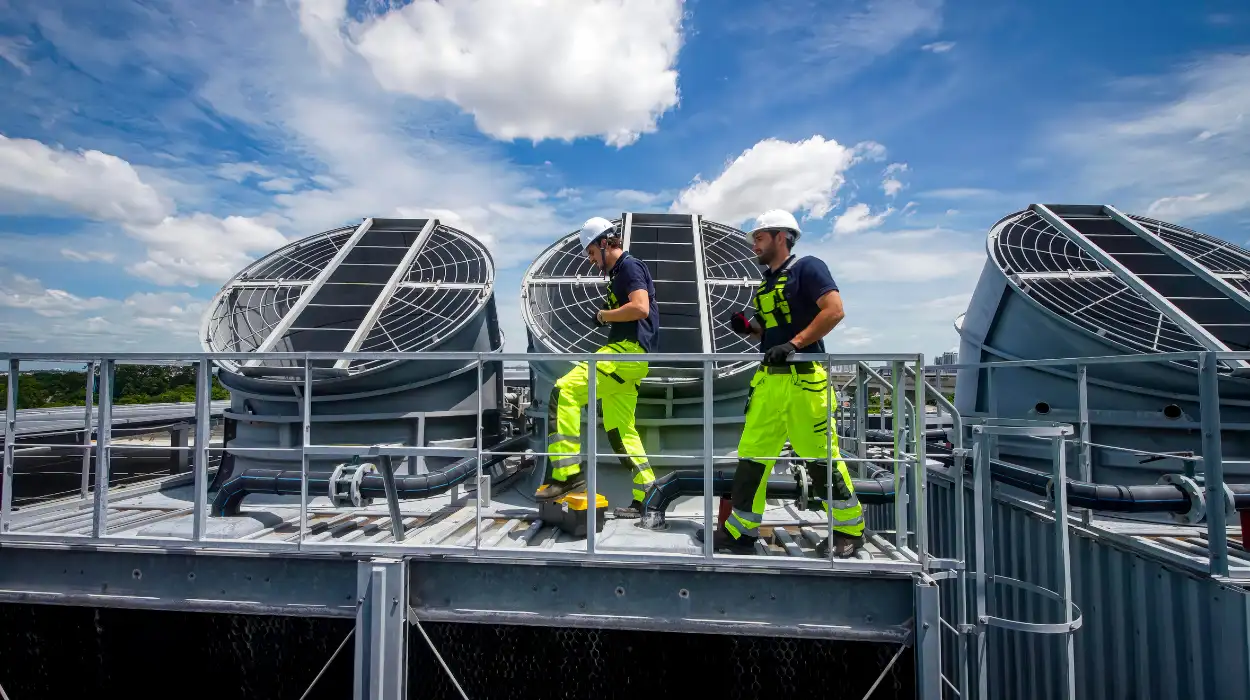
Engineering professionals often possess strong theoretical knowledge but face challenges when moving into industrial project environments. Industrial facilities, power plants, infrastructure developments, manufacturing sites, and large commercial complexes require a higher level of design coordination, documentation accuracy, compliance management, and multidisciplinary collaboration. Employers increasingly expect engineers to produce project-ready HVAC and plumbing documentation that aligns with corporate standards and international engineering requirements.
The transition becomes more demanding when projects involve multiple stakeholders, strict delivery schedules, integrated MEP systems, and complex construction workflows. Engineers entering industrial sectors must understand not only HVAC principles but also the drafting, coordination, and documentation processes that support successful project execution.
Professionals exploring career pathways into industrial engineering environments may first benefit from understanding how technical drafting skills support entry into specialised sectors through this guide on:
How AutoCAD HVAC training supports career entry into oil, gas and power sectors.
The AutoCAD HVAC and Plumbing Design Training Course delivered by Imperial Corporate Training Institute is designed to address these requirements. The programme provides structured development in HVAC drafting, plumbing system design, project documentation, MEP coordination, and corporate engineering workflows. The course enables engineers to move beyond theoretical understanding and develop practical competencies required in industrial project environments.
What Is the AutoCAD HVAC and Plumbing Design Training Course and What Problem Does It Solve?
The programme addresses the gap between engineering knowledge and industrial project execution by developing practical AutoCAD HVAC and plumbing design capabilities, project documentation skills, coordination workflows, and compliance-based engineering practices required for commercial, infrastructure, and industrial developments.
Many engineers understand HVAC concepts but struggle when applying them to real-world project deliverables. Industrial employers require professionals who can produce accurate drawings, coordinate with multidisciplinary teams, follow documentation standards, and manage revisions throughout project lifecycles.
The AutoCAD HVAC and Plumbing Design Training Course at Imperial Corporate Training Institute is structured to bridge this gap. It focuses on practical design development rather than purely theoretical engineering concepts. Participants learn how HVAC and plumbing systems are documented, coordinated, reviewed, and delivered within professional project environments.
Industrial projects require consistency across drawings, schedules, specifications, and technical documentation. Errors in design coordination can affect construction schedules, procurement activities, installation quality, and operational performance. The programme develops the skills needed to reduce such risks through structured design practices.
Imperial Corporate Training Institute aligns the training with real corporate engineering workflows. This allows participants to understand how technical drawings support procurement, construction, commissioning, maintenance, and facility management activities throughout the project lifecycle.
Why Is the Programme Structured Specifically for Industrial Project Transition?
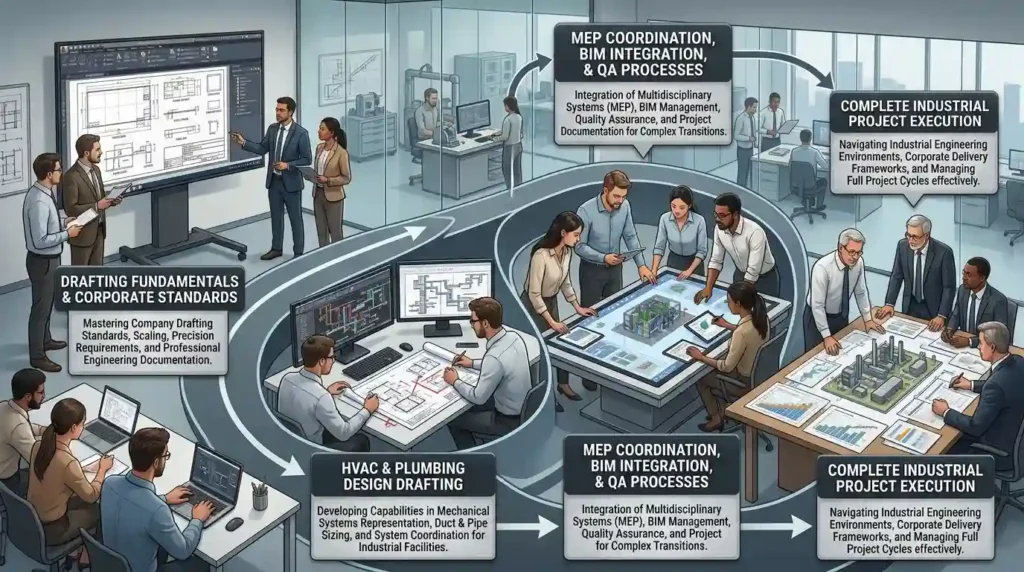
The curriculum follows a progressive learning pathway that begins with drafting fundamentals and advances towards project coordination, design optimisation, BIM integration, quality assurance, and complete project execution within industrial engineering environments and corporate delivery frameworks.
Industrial projects involve far more than drawing production. Engineers must understand design intent, documentation standards, project coordination requirements, and multidisciplinary collaboration processes.
The programme begins with AutoCAD fundamentals relevant to corporate engineering environments. Participants learn template creation, title block configuration, company drafting standards, scaling practices, and precision requirements that support professional engineering documentation.
The curriculum then progresses into HVAC design drafting. Learners develop capabilities in duct routing, airflow planning, equipment placement, diffuser coordination, and mechanical system representation. This creates a foundation for more advanced project activities.
Plumbing design modules build additional competencies in water supply systems, drainage networks, riser diagrams, pipe sizing, and system coordination. These skills are particularly relevant for engineers working on industrial facilities, commercial developments, and infrastructure projects.
As participants advance through the programme, they develop expertise in MEP coordination, project documentation, quality assurance processes, and BIM integration. The progression reflects the typical responsibilities engineers encounter when transitioning into industrial project roles.
Professionals evaluating different pathways into industrial engineering design may also review:
How AutoCAD HVAC design training opens doors into industrial engineering sectors to understand the broader application of these technical competencies.
Imperial Corporate Training Institute structures the curriculum around increasing levels of project complexity, ensuring participants build confidence before progressing to advanced coordination and project execution responsibilities.
What Will Participants Learn Throughout the Programme?
Participants develop measurable competencies in HVAC drafting, plumbing design, load calculations, MEP coordination, BIM integration, documentation management, quality assurance procedures, and complete project execution workflows aligned with modern industrial engineering requirements and standards.
Introduction to Corporate Design Workflows
The first module establishes the professional standards expected within engineering organisations. Participants learn AutoCAD interfaces, company templates, drafting protocols, title block management, and CAD standards used within corporate environments.
This module creates consistency in drawing production and introduces the documentation practices required for industrial projects.
HVAC Design Drafting
Participants learn how to create detailed HVAC layouts suitable for commercial and industrial facilities. Topics include duct routing, airflow distribution, equipment representation, diffuser placement, layer management, and drafting conventions.
The module develops practical skills required for producing professional HVAC documentation.
Plumbing and Drainage Design
The programme introduces cold water systems, hot water distribution, drainage layouts, riser diagrams, and pipe coordination techniques.
Participants learn how plumbing systems interact with HVAC and other building services while maintaining compliance with project requirements.
Advanced MEP Coordination
Industrial projects require collaboration across multiple engineering disciplines. Participants learn external references, coordination methods, clash management techniques, annotation standards, and data extraction processes.
These competencies support effective multidisciplinary project delivery.
HVAC Load Calculations and Design Optimisation
Engineers must understand the relationship between design calculations and documentation outputs. The programme introduces airflow planning, equipment selection considerations, energy efficiency principles, and design optimisation approaches.
Participants learn how engineering calculations influence project design decisions.
Plumbing Documentation and System Detailing
This section develops capabilities in schematic production, material scheduling, fixture analysis, pressure considerations, and detailed documentation practices.
The module strengthens participants’ ability to produce project-ready deliverables.
Project Documentation Standards
Imperial Corporate Training Institute emphasises documentation quality throughout the programme. Participants learn revision control procedures, drawing management techniques, company standards implementation, and client submission requirements.
These skills are essential for engineers transitioning into industrial project environments.
Quality Assurance and Design Review
Industrial projects require rigorous review processes. Participants learn audit procedures, compliance verification techniques, discrepancy identification, and correction methodologies.
The module helps engineers improve design accuracy and documentation reliability.
BIM and Revit Integration
Modern engineering projects increasingly utilise BIM workflows. Participants learn how AutoCAD HVAC and plumbing documentation integrates with BIM environments and multidisciplinary project models.
The module supports transition into contemporary engineering workplaces.
Corporate Project Simulation
The final module combines all previous learning outcomes through a practical project simulation. Participants develop complete HVAC and plumbing system layouts while managing documentation standards, quality requirements, project timelines, and technical communication processes.
How Is the Course Delivered?
The programme combines structured instruction, practical workshops, project-based exercises, technical demonstrations, collaborative activities, and simulated engineering scenarios that replicate workplace design responsibilities and multidisciplinary project environments encountered across industrial sectors.
Industrial engineering competence requires practical application rather than passive learning. Imperial Corporate Training Institute incorporates hands-on activities throughout the programme to ensure participants can apply concepts within realistic project contexts.
Training delivery may be provided through classroom sessions, virtual learning environments, hybrid models, or onsite corporate programmes depending on organisational requirements and participant locations.
Practical workshops allow learners to develop drawings, coordinate systems, apply drafting standards, and solve engineering documentation challenges. These exercises reinforce technical understanding while supporting workplace readiness.
Project-based learning forms a significant component of the programme. Participants work through realistic design scenarios that mirror the requirements of industrial engineering projects.
Collaborative activities simulate coordination between engineering disciplines. This approach helps participants understand communication requirements, approval workflows, and project delivery expectations.
Imperial Corporate Training Institute uses structured learning progression to ensure participants build competence systematically rather than attempting advanced project tasks before mastering foundational skills.
How Are Participants Assessed During the Programme?
Assessment combines practical assignments, drafting exercises, project simulations, design reviews, documentation evaluations, coordination tasks, and performance-based activities that demonstrate competency development across technical design and project execution requirements.
Assessment focuses on practical performance rather than memorisation. Participants demonstrate their ability to produce engineering documentation, coordinate systems, and apply project standards.
Drafting assignments evaluate technical accuracy, drawing organisation, and compliance with documentation requirements.
Design exercises assess participants’ ability to apply HVAC and plumbing principles within AutoCAD environments.
Project simulations test broader competencies including coordination, documentation management, quality control, and communication processes.
Design reviews encourage participants to identify errors, improve documentation quality, and apply engineering standards consistently.
Imperial Corporate Training Institute uses these assessment methods to verify that learning outcomes are achieved through measurable performance rather than theoretical understanding alone.
What Results Can Engineers Expect After Completing the Programme?
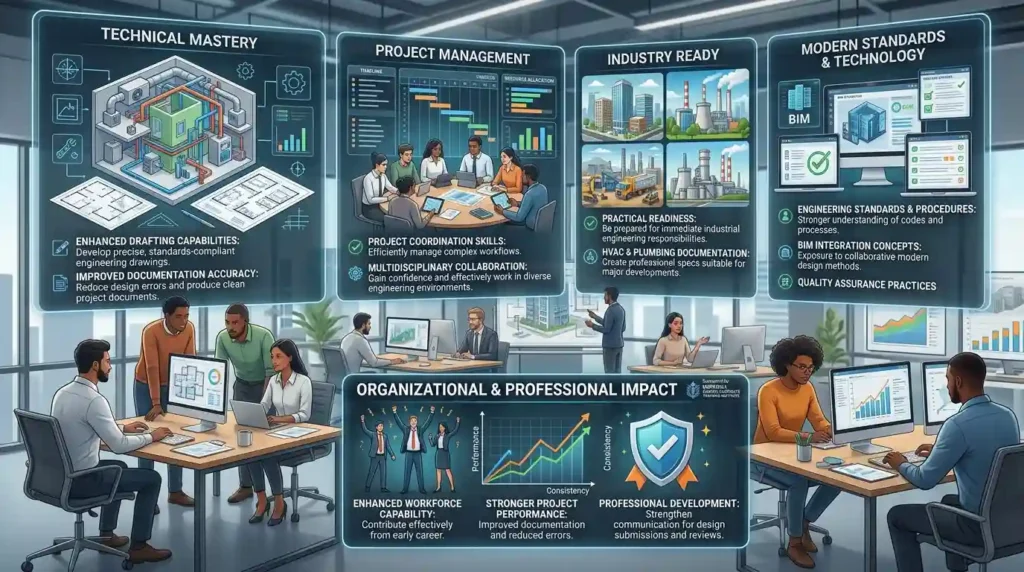
Graduates develop stronger technical drafting capabilities, improved project coordination skills, enhanced documentation accuracy, greater confidence in multidisciplinary environments, and practical readiness for industrial engineering responsibilities across diverse project sectors.
Industrial employers seek engineers who can contribute to project delivery from the early stages of employment. The programme supports this objective by focusing on practical workplace competencies.
Participants improve their ability to produce professional HVAC and plumbing documentation suitable for commercial, infrastructure, and industrial developments.
The programme strengthens understanding of engineering standards, documentation procedures, revision management processes, and project coordination requirements.
Engineers gain exposure to BIM integration concepts, multidisciplinary collaboration methods, and quality assurance practices increasingly expected within modern engineering organisations.
Imperial Corporate Training Institute also supports professional development by improving communication practices associated with design submissions, project reviews, and technical documentation management.
For organisations, these outcomes contribute to stronger project performance, improved documentation consistency, reduced design errors, and enhanced workforce capability.
HR departments often utilise structured technical training programmes to strengthen engineering teams and improve project delivery performance. The skills developed through this programme support both individual development and organisational capability objectives.
How Does the Programme Support Corporate and Industrial Project Requirements?
The curriculum aligns technical development with organisational objectives by strengthening documentation quality, engineering consistency, project coordination efficiency, compliance awareness, and multidisciplinary collaboration across corporate engineering and construction environments.
Industrial projects require standardised processes and repeatable quality outcomes. The programme reflects these requirements through structured documentation practices and engineering workflows.
Engineering managers benefit when teams follow consistent drafting standards and documentation procedures. Standardisation reduces project risk and improves collaboration.
Design coordinators gain practical knowledge relevant to multidisciplinary project environments. This supports more effective communication between engineering disciplines.
Facility management teams benefit from improved documentation quality and more accurate as-built information generated through structured design processes.
Imperial Corporate Training Institute incorporates these organisational considerations throughout the programme, ensuring technical development remains aligned with workplace performance expectations.
How Does Enrolment Work and Who Should Attend?
The programme is designed for engineers, MEP professionals, AutoCAD technicians, project coordinators, facility specialists, consultants, and graduates seeking practical HVAC and plumbing design capabilities applicable to industrial and corporate engineering projects.
The course is suitable for mechanical engineers seeking specialised HVAC and plumbing expertise. It also supports MEP professionals responsible for design coordination and project documentation.
Discover More from Our Guide Library:
Does Imperial’s HVAC Programme Teach Professional Drawing Plotting Techniques?
Does Imperial’s HVAC Course Cover Both Schematic and Installation Drawing Types?
Project engineers, consultants, draftsmen, and AutoCAD technicians can use the programme to strengthen technical design competencies and improve project readiness.
Graduates entering engineering sectors gain practical exposure to the documentation standards and workflows commonly used across industrial projects.
Facility management professionals benefit from understanding technical layouts, system documentation, and engineering coordination requirements.