

Modern building services projects require engineers and technical teams to deliver coordinated HVAC and plumbing drawings that align with international drafting standards, project timelines, and multidisciplinary collaboration requirements. Many professionals working in construction, facilities management, and MEP coordination struggle with inconsistent drawing practices, inefficient workflows, and limited exposure to corporate-level documentation systems. These gaps often affect project delivery quality and reduce technical efficiency across departments.
Professionals evaluating career progression in HVAC drafting and plumbing system design often begin by understanding salary expectations and market demand.
Those assessing long-term opportunities can review this educational guide on:
How Much Can an AutoCAD HVAC and Plumbing Designer Earn in the UK? which explains the commercial relevance of these technical skills across engineering and infrastructure sectors.
The AutoCAD HVAC and Plumbing Design Training Course delivered by Imperial Corporate Training Institute addresses these workplace requirements through structured technical instruction, applied drafting exercises, project simulations, and coordinated MEP workflow training. The programme is designed for professionals who need measurable improvement in AutoCAD-based HVAC and plumbing design capabilities within commercial and industrial project environments.
What Career Challenges Does AutoCAD HVAC Training Solve?
The training resolves technical drafting inconsistencies, coordination inefficiencies, and documentation skill gaps commonly faced by MEP professionals working in commercial engineering projects. Imperial Corporate Training Institute structures the programme to improve design accuracy, workflow management, system coordination, and compliance with corporate engineering documentation requirements.
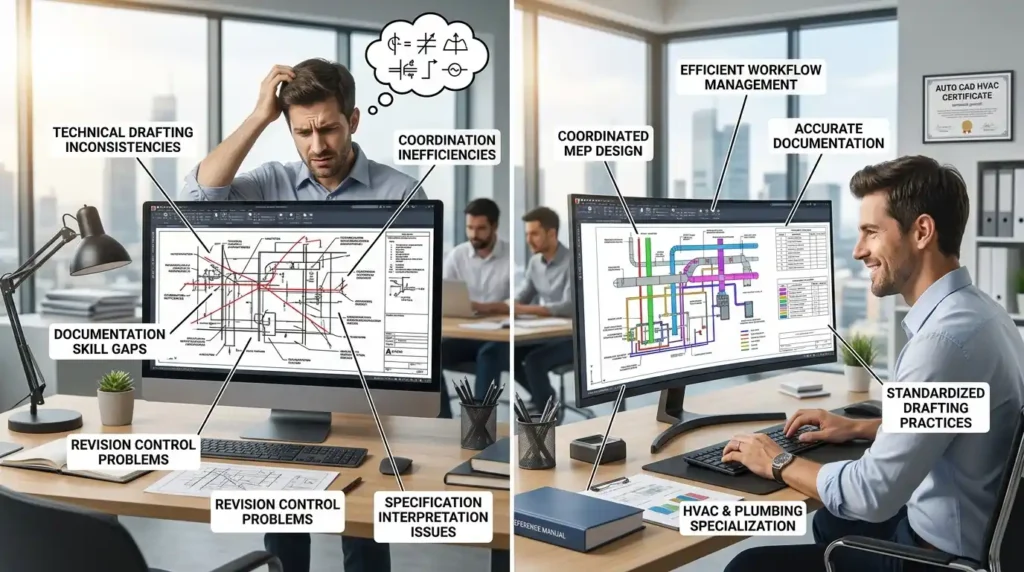
Many engineering professionals enter HVAC or plumbing design roles with general AutoCAD knowledge but limited understanding of real-world mechanical system implementation. This often creates difficulties in producing coordinated ducting layouts, plumbing riser diagrams, equipment schedules, and multidisciplinary documentation suitable for commercial projects.
Imperial Corporate Training Institute developed this course to address those operational gaps through industry-oriented learning modules focused on applied design workflows rather than isolated software instruction. Participants learn how HVAC and plumbing systems function within integrated construction environments while improving drafting precision and technical communication.
Previous participants commonly reported challenges related to drawing revision control, layer management, coordination with electrical systems, and interpretation of engineering specifications before attending the programme. The training introduces structured methods for managing these requirements through repeatable drafting standards and corporate-level documentation practices.
The course also supports professionals transitioning from general drafting positions into specialist HVAC and plumbing design responsibilities. Mechanical engineers, MEP coordinators, AutoCAD technicians, and infrastructure consultants use the programme to strengthen technical specialisation aligned with modern construction project requirements.
Why Is the Course Structured Around Corporate Engineering Workflows?
Imperial Corporate Training Institute organises the course around practical corporate workflows because modern HVAC and plumbing projects require coordinated drafting systems, multidisciplinary collaboration, documentation control, and engineering accuracy that extend beyond basic AutoCAD software knowledge and isolated technical drawing exercises.
The programme follows a progressive structure that mirrors actual engineering project delivery stages. Participants first establish drafting fundamentals and CAD standards before advancing into HVAC layouts, plumbing systems, multidisciplinary coordination, documentation control, and final project implementation.
This progression allows learners to build technical competency gradually while applying new concepts to increasingly complex engineering scenarios. Instead of separating software functions from workplace applications, the course integrates AutoCAD tools directly into commercial HVAC and plumbing design tasks.
Imperial Corporate Training Institute places strong emphasis on workflow consistency because engineering organisations depend on standardised drawing practices to reduce project delays and coordination errors. Participants learn how templates, layers, annotation systems, and revision controls support efficient collaboration across departments.
The structure also reflects the operational realities of construction and infrastructure sectors where engineers regularly coordinate with architects, electrical designers, BIM specialists, and facilities teams. By introducing multidisciplinary coordination processes early in the programme, the course helps participants understand how HVAC and plumbing drawings contribute to broader project delivery systems.
Training modules move from foundational drafting concepts into advanced design coordination. This progression improves knowledge retention and allows participants to apply technical learning in realistic workplace simulations.
What Technical Skills Do Participants Develop During the Programme?
Participants develop practical competencies in HVAC drafting, plumbing layouts, MEP coordination, documentation control, load calculations, AutoCAD workflow management, and multidisciplinary collaboration. Imperial Corporate Training Institute measures learning progression through applied assignments, technical exercises, project simulations, and structured engineering documentation tasks.
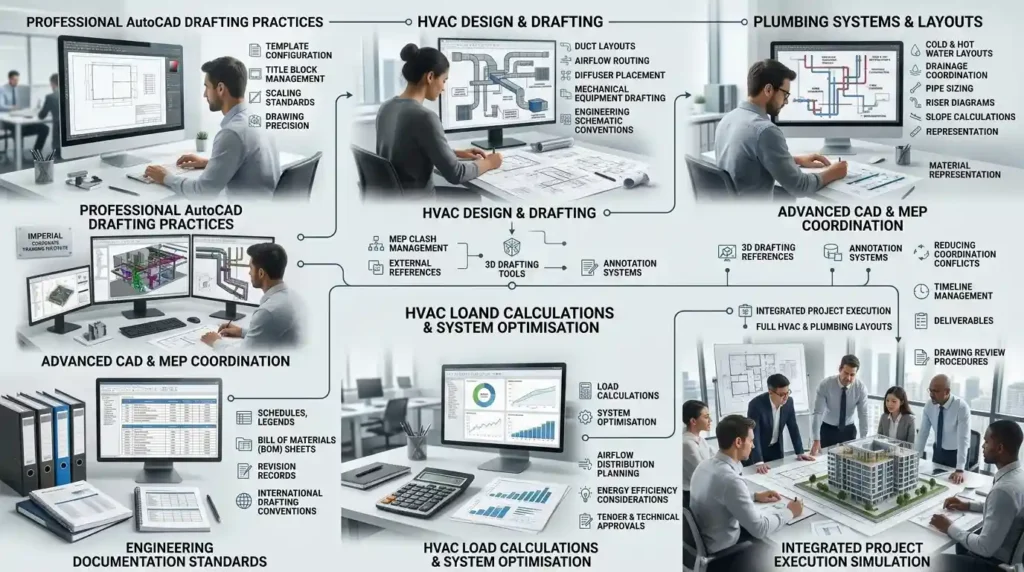
The first modules establish professional AutoCAD drafting practices used within corporate engineering environments. Participants learn template configuration, title block management, scaling standards, drawing precision, and CAD workflow organisation. These fundamentals provide the technical consistency required for later project coordination activities.
HVAC design modules focus on duct layouts, airflow routing, diffuser placement, and mechanical equipment drafting. Participants produce system drawings aligned with engineering schematic conventions while learning how airflow planning affects commercial building performance.
Plumbing modules introduce cold water systems, hot water layouts, drainage coordination, pipe sizing, and riser diagrams. Participants also study slope calculations and material representation techniques used in large-scale plumbing documentation.
Imperial Corporate Training Institute integrates advanced AutoCAD tools into practical coordination tasks. Learners work with external references, annotation systems, 3D drafting tools, and clash management methods commonly used in MEP environments. These skills help reduce coordination conflicts between mechanical, electrical, and plumbing systems during project execution.
The programme also develops competency in engineering documentation standards. Participants create schedules, legends, bill of materials sheets, and revision records while applying international drafting conventions to technical deliverables.
HVAC load calculations and system optimisation modules strengthen engineering decision-making capabilities. Participants understand airflow distribution planning, energy efficiency considerations, and documentation requirements associated with tenders and technical approvals.
The final stages of the course focus on integrated project execution. Participants complete simulations involving full HVAC and plumbing system layouts while managing timelines, deliverables, coordination workflows, and drawing review procedures.
How Does the Course Support Real Workplace Performance?
The programme improves workplace performance by strengthening technical coordination, drawing accuracy, revision management, and project documentation efficiency. Imperial Corporate Training Institute aligns training activities with operational engineering tasks commonly performed within construction, infrastructure, facilities management, and mechanical design environments.
Many organisations experience delays because technical drawings are incomplete, poorly coordinated, or inconsistent across departments. HVAC and plumbing systems require careful integration with architectural and electrical designs, making documentation accuracy essential for project continuity.
Imperial Corporate Training Institute addresses these operational risks through project-based learning exercises that simulate real engineering environments. Participants learn how to manage drawing revisions, maintain CAD standards, and coordinate layouts across multidisciplinary teams.
Mechanical design engineers often use the training to improve technical consistency in commercial project submissions. Facility management professionals apply the learning to interpret technical layouts more effectively during maintenance planning and system upgrades.
MEP consultants benefit from the course by strengthening their ability to coordinate pipe routing, airflow systems, and spatial planning requirements within constrained building environments. These improvements reduce clashes during project implementation and support smoother approval workflows.
Graduates entering specialist HVAC drafting positions also gain practical exposure to industry documentation standards. This helps them transition more effectively into engineering organisations requiring structured CAD deliverables and coordinated mechanical system drawings.
Imperial Corporate Training Institute includes quality assurance and design review procedures throughout the programme because technical validation plays a major role in engineering project delivery. Participants learn methods for identifying design discrepancies, conducting drawing reviews, and preparing as-built documentation for final project handovers.
How Are Learning Outcomes Evaluated During the Training?
Learning outcomes are evaluated through technical assignments, drafting simulations, project-based exercises, documentation reviews, and workflow coordination tasks. Imperial Corporate Training Institute uses applied assessment methods to confirm that participants can perform HVAC and plumbing design activities within professional engineering environments.
The programme avoids purely theoretical evaluation methods. Instead, participants complete practical drafting activities aligned with workplace expectations. This allows instructors to assess how learners apply AutoCAD tools within real engineering scenarios.
Assignments focus on measurable technical competencies such as duct routing accuracy, plumbing coordination quality, layer management consistency, and documentation organisation. Participants demonstrate their ability to manage engineering workflows while maintaining drafting standards.
Project simulations form a major component of the assessment structure. Participants complete integrated HVAC and plumbing layouts that require coordination with architectural and electrical systems. These exercises evaluate technical decision-making, drawing clarity, and multidisciplinary collaboration skills.
Imperial Corporate Training Institute also assesses workflow efficiency and documentation control practices. Participants produce schedules, annotations, legends, and revision records that reflect commercial project standards.
The course includes design review activities where participants identify and correct drafting inconsistencies. These exercises strengthen quality assurance awareness and improve technical problem-solving capabilities within engineering teams.
Corporate employers often value training programmes that measure applied competence rather than theoretical familiarity alone. The assessment structure used by Imperial Corporate Training Institute supports this requirement by linking learning outcomes directly to operational engineering tasks.
How Is the Training Delivered to Support Working Professionals?
Imperial Corporate Training Institute delivers the programme through structured workshops, guided technical exercises, project simulations, and flexible learning formats designed for corporate professionals. Delivery methods support skill application, technical collaboration, and progressive competency development within demanding engineering schedules and organisational environments.
The training can be delivered through classroom-based sessions, onsite corporate workshops, hybrid learning structures, or instructor-led online formats depending on organisational requirements and participant availability.
Workshop sessions focus on practical AutoCAD implementation rather than passive instruction. Participants complete drafting tasks, coordination exercises, and system documentation activities while receiving technical feedback from instructors.
Online and hybrid delivery options support professionals managing active project responsibilities. These formats allow participants to continue developing technical competencies without interrupting operational commitments.
Imperial Corporate Training Institute structures sessions to balance theoretical engineering concepts with practical software application. Participants study HVAC and plumbing design principles while immediately applying them to drafting activities within AutoCAD.
The programme also supports collaborative learning environments. Group coordination tasks simulate multidisciplinary engineering workflows where participants review layouts, identify coordination issues, and refine project documentation collectively.
Corporate teams frequently use the onsite delivery option to standardise drafting practices across departments. This approach helps organisations align documentation standards, workflow structures, and design review procedures within engineering operations.
How Does the Course Prepare Participants for Modern MEP Coordination?
The course prepares professionals for modern MEP coordination through BIM integration concepts, AutoCAD workflow management, clash reduction techniques, and multidisciplinary documentation processes. Imperial Corporate Training Institute aligns the programme with current engineering coordination standards used across commercial construction projects and infrastructure developments.
Modern engineering environments increasingly require integration between AutoCAD drafting workflows and BIM-based coordination systems. Many professionals possess traditional CAD experience but limited understanding of integrated MEP collaboration processes.
Imperial Corporate Training Institute addresses this requirement through dedicated modules covering BIM coordination principles, Revit integration concepts, and multidisciplinary data linking practices. Participants understand how AutoCAD-based drawings contribute to broader digital engineering environments.
The programme introduces strategies for transitioning from conventional 2D drafting workflows into coordinated 3D project structures. Participants also learn how clash detection and space management techniques improve mechanical system integration within complex building environments.
Coordination skills are especially valuable within commercial developments where HVAC, plumbing, electrical, and structural systems compete for limited installation space. The course helps participants understand how coordinated documentation reduces construction conflicts and project delays.
Participants also study engineering communication practices used during design review and approval stages. This strengthens collaboration between technical departments and improves clarity within project submissions.
Imperial Corporate Training Institute includes workflow automation and revision control methods because large engineering projects require consistent documentation management throughout design and construction phases.
Professionals evaluating technical training options often compare curriculum relevance before selecting a programme.
Those assessing AutoCAD-focused HVAC workflows can review this supporting guide on:
Which AutoCAD commands are most frequently used in HVAC and plumbing design to better understand the operational drafting competencies addressed within the course.
What Career and Organisational Outcomes Can Participants Expect?
Participants typically strengthen technical drafting performance, coordination capability, project documentation quality, and engineering workflow efficiency. Imperial Corporate Training Institute structures the programme to support measurable improvements in operational accuracy, multidisciplinary collaboration, and role readiness within HVAC and plumbing design environments.
Mechanical engineers frequently use the programme to improve project delivery accuracy and strengthen technical documentation consistency. MEP technicians often develop more advanced coordination skills that support larger commercial and industrial assignments.
Graduates entering specialist HVAC drafting roles gain exposure to engineering standards commonly required in corporate environments. This improves readiness for positions involving complex mechanical system layouts and multidisciplinary coordination responsibilities.
Facility management teams benefit through improved understanding of HVAC and plumbing layouts used during maintenance planning, system upgrades, and infrastructure modifications. Better technical interpretation supports more efficient operational decision-making.
Construction organisations use the training to strengthen internal drafting standards and reduce coordination inefficiencies across engineering departments. Standardised workflows help improve drawing consistency, revision management, and approval processes.
Imperial Corporate Training Institute also supports professionals seeking progression into technical coordination or design supervision responsibilities. The programme develops communication, documentation, and project implementation skills relevant to leadership within engineering environments.
Participants completing the course typically demonstrate improved confidence in managing engineering deliverables, coordinating project documentation, and supporting multidisciplinary design teams within commercial project structures.
How Does Enrollment and Course Completion Work?
Enrollment is structured for engineering professionals, technical graduates, corporate teams, and MEP practitioners seeking specialised AutoCAD HVAC and plumbing competencies. Imperial Corporate Training Institute provides a progressive completion pathway combining technical instruction, project simulations, assessments, and applied engineering documentation exercises.
The programme is designed for mechanical engineers, MEP professionals, AutoCAD technicians, project coordinators, facility management personnel, and graduates pursuing HVAC and plumbing design specialisation.
Participants are not required to possess advanced HVAC expertise before joining the course, although familiarity with engineering concepts and general AutoCAD functions supports faster progression through advanced modules.
Imperial Corporate Training Institute structures enrollment to accommodate individual learners as well as corporate groups seeking workforce development solutions. Organisations can align the training with departmental skill development objectives and operational documentation requirements.
Course completion involves participation in practical drafting exercises, technical coordination tasks, documentation activities, and integrated project simulations. Participants progressively build competency across HVAC drafting, plumbing design, workflow management, and multidisciplinary coordination.
The structured completion path allows learners to demonstrate measurable technical development while strengthening their ability to contribute effectively within commercial engineering environments.
Professionals seeking structured HVAC and plumbing design training aligned with modern engineering workflows can review the full programme structure and enrol today: