

Modern construction projects depend on coordinated design processes involving multiple technical disciplines. Commercial buildings, hospitals, manufacturing facilities, airports, and data centres require mechanical, electrical, plumbing, structural, architectural, and fire protection systems to function together. Within this environment, the HVAC designer plays a critical role in ensuring indoor environmental quality, energy efficiency, regulatory compliance, and system integration.
The role extends beyond producing mechanical drawings. HVAC designers contribute to planning, coordination, technical analysis, documentation, and interdisciplinary decision-making. Their work directly affects project timelines, construction costs, operational efficiency, and long-term building performance. Understanding how HVAC designers operate within multi-discipline teams helps organisations develop stronger engineering capabilities, improve collaboration, and reduce project risks.
Role of the HVAC Designer
An HVAC designer develops heating, ventilation, and air conditioning systems while coordinating with architects, structural engineers, electrical engineers, plumbing designers, and project stakeholders to ensure building systems operate efficiently, safely, and in compliance with project requirements and industry standards.
HVAC stands for Heating, Ventilation, and Air Conditioning. HVAC design involves calculating heating and cooling loads, selecting equipment, sizing ductwork, planning ventilation strategies, and creating technical drawings used during construction.
In a multi-discipline design environment, HVAC designers serve as system integration specialists. Their responsibilities influence building layouts, energy consumption, maintenance requirements, and occupant comfort.
For example, a commercial office building requires collaboration between:
- Architects designing occupied spaces
- Structural engineers designing support systems
- Electrical engineers providing power infrastructure
- Plumbing engineers designing water systems
- Fire protection engineers planning life-safety systems
- HVAC designers creating environmental control systems
Each discipline depends on information generated by others. HVAC designers therefore operate within a collaborative framework rather than working independently.
Why Do Modern Construction Projects Require Multi-Discipline Collaboration?
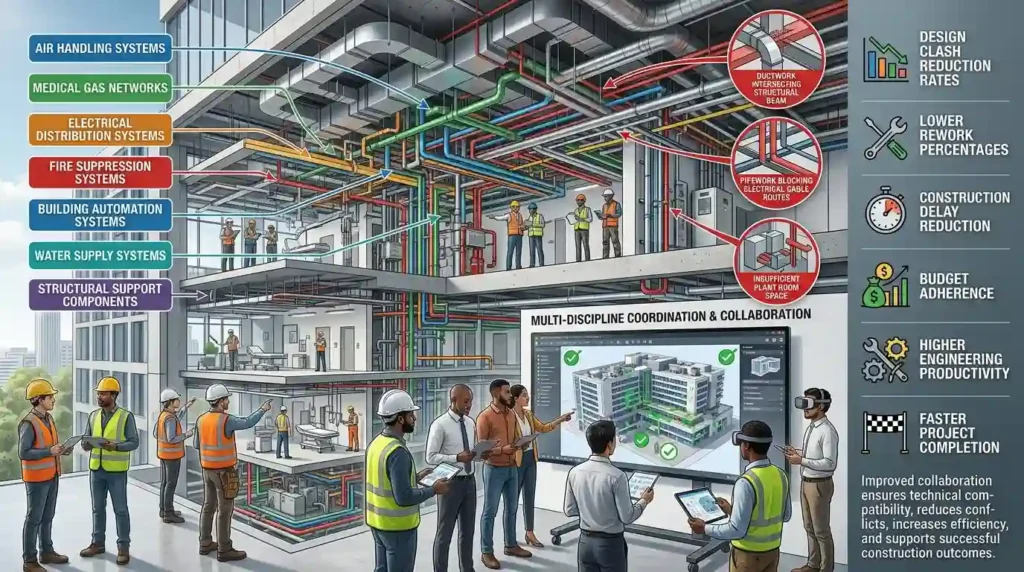
Large-scale building projects contain interconnected systems that compete for physical space, resources, energy requirements, and operational priorities. Multi-discipline collaboration ensures technical compatibility, reduces design conflicts, improves project efficiency, and supports successful construction outcomes.
Buildings have become increasingly complex.
A hospital, for example, contains:
- Air handling systems
- Medical gas networks
- Electrical distribution systems
- Fire suppression systems
- Building automation systems
- Water supply systems
- Structural support components
Each system occupies ceiling voids, risers, plant rooms, and service corridors.
Without coordinated collaboration, design conflicts occur. Examples include ductwork intersecting structural beams, pipework blocking electrical cable routes, or insufficient plant room space for mechanical equipment.
Multi-discipline coordination prevents these issues before construction begins.
Organisations often measure coordination success through project KPIs such as:
- Design clash reduction rates
- Rework percentages
- Construction delay reduction
- Budget adherence
- Engineering productivity metrics
- Project completion timelines
Improved collaboration directly supports project performance and operational efficiency.
How Does an HVAC Designer Contribute Throughout the Project Lifecycle?
HVAC designers participate in planning, design development, technical coordination, documentation, review processes, and construction support activities, ensuring mechanical systems align with project objectives from concept development through project completion.
The HVAC design process follows a structured workflow.
Concept Design Phase
During the concept stage, HVAC designers determine:
- Preliminary cooling loads
- Heating requirements
- Ventilation strategies
- Equipment locations
- Energy efficiency objectives
These decisions influence building architecture and space planning.
Design Development Phase
At this stage, HVAC designers produce:
- Equipment layouts
- Ductwork routing plans
- Mechanical room arrangements
- Air distribution strategies
- Ventilation calculations
Coordination activities increase significantly during this phase.
Detailed Design Phase
Detailed design focuses on construction-ready documentation.
Deliverables include:
- HVAC drawings
- Equipment schedules
- Technical specifications
- Control strategies
- Coordination models
Accuracy becomes essential because contractors rely on these documents during construction.
Construction Support Phase
HVAC designers review:
- Contractor submissions
- Equipment selections
- Installation methods
- Design modifications
Their involvement helps maintain design integrity throughout implementation.
How Does HVAC Design Coordination Work in Corporate Engineering Environments?
HVAC coordination follows structured workflows involving information sharing, technical reviews, digital modelling, clash detection, design meetings, and cross-functional approvals that ensure all building systems function together without conflicts or performance issues.
Engineering organisations use formal collaboration processes to manage project complexity.
Information Exchange
Each discipline shares design information regularly.
Examples include:
- Architectural floor plans
- Structural framing layouts
- Electrical distribution drawings
- Plumbing routing plans
HVAC designers use these inputs to refine system layouts.
Coordination Meetings
Project teams conduct scheduled review sessions.
Typical meeting objectives include:
- Resolving design conflicts
- Reviewing project milestones
- Updating technical requirements
- Managing design changes
Regular communication improves project transparency.
Digital Collaboration Tools
Modern engineering teams utilise:
- AutoCAD
- Building Information Modelling (BIM)
- Clash detection software
- Common data environments
- Document management systems
These technologies improve visibility across disciplines.
Organisations often invest in technical training programmes to strengthen these collaboration capabilities. Readers evaluating implementation methods often explore how engineers develop cross-functional coordination skills through specialised learning pathways, such as discussing:
Engineering Multi-Discipline collaboration within design environments.
For deeper insight explore:
AutoCAD HVAC and Plumbing Design Training Course.
What Technical Skills Must HVAC Designers Use Within Multi-Discipline Teams?
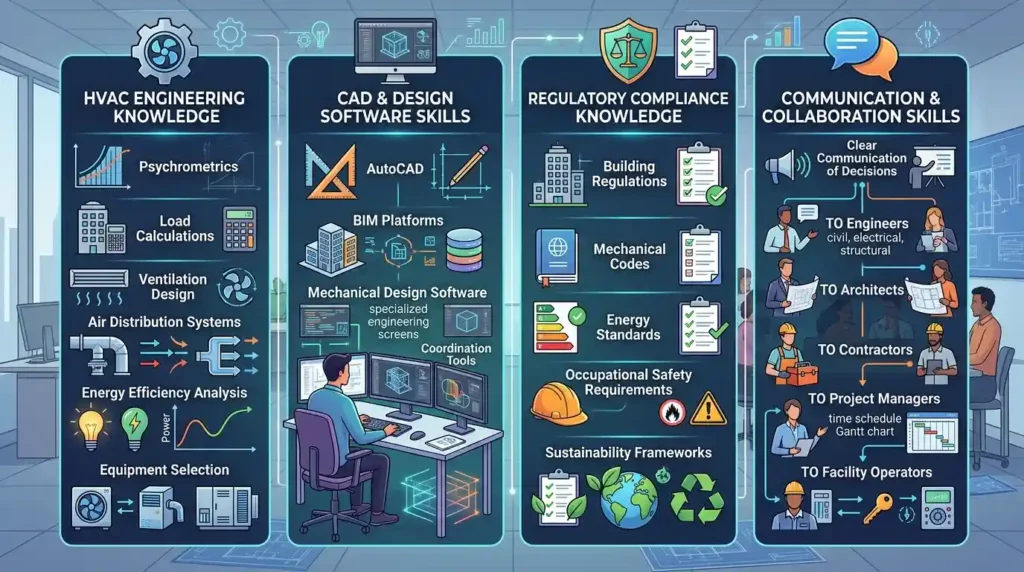
HVAC designers require technical design expertise, software proficiency, communication skills, systems thinking, coordination capabilities, regulatory knowledge, and problem-solving abilities to contribute effectively within integrated project teams.
Technical competency extends beyond mechanical engineering calculations.
HVAC Engineering Knowledge
Core expertise includes:
- Psychrometrics
- Load calculations
- Ventilation design
- Air distribution systems
- Energy efficiency analysis
- Equipment selection
These skills form the foundation of HVAC design work.
CAD and Design Software Skills
Engineering organisations frequently require proficiency in:
- AutoCAD
- BIM platforms
- Mechanical design software
- Coordination tools
Software skills support efficient communication between disciplines.
Regulatory Compliance Knowledge
HVAC designers work with:
- Building regulations
- Mechanical codes
- Energy standards
- Occupational safety requirements
- Sustainability frameworks
Compliance affects every stage of project delivery.
Communication and Collaboration Skills
Technical expertise alone does not guarantee successful project outcomes.
HVAC designers must communicate design decisions clearly to:
- Engineers
- Architects
- Contractors
- Project managers
- Facility operators
Strong communication reduces misunderstandings and project delays.
What Components Are Included in HVAC Design Collaboration Processes?
Effective HVAC collaboration combines technical design activities, project governance frameworks, digital workflows, stakeholder communication, documentation standards, quality assurance processes, and performance measurement systems that support coordinated project execution.
Several interconnected components contribute to successful collaboration.
Technical Documentation
Documentation typically includes:
- Design drawings
- Calculations
- Equipment schedules
- Specifications
- Design reports
Standardisation improves consistency.
Quality Assurance Processes
Engineering organisations establish review procedures such as:
- Internal design reviews
- Peer assessments
- Compliance checks
- Coordination audits
Quality controls reduce errors before construction begins.
Digital Modelling
Digital design environments improve project visibility.
Benefits include:
- Real-time updates
- Clash detection
- Enhanced coordination
- Better decision-making
Digital workflows improve efficiency across departments.
Performance Tracking
Project teams monitor measurable outcomes including:
- Design completion rates
- Coordination issue resolution
- Rework reduction
- Schedule adherence
- Budget performance
These metrics provide objective evidence of project success.
What Benefits Does Effective HVAC Design Collaboration Deliver to Organisations?
Strong HVAC collaboration improves project quality, reduces rework, enhances productivity, strengthens risk management, supports regulatory compliance, accelerates project delivery, and contributes to long-term operational performance of buildings and facilities.
Organisations increasingly evaluate engineering performance through measurable outcomes.
Reduced Rework
Design conflicts discovered during construction generate significant costs.
Early coordination reduces:
- Site modifications
- Installation changes
- Construction delays
This improves budget control.
Higher Productivity
Integrated workflows enable teams to:
- Resolve issues faster
- Share information efficiently
- Reduce duplicated effort
Productivity improvements support project profitability.
Improved Risk Management
Collaborative design reduces technical uncertainties.
Benefits include:
- Better compliance management
- Reduced operational risks
- Improved safety outcomes
Risk reduction remains a major organisational objective.
Better Facility Performance
Well-coordinated HVAC systems contribute to:
- Energy efficiency
- Occupant comfort
- Indoor air quality
- Equipment reliability
These outcomes affect long-term operational costs.
Which Industries Depend Most on Multi-Discipline HVAC Design Teams?
Industries with complex building systems rely heavily on coordinated HVAC design teams to manage technical requirements, operational reliability, compliance obligations, energy performance targets, and facility functionality throughout the asset lifecycle.
Several sectors require advanced HVAC coordination.
Healthcare
Hospitals require:
- Infection control ventilation
- Pressurised environments
- Critical care air systems
HVAC performance directly affects patient safety.
Data Centres
Data centres depend on:
- Precision cooling
- Redundancy planning
- Thermal management
System reliability supports business continuity.
Manufacturing
Industrial facilities require:
- Process ventilation
- Environmental control
- Heat management systems
HVAC systems influence production performance.
Commercial Real Estate
Office buildings require:
- Occupant comfort
- Energy efficiency
- Sustainability compliance
HVAC systems contribute significantly to operational costs.
Education and Public Infrastructure
Universities, schools, airports, and government facilities require coordinated design approaches because of their scale and operational complexity.
What Common Misconceptions Limit HVAC Design Effectiveness?
Many organisations underestimate the collaborative nature of HVAC design, treat software skills as substitutes for engineering expertise, overlook coordination processes, and fail to connect technical training with measurable business performance outcomes.
Several misconceptions affect workforce development initiatives.
Misconception 1: HVAC Design Is Only Drafting
Creating drawings represents only one aspect of the role.
HVAC designers also perform:
- Analysis
- Coordination
- Documentation
- Technical decision-making
The role requires broad engineering capability.
Misconception 2: Software Expertise Alone Creates Effective Designers
AutoCAD proficiency improves productivity.
However, effective HVAC design also requires:
- Engineering principles
- Regulatory knowledge
- Coordination skills
- Project understanding
Software supports engineering judgement rather than replacing it.
Misconception 3: Coordination Happens Automatically
Successful coordination follows structured processes.
Organisations establish:
- Review cycles
- Design standards
- Communication protocols
- Accountability frameworks
Without governance, coordination quality declines.
Misconception 4: Training Outcomes Cannot Be Measured
Workforce development programmes support measurable outcomes such as:
- Reduced design errors
- Improved productivity
- Faster project delivery
- Better compliance performance
- Increased project quality
Training effectiveness can be linked directly to operational KPIs.
How Do Organisations Develop HVAC Collaboration Capabilities?
Organisations build HVAC collaboration capability through structured learning programmes, project-based practice, digital tool training, technical assessments, mentoring systems, and continuous performance measurement aligned with business objectives.
Effective workforce development combines knowledge, skills, and application.
Common delivery formats include:
- Instructor-led workshops
- Virtual classrooms
- Hybrid learning programmes
- Technical simulations
- Case-based learning
- Practical design projects
Learning methodologies focus on real-world application rather than theoretical knowledge alone.
Assessment methods frequently include:
- Design exercises
- Technical reviews
- Coordination scenarios
- Software-based projects
- Competency evaluations
This approach ensures skills transfer into workplace performance.
Discover More from Our Guide Library:
How Are AutoCAD HVAC Drawings Issued and Revised During Construction Projects?
What International Drawing Standards Apply to AutoCAD HVAC Design Work?
As organisations pursue excellence, integrity, innovation, collaboration, and measurable impact, HVAC designers increasingly become key contributors to integrated project delivery. Their role extends beyond mechanical systems and influences coordination quality, project efficiency, building performance, and long-term operational success across modern construction environments.
Frequently Asked Questions
How does AutoCAD HVAC training help engineers work in multi-discipline design teams?
AutoCAD HVAC training improves coordination skills by teaching engineers how to create accurate mechanical drawings that align with architectural, structural, and electrical systems. This supports multi-discipline collaboration by reducing design clashes and improving project integration in construction workflows.
Who should take AutoCAD HVAC and Plumbing Design Training Course?
The Imperial Corporate Training Institute AutoCAD HVAC and Plumbing Design Training Course is suitable for mechanical engineers, HVAC designers, draftsmen, and building services professionals. It is also relevant for professionals involved in construction design, facility management, and engineering project coordination.
What skills are developed in AutoCAD HVAC and Plumbing Design training?
Learners develop skills in HVAC load-based drawing, duct sizing layouts, plumbing system drafting, and construction-ready documentation. The training also builds AutoCAD proficiency, technical coordination skills, and understanding of building services standards used in engineering projects.
Why is AutoCAD important in HVAC and plumbing design work?
AutoCAD is essential in HVAC and plumbing design because it enables precise technical drawings for mechanical systems used in construction projects. It supports accurate coordination between disciplines, reduces errors, and improves efficiency in building services design and implementation.