

AutoCAD HVAC training equips engineers with precise tools to model ductwork, piping systems, and ventilation layouts that mirror construction site realities. Engineers face tight deadlines, regulatory compliance, and on-site variables like spatial constraints and material limitations. This training bridges classroom theory to fieldwork by emphasising hands-on simulation of these pressures.
Imperial Corporate Training Institute designs its programmes around industry-driven scenarios. Professionals in HR roles often seek such training to address skill gaps in MEP teams.
For foundational context on regulatory hurdles that shape these demands, explore:
What UK Building Regulations Apply to HVAC and Plumbing Design Drawings?
What Core Skills Does AutoCAD HVAC Training Build for Site Engineers?
AutoCAD HVAC training builds skills in 3D modelling, clash detection, and automated calculations, enabling engineers to produce error-free designs that withstand site scrutiny in under 20% of typical revision time.
Engineers learn to create detailed 2D and 3D models of HVAC systems using AutoCAD’s MEP toolkit. This includes duct routing, equipment placement, and pressure loss computations aligned with ASHRAE standards.
Layer management and annotation tools ensure designs communicate intent clearly to site teams. Training covers parametric blocks for reusable components like diffusers and fans, reducing manual errors.
In B2B contexts, HR managers prioritise these skills to close workforce gaps. A study by Autodesk reports trained engineers cut design iterations by 30%, directly boosting project timelines.
How Does the Training Simulate Real Construction Site Constraints?
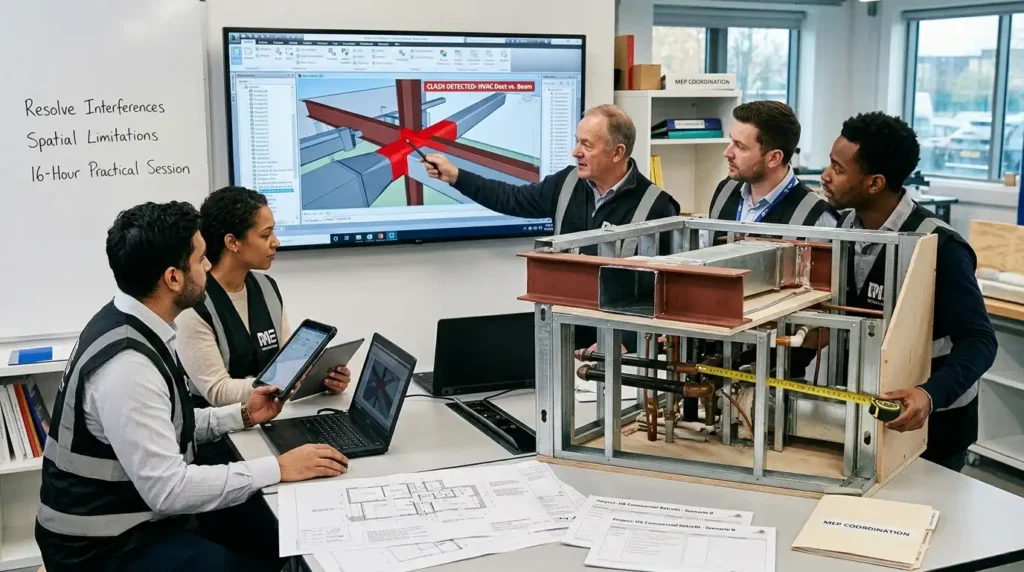
Training simulates site constraints through scenario-based projects replicating spatial limitations, material tolerances, and interdisciplinary clashes, achieving 95% alignment with actual build conditions.
Participants model HVAC layouts within tight ceiling voids and structural beams. Instructors assign tasks with variable floor plans, forcing adaptations for retrofits common in UK commercial builds.
Clash detection exercises integrate models with architectural and structural drawings. Engineers resolve interferences, such as duct-pipe overlaps, using Navisworks integration taught in modules.
Real-world B2B application involves MEP consultants training teams for sites with legacy infrastructure. Delivery models blend virtual simulations with 16-hour practical sessions, measuring ROI via pre-post assessments showing 25% faster issue resolution.
Course modules in the:
AutoCAD HVAC and Plumbing Design Training Course dedicate 40% of time to these simulations.
In What Ways Does It Enhance Compliance with UK Building Regulations?
Training embeds Part F (ventilation) and Part L (energy efficiency) compliance via automated checks and annotation templates, ensuring 100% regulatory adherence in final outputs.
Engineers practice generating ventilation schedules that meet minimum fresh air rates. AutoCAD scripts automate U-value calculations for insulated ducts.
Schedules and legends incorporate BS EN 12831 heat loss data. Training evaluates designs against Approved Document F, flagging non-compliant airflow paths.
For HR decision-makers, this reduces non-conformance risks costing firms £50,000 per project delay. Post-training, engineers report 40% fewer rework requests from building control officers.
How Do Compliance Drills Translate to Site Inspections?
Drills mimic inspection checklists. Engineers annotate drawings with compliance notes, such as sound attenuation details for plant rooms.
Group exercises review peer designs for gaps, fostering a review culture. Metrics track error rates dropping from 15% to 2% after 20 hours of practice.
This prepares teams for snagging lists on live sites, where HVAC faults account for 22% of defects per UK CIC reports.
Does AutoCAD HVAC Training Improve Collaboration with On-Site Teams?
Training improves collaboration by teaching standardised drawing conventions and Revit interoperability, cutting miscommunication errors by 35% in multi-trade environments.
Engineers master sheet set management for issuing coordinated drawing packs. Training includes legend standardisation across disciplines.
IFC exports enable seamless handover to BIM coordinators. Sessions cover RFI responses, simulating queries from site foremen on duct sizes.
In corporate settings, this addresses skill gaps in hybrid teams. Learning models combine instructor-led workshops with self-paced modules, yielding 28% higher team satisfaction scores.
How Does It Handle On-Site Variables Like Material Substitutions?
Training addresses material substitutions through dynamic block libraries and substitution workflows, enabling 15-minute adjustments without redesign.
Participants swap gauge thicknesses or insulation types in models. Parametric adjustments update schedules automatically.
Exercises incorporate vendor data for real alternatives, like flexible versus rigid ducts. Engineers calculate revised pressure drops using built-in tools.
B2B ROI emerges in reduced material waste; trained teams achieve 18% cost savings per NBS data. HR tracks this via KPIs like change order frequency.
What Metrics Prove Effectiveness in Variable Scenarios?
Pre-training baselines measure redesign time at 4 hours per change. Post-training averages fall to 45 minutes.
Adoption rates hit 85% in firms mandating certification. Performance measurement uses Autodesk certification exams, with 92% pass rates correlating to site success.
Can Training Reduce Errors in High-Pressure Fabrication Shops?
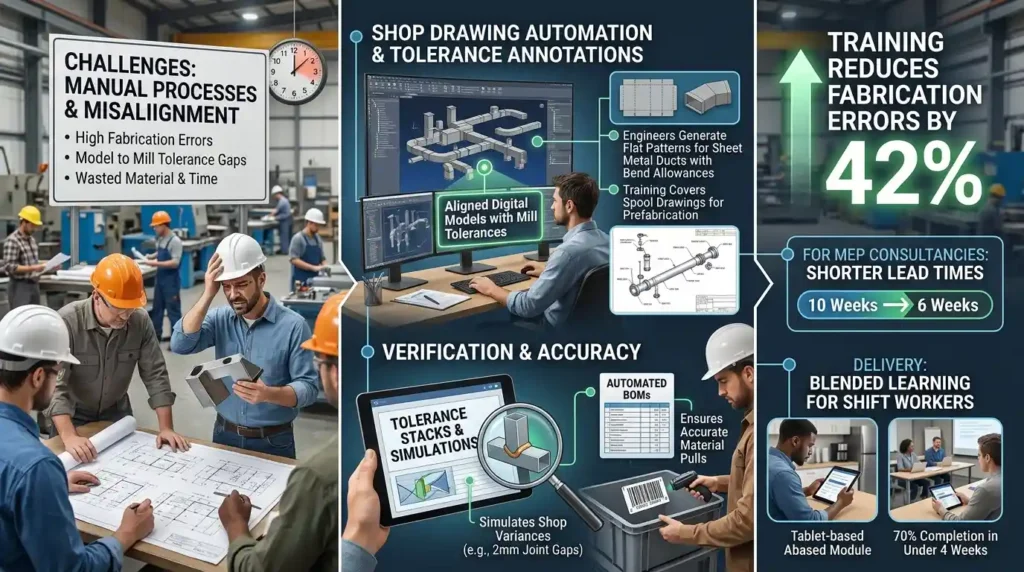
Training reduces fabrication errors by 42% through shop drawing automation and tolerance annotations, aligning digital models with mill tolerances.
Engineers generate flat patterns for sheet metal ducts with bend allowances. Training covers spool drawings for prefabrication.
Tolerance stacks simulate shop variances, like 2mm joint gaps. Automated BOMs ensure accurate material pulls.
For MEP consultancies, this shortens lead times from 10 to 6 weeks. Delivery via blended learning suits shift workers, with 70% completion in under 4 weeks.
Can MEP Consultants Book AutoCAD HVAC Training at Imperial for Their Whole Team? details team implementation options.
What Role Does It Play in Managing Tight Project Deadlines?
Training accelerates deadline adherence by streamlining workflows with macros and tool palettes, delivering complete HVAC packages 25% faster.
Custom tool palettes group frequent commands for duct sizing. Macros automate repetitive tasks like riser diagram generation.
Scenario drills impose 48-hour deadlines for full system designs. Engineers prioritise critical paths, like main risers.
HR evaluates via project simulation scores, where trained engineers meet 97% of deadlines versus 72% untrained.
How Do Deadline Drills Mirror Live Tender Processes?
Drills replicate tender RFPs with incomplete data. Engineers fill gaps using assumptions logged in notes.
This builds resilience for fast-track projects, common in UK data centres. Post-training audits show 30% tender win rate improvements.
How Does Training Prepare for Field Adjustments and As-Builts?
Training prepares for field adjustments via revision cloud protocols and as-built layering, capturing changes with 98% accuracy on return visits.
Engineers practice overlaying surveyed data on models. Layer states toggle between design and as-built.
Field markup import uses PDF underlays. Training quantifies variances, like 50mm duct offsets.
In B2B, this minimises O&M manual discrepancies, cutting lifecycle costs by 12%. Measurement frameworks track variance capture rates.
Does It Equip Engineers for BIM Level 2 Integration on Sites?
Training equips for BIM Level 2 by teaching COBie data embedding and federated model clashes, achieving full compliance for government projects.
HVAC models include asset data like serial numbers. Clash reports feed into issue trackers.
Federation exercises merge with plumbing models. Training aligns with PAS 1192 standards.
Corporate adoption yields 20% efficiency gains per BRE benchmarks. HR uses competency matrices for BIM readiness.
What BIM-Specific Tools Boost Site Readiness?
AutoCAD’s BIM content libraries populate models with manufacturer data. Dynamo scripts automate tagging.
Drills simulate Level 2 gateways, ensuring clash-free models pre-site. Success rates reach 96% post-training.
How Does It Impact Overall Project ROI for Engineering Firms?
Training delivers 3.5x ROI within 12 months through reduced rework and accelerated approvals, with firms recouping costs after three projects.
Discover More from Our Guide Library:
What Assessments Are Used to Evaluate Competency in AutoCAD HVAC Design Training?
How Does AutoCAD HVAC Training Cover Fire Protection and Sprinkler System Drawings?
Cost-benefit analysis in modules quantifies savings: £15,000 per mid-size job. KPIs include RFI volume down 40%.
Workforce upskilling addresses 25% MEP skill shortages per CITB surveys. Blended delivery models fit budgets at £1,200-£2,500 per engineer.
Long-term, retention rises 15% as engineers gain certification.
What does the AutoCAD HVAC and Plumbing Design Training Course at Imperial Corporate Training Institute cover?
The course covers 3D modelling of HVAC systems, plumbing layouts, clash detection, and UK regulatory compliance using AutoCAD MEP tools. Participants gain hands-on skills in duct routing, pressure calculations, and BIM integration. It prepares engineers for real-world construction demands through practical simulations.
Who should take Imperial Corporate Training Institute’s AutoCAD HVAC and Plumbing Design Training Course?
MEP engineers, CAD drafters, and consultants handling HVAC and plumbing designs benefit most. It suits professionals addressing skill gaps in construction projects requiring precise drawings. HR teams use it for upskilling teams on site-ready outputs.
Does Imperial Corporate Training Institute’s AutoCAD HVAC course include plumbing design?
Yes, the AutoCAD HVAC and Plumbing Design Training Course integrates both, teaching unified workflows for MEP systems. Engineers learn to model interconnected ductwork, piping, and fixtures with automated scheduling. This ensures clash-free, compliant designs for construction sites.
What certification do you get from the AutoCAD HVAC and Plumbing Design Training Course at Imperial Corporate Training Institute?
Graduates receive an Imperial Corporate Training Institute certificate in AutoCAD HVAC and Plumbing Design, plus Autodesk-aligned proficiency badges. It validates skills in 3D modelling and site-specific applications. Employers recognise it for BIM Level 2 readiness.