
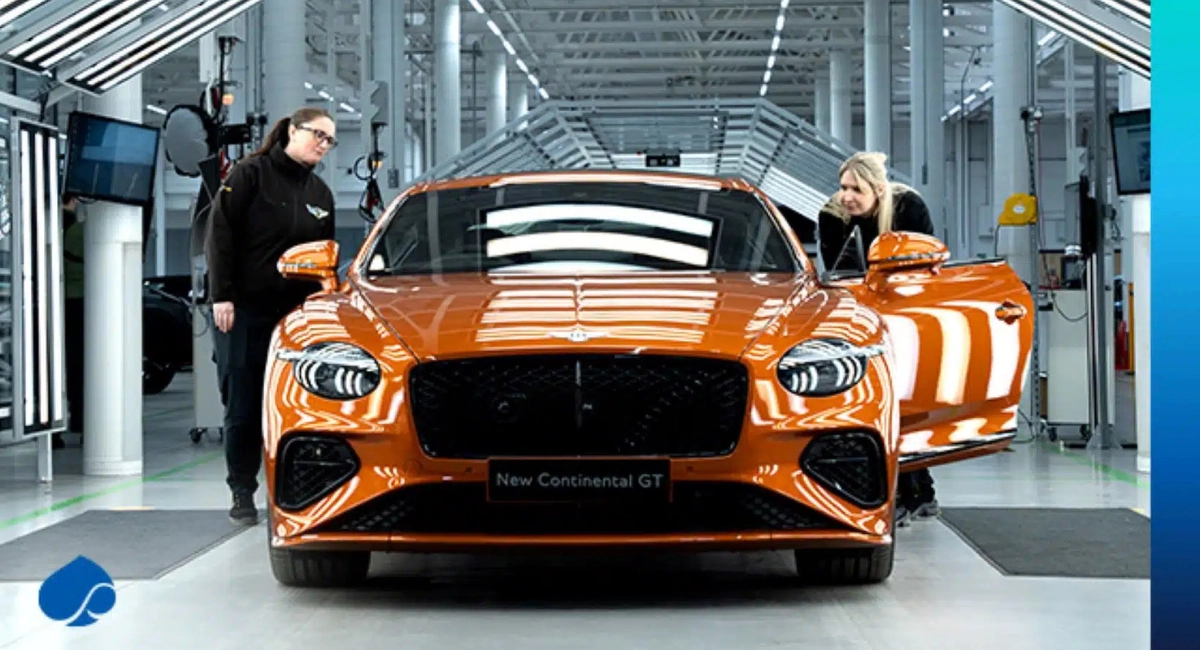
Key Points
- Bentley Motors has entered a strategic collaboration with Capgemini to accelerate its digital transformation, with Bentley saying the work supports its Beyond100+ strategic vision.
- The partnership is centred on Bentley’s Dream Factory in Crewe, where Capgemini will provide digital infrastructure, systems integration and support for intelligent manufacturing technology systems.
- Capgemini will also help Bentley strengthen its AI and data foundations, with the aim of improving data ownership, accountability, decision-making and efficiency across the business.
- The work covers manufacturing, back-office processes, customer and commercial insight, IT service operations, data architecture, cost optimisation and continuous improvement.
- Bentley said the collaboration is part of a longer-term relationship, and integration is already under way.
- Rob Pears, UK Head of Manufacturing, Automotive and Life Sciences at Capgemini, said the partnership offers opportunities to drive innovation through data and AI.
- Axel Dewitz, Member of the Board for Finance and IT at Bentley Motors, said the transition marks an important step in Bentley’s digital journey.
What has been announced?
Bentley said Capgemini will act as its digital transformation lead in the UK, providing the digital infrastructure and systems integration needed to modernise intelligent manufacturing systems and link them with back-office operations. The arrangement is intended to simplify operations, reduce complexity and help Bentley staff adopt new digital tools and processes.
As reported by Mark Tarre of IT Brief, Bentley’s Dream Factory in Crewe is being developed for more personalised, lower-impact luxury vehicle production. Capgemini’s statement described the site as an evolving hub for hyper-personalised, digital and sustainable luxury car production. The two companies did not present the move as a one-off technology purchase, but as a wider strategic relationship.
Why does it matter?
The partnership shows how a traditional automotive manufacturer is leaning on technology and consulting expertise to modernise production and support wider business operations. Beyond the factory floor, the collaboration is designed to connect manufacturing systems with administration, commercial planning and employee support functions.
Capgemini said the work will strengthen Bentley’s AI and data capabilities, enabling clearer data ownership and accountability while accelerating decision-making. It also said the programme should help Bentley unlock continuous improvements in user experience and operational value. In practical terms, that means Bentley wants faster information flow, fewer silos and a more integrated operating model across the business.
Which areas are covered?
According to Capgemini, the programme spans four main areas. First, it includes advanced customer and commercial insights, with improved analytics and AI expected to support sales, marketing and campaign activity. Second, it covers modern IT service operations, moving beyond traditional break-fix support to more reliable and user-centric services.
Third, Capgemini will work on Bentley’s data foundations and digital footprint so the company can support faster decision-making and next-generation products. Fourth, the project includes cost optimisation and continuous improvement, from manufacturing systems modernisation to enterprise-wide digital optimisation. Bentley and Capgemini both framed these areas as part of a long-term transformation rather than a limited systems upgrade.
What did the leaders say?
As reported by Mark Tarre of IT Brief, Rob Pears, UK Head of Manufacturing, Automotive and Life Sciences at Capgemini, said Bentley represents “the pinnacle of British quality and manufacturing prowess” and that the brand’s legacy and ambitions create opportunities to drive innovation through data and AI.
In Capgemini’s statement, Pears said the company’s expertise in integrating and modernising complex enterprise and manufacturing systems at scale would support Bentley’s transformation. Axel Dewitz, Member of the Board for Finance and IT at Bentley Motors, said the transition marks an important step in Bentley’s digital journey and that the integration is progressing smoothly.
How is Bentley framing the move?
Bentley said the collaboration is part of a broader strategic shift, not simply a technology deployment. The company said it is building a strategic relationship with Capgemini to support long-term ambitions, with both sides committed to quality and agility.
The company’s use of the Dream Factory also points to a broader industrial ambition: combining craftsmanship with digital production methods to support luxury vehicle manufacturing. Capgemini said the project should help Bentley stay agile in a rapidly changing market while supporting employees as they adopt new ways of working.
Why is this important for the auto sector?
The move reflects a wider trend in the automotive industry, where manufacturers are using software, AI and connected systems to improve efficiency and responsiveness. As reported by Mark Tarre of IT Brief, carmakers are increasingly turning to digital tools to break down older technology silos and improve decision-making.
For Bentley, the challenge is not only production modernisation but also linking manufacturing with commercial and administrative functions. That makes the Capgemini partnership significant because it extends beyond the shop floor and into the wider operating model of the company.
What is the contextual CTA?
For readers seeking to build expertise around this kind of business transformation, digital manufacturing and industry innovation, Business Management and IT & Software Development are relevant course areas to explore.