
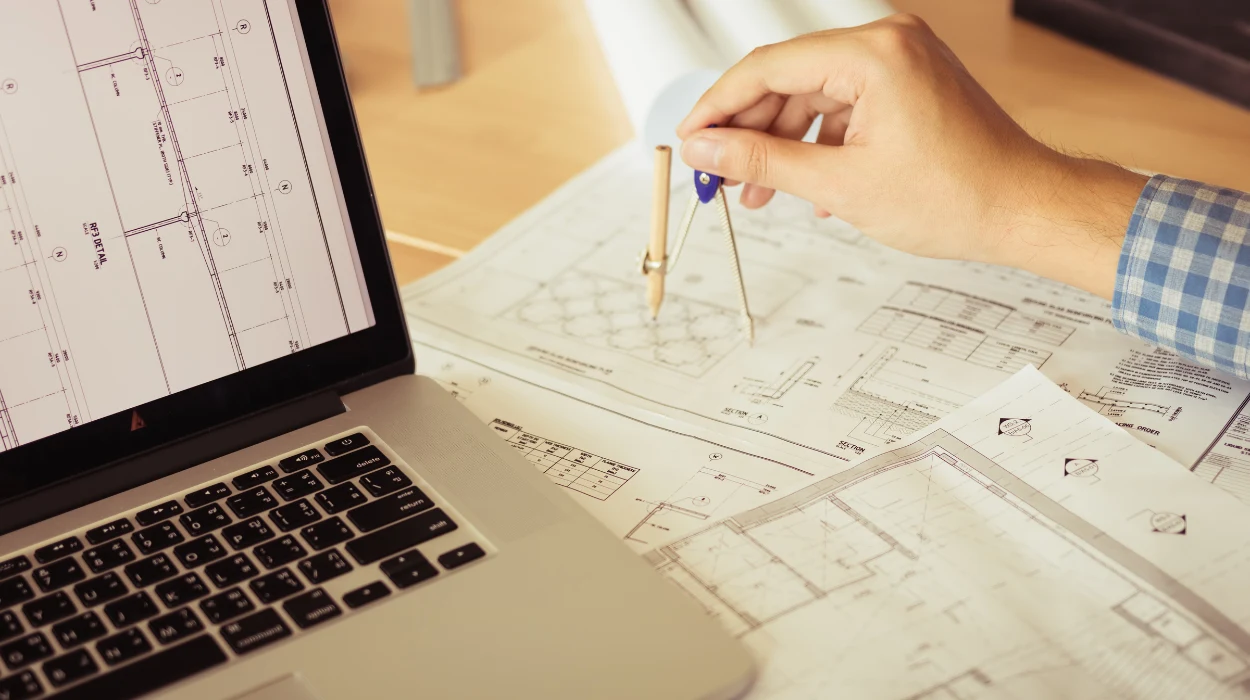
Construction projects rarely finish exactly as designed. Equipment locations change, duct routes are adjusted, pipe sizes are modified, and installation constraints force revisions throughout the build process. These changes create a gap between design drawings and the actual installed HVAC system. As-built drawings close that gap by documenting the final field conditions.
For HVAC professionals, the ability to produce accurate as-built documentation has become a core technical competency. Organisations evaluating technical training programmes increasingly examine whether training includes mark-up interpretation, drawing revision workflows, field verification methods, and documentation standards. Understanding how HVAC designers create final project records helps clarify the importance of these skills.
Readers seeking foundational knowledge can explore:
How Do AutoCAD HVAC Designers Produce As-Built Drawings After Construction? before evaluating how training programmes teach these competencies.
Why Is As-Built Drawing Production a Critical Part of AutoCAD HVAC Training?
AutoCAD HVAC training covers as-built drawing production because construction modifications affect system performance, maintenance planning, regulatory compliance, and facility lifecycle management. Professionals must learn how to convert site mark-ups into accurate digital records that reflect final installed conditions.
As-built drawings represent the final documented version of an HVAC system after construction completion. They differ from design drawings because they incorporate all approved changes made during installation.
In commercial buildings, HVAC systems include interconnected components such as ductwork, chilled water piping, ventilation equipment, control devices, dampers, and air distribution systems. Changes to any element affect the overall building documentation.
Training programmes therefore focus on the process of transforming field information into accurate digital records. Participants learn how contractors, consultants, commissioning teams, and facility managers rely on these documents throughout the operational life of a building.
From a business perspective, organisations face significant costs when facility documentation is inaccurate. Maintenance teams spend additional hours locating equipment, troubleshooting systems, and verifying layouts. Accurate as-built documentation reduces operational inefficiencies and supports long-term asset management strategies.
HR departments evaluating technical development initiatives often identify drawing revision capability as a critical workforce skill because it directly influences project handover quality and documentation accuracy.
Key Business Functions Supported by As-Built Drawings
- Facility maintenance planning
- Asset management programmes
- HVAC system upgrades
- Building commissioning activities
- Compliance inspections
- Energy efficiency projects
- Future renovation planning
How Does Training Teach HVAC Drawing Mark-Up Interpretation?
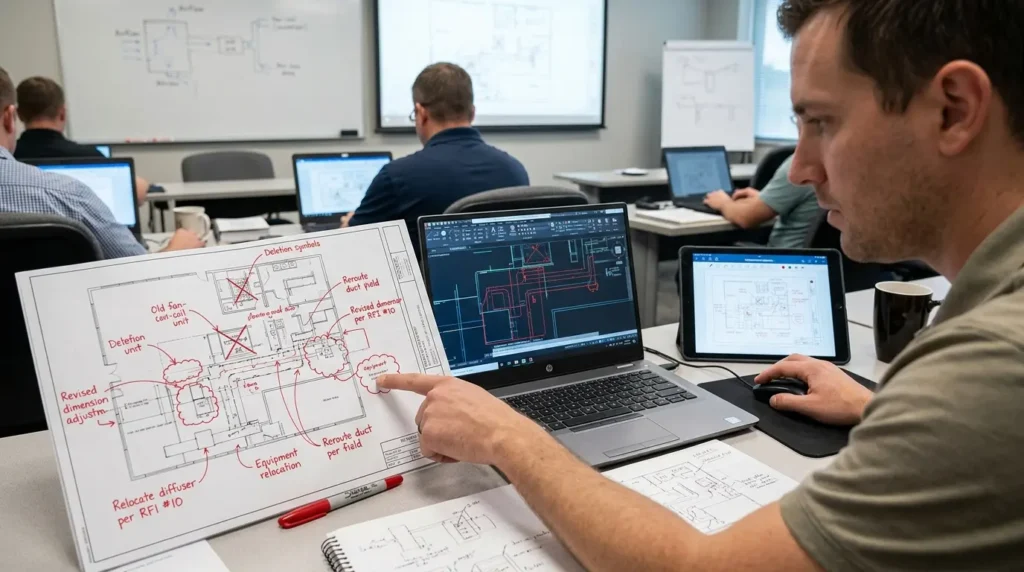
AutoCAD HVAC training teaches mark-up interpretation through structured exercises that help learners understand revision symbols, field annotations, contractor comments, installation changes, and documentation standards used during construction and project closeout activities.
Mark-ups serve as communication tools between site personnel and design teams. They identify changes made during construction and provide instructions for updating original drawings.
Training introduces learners to common mark-up conventions used across HVAC projects. These include clouded revisions, deletion symbols, equipment relocation notes, dimension adjustments, and annotation updates.
Participants learn how field engineers and contractors communicate installation changes using paper drawings, digital PDFs, tablets, and collaborative project management platforms.
A typical training workflow includes:
Reviewing Original Design Drawings
Learners analyse baseline HVAC layouts to understand intended system configurations.
Identifying Site Changes
Field mark-ups highlight modifications such as rerouted ducts, relocated equipment, altered pipe routes, or revised diffuser locations.
Applying Revisions in AutoCAD
Participants update drawings using AutoCAD commands, layers, annotation tools, and revision management techniques.
Verifying Documentation Accuracy
The updated drawing undergoes quality checks to ensure all approved field changes have been incorporated correctly.
This structured approach develops practical competencies rather than theoretical knowledge alone.
What Technical Skills Are Developed During As-Built Documentation Training?
As-built documentation training develops technical skills related to drawing revision, layer management, annotation control, spatial coordination, quality assurance, and digital documentation workflows that support accurate HVAC record production throughout project delivery and handover.
As-built drawing production requires more than basic drafting capability.
Professionals must understand how building systems interact and how revisions affect project documentation integrity.
Training commonly develops competencies in:
Layer Management
HVAC projects contain numerous drawing layers representing ductwork, piping, equipment, controls, dimensions, and annotations.
Learners understand how to organise revisions while maintaining drawing clarity.
Annotation Standards
Accurate notes improve communication between project stakeholders.
Training covers leader notes, revision clouds, call-outs, schedules, and documentation conventions.
Coordination Skills
HVAC systems interact with structural, electrical, architectural, and plumbing disciplines.
Participants learn to identify conflicts and maintain coordinated documentation.
Quality Control Procedures
Quality assurance frameworks help prevent documentation errors.
Training introduces verification checklists, revision tracking processes, and review workflows.
These skills support both project accuracy and organisational documentation standards.
How Does AutoCAD HVAC Training Compare Different As-Built Documentation Approaches?
AutoCAD HVAC training evaluates multiple documentation approaches by comparing manual mark-up workflows, digital revision methods, collaborative project platforms, and integrated BIM environments used across modern construction and facility management projects.
Different organisations use different documentation methods depending on project size, technology adoption, and stakeholder requirements.
The training process often examines these approaches comparatively.
| Documentation Approach | Typical Environment | Strengths | Limitations |
|---|---|---|---|
| Paper Mark-Ups | Traditional construction projects | Familiar workflow | Slower updates |
| PDF-Based Mark-Ups | Hybrid project environments | Faster communication | Requires version control |
| AutoCAD Revision Workflow | Design and documentation teams | Precise drawing updates | Dependent on drafting accuracy |
| BIM-Integrated Documentation | Complex projects | Enhanced coordination | Higher training requirements |
Understanding these approaches helps learners evaluate which workflow aligns with specific project environments.
For organisations planning workforce development, this comparison provides a practical framework for selecting training programmes that match operational requirements.
How Are Real Construction Changes Simulated During Training?
Training programmes simulate real construction changes through project-based exercises involving equipment relocation, duct rerouting, pipe adjustments, dimension revisions, and installation conflicts that mirror challenges encountered on commercial HVAC projects.
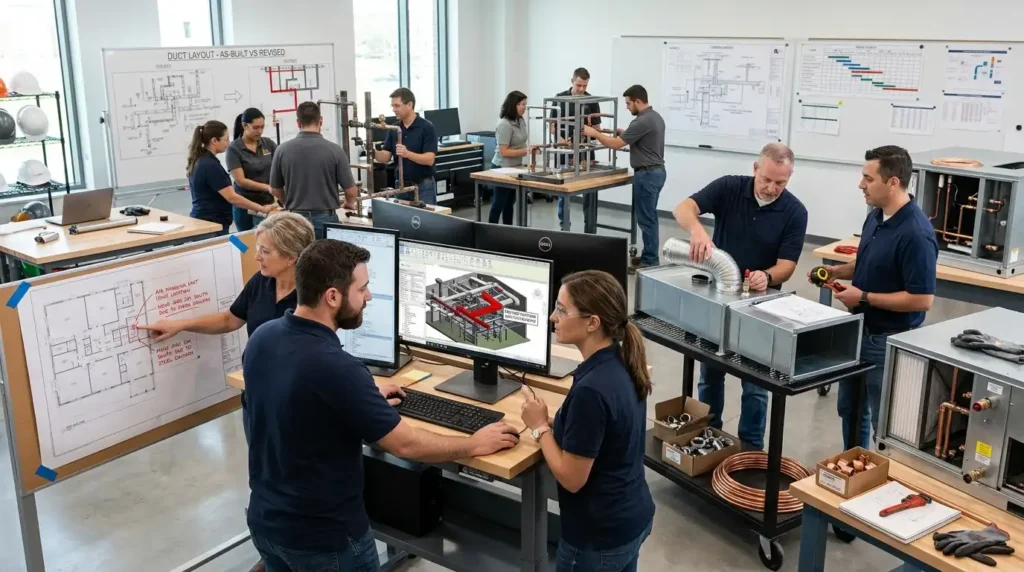
Practical learning environments improve knowledge retention and workplace transfer.
Rather than focusing exclusively on software commands, effective programmes recreate actual project conditions.
Common training scenarios include:
Equipment Relocation Exercises
Air handling units are moved due to structural constraints.
Participants update equipment schedules, dimensions, and connected systems.
Ductwork Revision Scenarios
Field conditions require rerouting of supply or return air ductwork.
Learners revise layouts while maintaining design intent.
Pipe Route Modifications
Mechanical piping adjustments affect surrounding building systems.
Participants update drawings and coordinate associated documentation.
Multi-Discipline Coordination Tasks
HVAC revisions must align with architectural and structural changes.
Learners identify coordination issues and implement accurate updates.
These scenarios strengthen problem-solving capability while reinforcing technical drawing standards.
What Role Does Quality Assurance Play in As-Built Drawing Production?
Quality assurance plays a central role because inaccurate as-built documentation creates operational risks, maintenance inefficiencies, compliance issues, and project closeout delays that affect multiple stakeholders across the building lifecycle.
Quality assurance frameworks help organisations maintain documentation accuracy.
Training programmes therefore emphasise verification procedures alongside drafting techniques.
Participants learn how experienced documentation teams review drawings before project handover.
Common quality checks include:
- Equipment verification
- Dimension validation
- Annotation review
- Layer consistency checks
- Cross-discipline coordination review
- Revision history confirmation
These procedures reduce documentation errors and improve project record reliability.
Organisations increasingly measure project documentation performance using KPIs such as revision accuracy, drawing completeness, turnaround time, and handover quality.
Training aligned with these metrics supports measurable business outcomes.
How Does AutoCAD HVAC Training Support Workforce Development Goals?
AutoCAD HVAC training supports workforce development by closing technical skill gaps, improving documentation quality, strengthening project delivery capabilities, and helping organisations establish standardised drawing management practices across engineering and construction teams.
Many organisations face challenges when experienced designers retire or project workloads increase.
Documentation expertise often exists within a limited number of individuals.
Structured training helps transfer institutional knowledge across broader teams.
From an HR perspective, technical training contributes to workforce capability in several areas:
Skill Standardisation
Employees follow consistent documentation procedures.
Reduced Rework
Accurate revisions decrease correction requirements.
Improved Collaboration
Teams communicate more effectively through standardised drawing practices.
Enhanced Project Performance
Documentation quality supports smoother project closeout processes.
Learning delivery models vary between instructor-led classrooms, virtual training environments, blended programmes, and project-based workshops.
The most effective approach depends on organisational objectives, workforce experience levels, and operational requirements.
How Can Organisations Evaluate Training Programmes That Include As-Built Drawing Skills?
Organisations should evaluate training programmes based on practical application, project realism, quality assurance coverage, mark-up interpretation methods, software competency development, and measurable workplace outcomes rather than software instruction alone.
Training evaluation becomes important when selecting a development pathway for engineering and technical teams.
When reviewing programmes such as the:
AutoCAD HVAC and Plumbing Design Training Course, decision-makers often assess whether the curriculum includes real-world documentation workflows alongside drafting fundamentals.
Teams comparing specialised learning options frequently examine whether a programme provides structured instruction on field revisions and project closeout documentation.
A useful evaluation point is reviewing:
How Does Imperial’s AutoCAD HVAC Programme Include As-Built Drawing Techniques? addresses practical as-built production competencies within a broader HVAC design framework.
The following framework helps organisations assess programme suitability.
| Evaluation Area | Key Assessment Question |
| Practical Exercises | Are real project scenarios included? |
| Mark-Up Interpretation | Are field revision workflows taught? |
| Quality Assurance | Are verification procedures covered? |
| Documentation Standards | Are industry conventions explained? |
| Software Application | Are revisions performed directly in AutoCAD? |
| Business Relevance | Are workplace outcomes measurable? |
This evaluation process aligns training investment decisions with operational objectives.
Technical competence alone does not determine programme effectiveness. Organisations benefit most when training improves project documentation quality, strengthens workforce capability, and supports consistent operational standards.
Discover More from Our Guide Library:
How Are Equipment Schedules and Legends Created in AutoCAD HVAC Training?
How Does AutoCAD HVAC Training Cover Pipe Sizing Tables and Drawing Annotation?
As-built drawing production remains one of the most practical applications of AutoCAD HVAC expertise because it connects design intent, construction reality, and long-term facility management into a single documentation process. Training programmes that develop these competencies prepare professionals to manage the complete lifecycle of HVAC project documentation while supporting organisational goals related to accuracy, compliance, and operational efficiency.
Frequently Asked Questions
Does AutoCAD HVAC training include as-built drawing preparation?
Yes, many AutoCAD HVAC training programmes include as-built drawing production, revision management, and mark-up interpretation. The AutoCAD HVAC and Plumbing Design Training Course helps participants understand how to update drawings to reflect final site conditions accurately.
Who should attend an AutoCAD HVAC and Plumbing Design Training Course?
This course is suitable for HVAC designers, mechanical engineers, CAD technicians, project coordinators, and building services professionals. Imperial Corporate Training Institute designs the training to support both new and experienced professionals working with HVAC and plumbing systems.
Why are AutoCAD HVAC design skills important for construction projects?
AutoCAD HVAC design skills help professionals create accurate technical drawings, improve system coordination, and support project documentation requirements. These skills contribute to efficient design workflows and better communication between project stakeholders.
Why are AutoCAD HVAC design skills important for construction projects?
AutoCAD HVAC design skills help professionals create accurate technical drawings, improve system coordination, and support project documentation requirements. These skills contribute to efficient design workflows and better communication between project stakeholders.
How does AutoCAD HVAC training improve workplace performance?
AutoCAD HVAC training strengthens technical drafting skills, improves drawing accuracy, and enhances documentation quality. The AutoCAD HVAC and Plumbing Design Training Course helps professionals apply industry-standard design practices that support project delivery and facility management objectives.