

Lean Six Sigma certifications build progressive expertise in process improvement. Organisations pursue these belts to close workforce skill gaps in efficiency and quality. HR teams evaluate belt levels during training decisions to align with business outcomes like reduced defects and faster cycle times.
Master Black Belt courses extend beyond Black Belt training. They target senior leaders who coach teams and drive enterprise-wide transformations.
To understand belt progression, read:
What Are the Different Belt Levels in Lean Six Sigma Certification
What Defines a Black Belt Certification in Lean Six Sigma?
Black Belts master DMAIC methodology, lead complex projects, and deliver measurable improvements like 20-50% defect reductions in manufacturing or service operations. They require 3-4 weeks of training plus project experience.
Black Belts execute projects using Define, Measure, Analyze, Improve, Control (DMAIC). They apply statistical tools such as hypothesis testing and regression analysis. Training covers practical application through simulations and case studies.
Organisations deploy Black Belts on cross-functional teams. These professionals identify root causes in processes like supply chain logistics or customer service workflows. They quantify baselines with metrics like sigma levels, often starting at 3-4 sigma in typical B2B settings.
Certification demands one or two completed projects with verified savings, typically $100,000-$500,000 annually per project. Bodies like ASQ or IASSC validate this through exams testing 150-200 tools and techniques.
HR directors select Black Belt programs for mid-level managers facing skill gaps in data-driven decision-making. Delivery models include in-person workshops or blended online formats spanning 120-160 hours.
Black Belts achieve ROI through sustained gains. Companies report 5-10x returns on training investments within 12 months, measured by KPIs like process cycle time reductions of 30-40%.
What Characterises a Master Black Belt Course?

Master Black Belts develop strategic expertise, coaching multiple Black Belts, designing organisation-wide programs, and achieving 4-6 sigma levels across portfolios. Training lasts 4-6 weeks with advanced leadership focus.
Master Black Belts operate at enterprise scale. They integrate Lean principles like value stream mapping with Six Sigma rigor. Courses emphasize coaching frameworks, change management, and innovation beyond standard DMAIC.
Participants learn to mentor 5-10 Black Belts simultaneously. They design tollgate reviews and sustain gains post-project. Training includes advanced topics like Design for Six Sigma (DFSS) for new processes.
Certification requires 5+ years of Black Belt experience, mentoring records, and a portfolio of transformations yielding multimillion-dollar impacts. Exams probe scenario-based leadership, such as aligning process improvements with corporate strategy.
In B2B contexts, HR teams assign Master Black Belts to C-suite initiatives. They address gaps in strategic workforce development, where 70% of organizations struggle with scaling Lean Six Sigma per industry surveys.
Delivery models feature intensive residencies or virtual cohorts with live coaching. Programs total 200-300 hours, incorporating real-time enterprise simulations.
What Are the Core Differences in Training Duration and Structure?
Master Black Belt courses double the duration of Black Belt training, spanning 4-6 weeks versus 3-4 weeks, with 60% more emphasis on coaching, strategy, and portfolio management over tactical project execution.
Black Belt programs focus on individual project leadership. They allocate 70% of time to technical tools like Minitab analysis and control charts. Structure follows a linear DMAIC path with weekly modules.
Master Black Belt training expands to holistic leadership. It dedicates 50% to mentoring simulations and organizational design. Weeks 1-2 review Black Belt skills; weeks 3-6 cover advanced interventions.
Black Belt cohorts practice on single projects. Master Black Belt groups tackle interconnected case studies, simulating divisional rollouts.
Blended learning suits Black Belts for flexibility. Master Black Belt programs demand immersion, with 40-hour weeks including peer critiques.
Organisations measure structure effectiveness by completion rates. Black Belt programs hit 85-90%; Master Black Belt reaches 75% due to rigor, but yields 2x leadership output.
How Do Skills and Responsibilities Diverge Between Them?
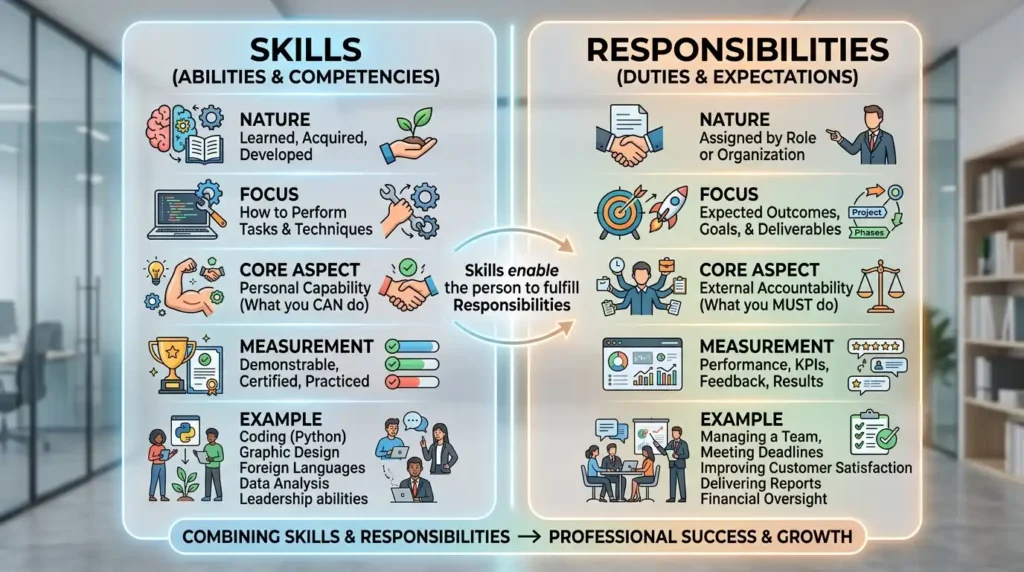
Master Black Belts coach teams and architect programs, handling 10+ projects yearly, while Black Belts lead 2-4 projects, focusing on execution and data analysis without strategic oversight.
Black Belts excel in tactical execution. They perform DOE (Design of Experiments) and FMEA (Failure Mode Effects Analysis), driving 20-30% efficiency gains per project.
Master Black Belts prioritise enablement. They train Black Belts on nuanced tools like QFD (Quality Function Deployment) and lead culture shifts, targeting 50%+ enterprise improvements.
Responsibilities split by scope. Black Belts own project tollgates; Master Black Belts govern portfolios, reporting to executives on sigma progression from 3.5 to 5+.
In HR contexts, Black Belts fill operational gaps. Master Black Belts bridge to strategy, upskilling managers for promotions amid 40% leadership voids in process excellence roles.
Real-world B2B example: A logistics firm trains Black Belts for warehouse optimisations (25% throughput boost). Master Black Belts then scale to network-wide systems, cutting costs by $2M annually.
What Distinguishes Project Scope and Impact?
Master Black Belt projects span enterprise portfolios with multimillion-dollar impacts and 4-6 sigma outcomes; Black Belt projects target departmental fixes yielding $100K-$500K savings at 3-5 sigma.
Black Belts tackle siloed initiatives. A typical project shortens order-to-cash cycles by 40%, measured via SIPOC maps and capability analysis.
Master Black Belts orchestrate cross-business transformations. They link projects into value chains, achieving 60% variance reductions across units.
Impact scales with scope. Black Belts deliver quick wins; Master Black Belts sustain them through governance, with 80% of gains retained after two years versus 60% for unmentored efforts.
B2B HR decisions weigh this: Black Belts suit immediate gaps; Master Black Belts drive long-term ROI, with adoption rates climbing 25% post-training per Gartner data.
How Does Certification Requirements Compare?
| Aspect | Black Belt Certification | Master Black Belt Certification |
|---|---|---|
| Experience Prerequisite | 3+ years in quality/process roles | 5+ years, including Black Belt achievements |
| Training Hours | 120-160 hours | 200-300 hours |
| Projects Required | 1-2 completed with $100K+ savings | Portfolio mentoring 5+ Black Belts, $1M+ impact |
| Exam Format | 4-hour multiple choice on 150+ tools | 5-hour scenario-based on leadership/strategy |
| Renewal Cycle | 3 years, 60 PDUs | 3 years, 100 PDUs with mentoring proof |
| Issuing Bodies | ASQ, IASSC, Exemplar Global | ASQ, CSSBB prerequisite required |
Black Belt paths emphasize tool proficiency. Candidates submit affidavits for project ROI.
Master Black Belt demands proof of influence. Recertification tracks mentee successes, ensuring ongoing value.
HR teams use these criteria for vendor selection. Master Black Belt rigor filters high-potentials, correlating with 15% faster promotions.
What Learning Delivery Models Do They Employ?
Master Black Belt courses favor immersive blended models with live coaching; Black Belt programs use flexible online-hybrid formats to accommodate working professionals.
Black Belt training blends 40% virtual lectures with 60% self-paced labs. Platforms like GoLeanSixSigma deliver modules in 4-8 hour bursts.
Master Black Belt requires interaction. Programs feature 70% live sessions for role-plays, with tools like Zoom breakout rooms for mentoring drills.
Organizations adapt to workforce needs. Remote Black Belt suits global teams; in-person Master Black Belt builds networks, boosting internal adoption by 30%.
Effectiveness metrics favor hybrids: Black Belt completion yields 4.2 sigma projects; Master Black Belt hits 5.1 sigma with coaching emphasis.
When Should Organisations Choose One Over the Other?
Select Black Belt for tactical project leaders addressing immediate gaps; pursue Master Black Belt for strategic coaches scaling programmes enterprise-wide.
HR evaluates via skill audits. Black Belt fits 70% of mid-managers needing execution skills. Master Black Belt targets 10-20% of senior roles for transformation leadership.
Decision framework weighs maturity. Early adopters train Black Belts for pilots; mature programs invest in Master Black Belts for sustainment.
Business application: Tech firms use Black Belts for DevOps streamlining (35% defect drop). Healthcare deploys Master Black Belts for system-wide patient flow (50% wait time cut).
ROI guides choice. Black Belt training recoups in 6-9 months; Master Black Belt in 12-18 months via leveraged impacts.
What Business Outcomes Emerge from Each Level?
Black Belts generate $250K average annual savings per practitioner; Master Black Belts amplify to $1M+ through team leverage and program design.
Black Belts close operational gaps. Metrics show 25% productivity lifts in B2B services.
Master Black Belts enable scale. They foster cultures where 80% of employees apply Lean tools, per ASQ benchmarks.
HR measures via KPIs: Black Belt programs lift sigma by 1 level; Master Black Belt by 2 levels organization-wide.
Case in point: A financial services provider trained 20 Black Belts for claims processing (40% faster resolutions). Two Master Black Belts then rolled out firm-wide, saving $5M yearly.
For organisations ready to implement advanced training, explore:
What Is Included in Imperial’s One-Week Lean Six Sigma Master Black Belt Programme
Imperial’s Lean Six Sigma Master Black Belt Certification Training Course equips leaders with these skills.
What is included in Imperial Corporate Training Institute’s Lean Six Sigma Master Black Belt Certification Training Course?
The course covers advanced DMAIC leadership, coaching Black Belts, DFSS, and enterprise program design over intensive modules. Participants complete mentoring simulations and portfolio projects for certification. It aligns with ASQ standards, emphasizing measurable business transformations.
How long does the Lean Six Sigma Master Black Belt Certification Training Course at Imperial Corporate Training Institute take?
The program spans 4-6 weeks of immersive training, totaling 200-300 hours with blended live and practical sessions. This includes coaching drills and real-world case studies. Flexible scheduling suits senior professionals balancing work demands.
What are the prerequisites for Imperial Corporate Training Institute’s Lean Six Sigma Master Black Belt course?
Candidates need 5+ years of experience, including Black Belt certification and proven project impacts exceeding $1M. Mentoring records for multiple Black Belts are required. This ensures readiness for strategic process improvement roles.
How does Imperial Corporate Training Institute’s Master Black Belt course differ from Black Belt training?
Master Black Belt training focuses on coaching teams and scaling programs enterprise-wide, unlike Black Belt’s tactical project execution. It doubles the depth in leadership and strategy for 4-6 sigma outcomes. Graduates lead transformations with multimillion-dollar ROI.