

Construction and engineering projects depend on accurate drawing control. HVAC and plumbing drawings pass through multiple stages, including design development, coordination, review, approval, revision, construction issue, and as-built documentation. When drawing issue management procedures are inconsistent, organisations face delays, coordination conflicts, rework costs, and compliance risks. For professionals responsible for technical documentation, understanding how drawings are issued, revised, tracked, and controlled is an essential competency rather than an administrative task.
Professionals seeking foundational knowledge on the lifecycle of construction documentation may benefit from reviewing the educational resource:
How Are AutoCAD HVAC Drawings Issued and Revised During Construction Projects?
The next step is understanding how these procedures are applied within a structured technical training environment.
The AutoCAD HVAC and Plumbing Design Training Course from Imperial Corporate Training Institute addresses this requirement through a curriculum that combines HVAC drafting, plumbing design, documentation standards, multidisciplinary coordination, revision management, and project delivery workflows. Drawing issue management procedures are not treated as isolated administrative activities. They are integrated into the broader design and documentation process that supports real engineering projects.
What Is the AutoCAD HVAC and Plumbing Design Training Course and What Problem Does It Solve?
The course develops practical capability in HVAC and plumbing design documentation, helping professionals manage engineering drawings, revision workflows, coordination requirements, and project deliverables while reducing documentation errors that affect construction performance, compliance requirements, stakeholder communication, and multidisciplinary project execution.
Many organisations invest heavily in design software but continue to experience documentation challenges. Drawings may contain outdated revisions. Project teams may work from superseded versions. Design changes can be poorly communicated between departments. These issues often originate from insufficient understanding of drawing management procedures.
The AutoCAD HVAC and Plumbing Design Training Course is designed to close this gap. Imperial Corporate Training Institute structures the programme around both technical drafting competencies and project documentation responsibilities. Participants learn how engineering drawings progress through the lifecycle of design, review, issue, revision, approval, and project handover.
The course also addresses challenges faced by mechanical engineers, MEP professionals, AutoCAD technicians, project coordinators, and facility management teams who must maintain documentation accuracy throughout project execution.
In modern construction environments, technical drawings serve as communication tools between designers, contractors, consultants, procurement teams, and project managers. Effective drawing issue management ensures all stakeholders operate from the correct information source. The course prepares participants to support these requirements through structured design documentation practices.
Why Is the Course Structured to Include Drawing Issue Management Procedures?
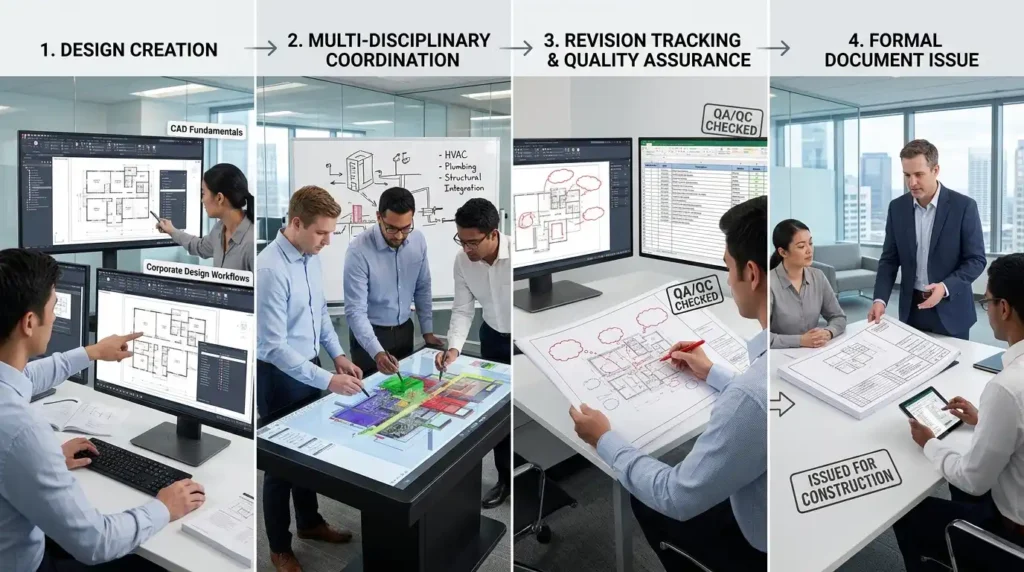
Drawing management skills are integrated throughout the curriculum because engineering documentation accuracy depends on design quality, coordination processes, revision control, project communication standards, approval workflows, and compliance with recognised drafting and construction documentation requirements across organisations.
Drawing issue management cannot be taught effectively as a standalone topic. Revision procedures depend on how drawings are created, organised, coordinated, reviewed, and distributed.
Imperial Corporate Training Institute follows a progressive learning structure. Participants begin with AutoCAD fundamentals and corporate design workflows before advancing to HVAC drafting, plumbing design, coordination methods, documentation standards, quality assurance procedures, and project execution practices.
This sequence mirrors real project environments. Engineers first create drawings. They then coordinate designs with other disciplines. Design reviews identify modifications. Revisions are implemented and tracked. Updated documents are issued to project stakeholders. Final as-built documentation is produced after construction completion.
The curriculum reflects this progression because it allows participants to understand not only how revisions occur but also why they occur. Learning revision management in context improves workplace application and supports stronger documentation governance.
Module sequencing also helps participants understand the relationship between design intent and document control. Drawing revisions become easier to manage when participants understand layer structures, annotation standards, external references, scheduling requirements, and multidisciplinary coordination procedures.
What Will Participants Learn About Drawing Issue Management and Revision Control?
Participants learn structured revision management, document control practices, version tracking methods, client deliverable standards, drawing coordination procedures, approval workflows, quality review processes, and technical documentation requirements that support professional HVAC and plumbing project execution environments.
Drawing issue management is directly addressed within several course modules.
Corporate Design Workflows and Documentation Standards
The programme begins by introducing corporate drafting environments. Participants learn how organisations establish templates, title blocks, naming conventions, sheet standards, and drawing structures.
These elements create the foundation for effective document management. Without standardisation, revision control becomes difficult to maintain across large projects.
HVAC and Plumbing Documentation Development
Participants create HVAC duct layouts, plumbing systems, riser diagrams, schedules, and engineering documentation using AutoCAD.
As drawings become more complex, participants learn how documentation standards support consistency throughout project development. They also gain experience applying recognised drafting conventions that improve communication between stakeholders.
Multidisciplinary Coordination Procedures
Modern projects require collaboration between architectural, structural, mechanical, electrical, and plumbing disciplines.
The course teaches participants how to use external references, layer management techniques, and coordination methods that support collaborative project workflows. These competencies directly influence drawing issue management because design revisions often result from coordination findings.
Drawing Revisions and Version Control
A dedicated focus is placed on revision procedures within the Corporate Project Implementation and Documentation Standards module.
Participants learn how to:
- Manage drawing revisions systematically.
- Maintain version control procedures.
- Track project changes.
- Update documentation records.
- Prepare client deliverables.
- Maintain drawing issue histories.
- Apply company documentation standards.
These competencies are directly linked to drawing issue management procedures commonly used within construction and engineering organisations.
Quality Assurance and Review Procedures
Drawing revisions must be reviewed before issue.
Imperial Corporate Training Institute incorporates quality assurance activities that teach participants how to identify discrepancies, verify design accuracy, review documentation compliance, and prepare final project submissions.
These review procedures support reliable drawing issue management and reduce the risk of distributing inaccurate documentation.
How Does the Course Teach These Skills in a Practical Environment?
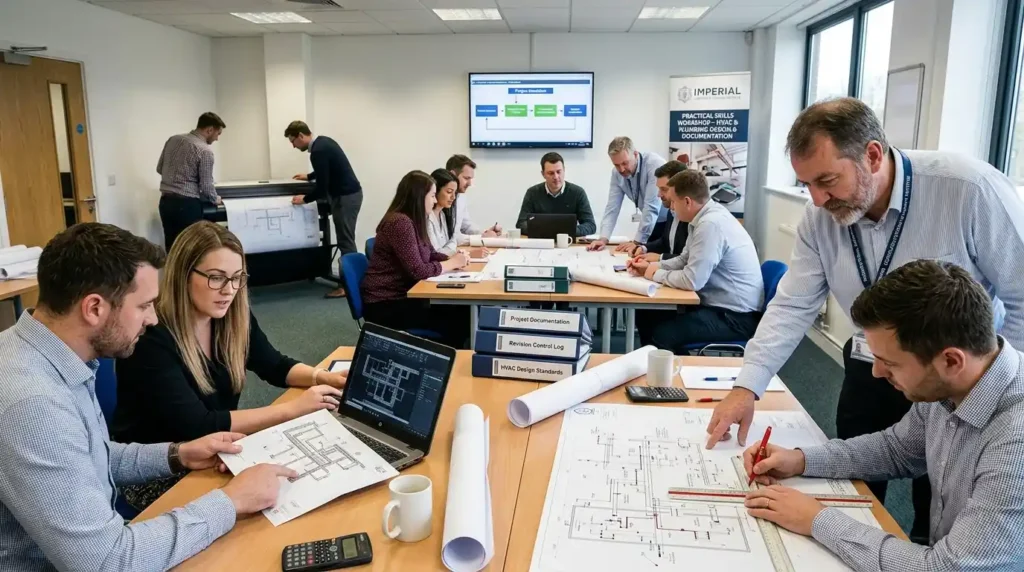
The training combines technical instruction, guided workshops, practical drafting exercises, project simulations, documentation activities, and design review scenarios that allow participants to apply revision control procedures within realistic engineering and construction project contexts.
Technical skills are most effective when applied through practical activities.
Imperial Corporate Training Institute incorporates hands-on learning throughout the programme. Participants work with HVAC layouts, plumbing systems, schedules, documentation sets, and project deliverables that reflect workplace requirements.
Project-based activities allow learners to experience how drawing modifications affect documentation workflows. As project requirements change, participants must update drawings, maintain consistency, and manage documentation outputs.
The programme also includes corporate-level project simulations. These exercises require participants to develop complete HVAC and plumbing design packages while maintaining documentation standards.
Such activities reinforce the relationship between technical drafting and document control responsibilities.
Participants gain experience managing information flow rather than simply producing drawings. This distinction is important because employers increasingly expect engineers and designers to contribute to project governance as well as technical production.
How Is the Course Delivered and Assessed?
The programme uses structured learning pathways supported by workshops, instructor-led sessions, practical assignments, technical exercises, project simulations, design reviews, and competency assessments that measure participants’ ability to apply documented engineering workflows accurately and consistently.
Training delivery is designed to accommodate corporate and professional learning requirements.
Imperial Corporate Training Institute offers flexible delivery approaches that may include classroom training, online learning, hybrid formats, and onsite corporate programmes depending on organisational requirements.
The learning experience combines theory with application. Participants receive technical instruction before applying concepts through drafting exercises and project tasks.
Assessment methods are aligned with workplace expectations.
Practical Assignments
Participants complete drafting and documentation exercises that demonstrate competency in HVAC and plumbing design development.
Project Simulations
Learners apply skills within realistic project scenarios that include coordination requirements, documentation standards, and deliverable preparation.
Technical Reviews
Participants undergo design review processes that evaluate drawing accuracy, compliance, coordination quality, and documentation consistency.
Workflow Application Assessments
Revision management, documentation control, and project execution activities are assessed through practical application rather than theoretical memorisation.
This assessment approach provides measurable evidence of competency development.
What Results Can Organisations and Professionals Expect?
Participants develop measurable improvements in drafting accuracy, documentation quality, revision management capability, multidisciplinary coordination effectiveness, project communication standards, and technical workflow efficiency that support stronger engineering performance across construction and infrastructure projects.
Drawing issue management contributes directly to organisational performance.
When documentation processes are well managed, project teams spend less time resolving revision conflicts. Stakeholders gain access to current information. Construction activities proceed with fewer disruptions caused by outdated documentation.
Imperial Corporate Training Institute aligns learning outcomes with these practical business requirements.
Mechanical engineers gain stronger control over design documentation.
MEP teams improve coordination between disciplines.
Project managers benefit from more reliable deliverable management.
Facility management professionals improve their ability to interpret and maintain technical documentation.
HR departments responsible for workforce development can use the programme to strengthen technical competency frameworks within engineering teams.
The course also supports professional development pathways for graduates and early-career engineers seeking specialised HVAC and plumbing design expertise.
Because drawing issue management procedures are integrated into broader documentation workflows, participants develop skills that extend beyond drafting software operation. They gain understanding of project execution processes that influence organisational performance.
How Does This Course Compare with General Revision Management Training?
The programme connects revision management directly to HVAC and plumbing design workflows, providing industry-specific application, technical context, engineering documentation standards, and multidisciplinary coordination requirements that generic document control courses typically do not address in detail.
Many document control programmes focus on administrative procedures. They may explain version numbering, approval processes, and document registers.
Engineering environments require additional competencies.
Professionals must understand how design changes affect system layouts, schedules, equipment selections, coordination requirements, and construction deliverables.
Imperial Corporate Training Institute integrates revision management into HVAC and plumbing design practice. This approach allows participants to understand the technical implications of documentation decisions.
Professionals evaluating training options may also review:
How Does AutoCAD HVAC Training Teach Drawing Issue Revision and Transmittal? to compare learning objectives and documentation management outcomes in greater detail.
This alignment between technical design and documentation control supports stronger workplace application after course completion.
How Does Enrolment Work and Who Should Attend?
The course is designed for engineering professionals, AutoCAD technicians, MEP specialists, project coordinators, consultants, graduates, and corporate teams seeking advanced HVAC and plumbing design capabilities alongside professional documentation management competencies.
The programme is suitable for professionals working in engineering, construction, infrastructure development, facilities management, and building services environments.
Participants do not need to hold document control roles to benefit from the course. Revision management procedures affect many positions involved in design production and project delivery.
The learning pathway begins with corporate design workflows and progresses through HVAC drafting, plumbing design, coordination practices, documentation standards, quality assurance processes, BIM integration, and project execution.
Imperial Corporate Training Institute structures the programme to support both individual professional development and organisational workforce capability initiatives.
Discover More from Our Guide Library:
Does Imperial’s HVAC Programme Teach International Drawing Standards?
Does Imperial’s HVAC Course Include VRF System Design Drawing Exercises?
Successful completion provides participants with practical experience in HVAC and plumbing design documentation, revision control procedures, project coordination methods, and quality-focused engineering workflows.
For professionals evaluating whether the curriculum covers drawing issue management procedures, the answer is clear. Revision control, version management, documentation standards, project deliverables, and drawing issue workflows are embedded throughout the programme structure. Those seeking structured development in these competencies can review the full course details and apply for course access.