

Imperial’s Intensive Data-Driven Strategy Training Programme covers advanced data analytics, strategic decision-making frameworks, diagnostic business metrics, and execution models. The curriculum equips managers to translate complex datasets into actionable organizational strategies across finance, operations, and cross-functional leadership.
Modern enterprises collect vast amounts of operational and customer data, yet many management teams struggle to translate these inputs into coherent strategic directives. Organizations often face fragmented reporting, misaligned key performance indicators, and delays in strategic execution due to an over-reliance on intuition rather than empirical evidence. Understanding how do organisations use data to make better strategic business decisions? is essential for identifying operational inefficiencies, but translating that broad conceptual understanding into structured organizational execution requires formal methodology and rigorous technical alignment.
Without standardized analytical frameworks, departmental leaders frequently misinterpret metrics, leading to misallocated capital and disconnected business units. The Imperial Corporate Training Institute designed this curriculum specifically to eliminate this execution gap by establishing a unified, enterprise-wide standard for strategic data interpretation and deployment.
What Is the Course and What Workplace Problem Does It Solve?
This programme solves the strategic execution gap caused by poor data literacy among decision-makers. It provides structured frameworks for interpreting analytics, evaluating risks, and aligning core departmental objectives with high-level corporate metrics to improve overall business performance.
Organizations routinely encounter structural friction when transitioning from tactical reporting to high-level strategic forecasting. Raw data is frequently confined to isolated analytics or IT departments, leaving operational managers and executive leaders to make high-stakes commercial decisions based on incomplete summaries or subjective experience. This disconnect leads to flawed risk assessments, slow market responses, and poorly targeted capital allocation.
The Intensive Data-Driven Strategy Training Programme addresses this vulnerability directly by training professionals to extract, evaluate, and operationalize critical data streams independently. Rather than teaching isolated software tools, the course embeds a system-level understanding of commercial analytics. Participants learn to audit existing data pipelines, identify actionable signals amidst statistical noise, and construct predictive models directly applicable to their corporate functions.
By establishing a standardized analytical vocabulary across business units, the training reduces friction between technical teams and commercial leaders. HR executives, operations directors, and commercial heads gain the technical fluency required to critique analytical assumptions, evaluate algorithm-driven recommendations, and align internal resource distribution with verifiable market realities. The Imperial Corporate Training Institute delivers this methodology to ensure that corporate strategy remains grounded in repeatable, verifiable analytical processes rather than speculative planning.
Why Is This Course Structured in a Progressive Learning Logic?
The curriculum is structured sequentially to move professionals from core data audit mechanics to complex diagnostic modeling and final strategic execution. This progressive architecture ensures participants build technical confidence before applying analytical models to live enterprise scenarios.
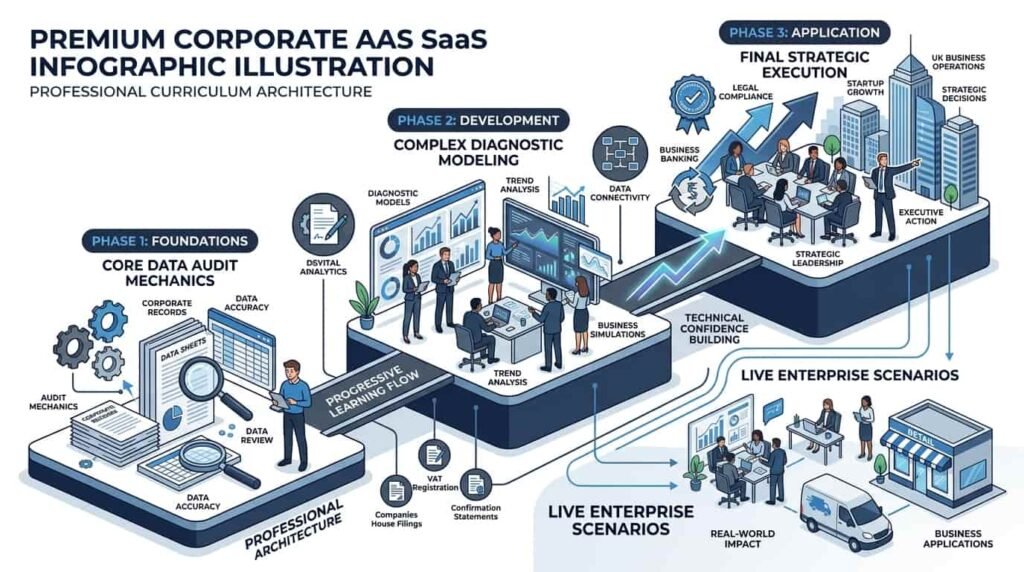
A common point of failure in executive education is the immediate jump to complex predictive analytics without first solidifying foundational data hygiene and diagnostic principles. To prevent analytical errors in live corporate environments, the Imperial Corporate Training Institute utilizes a scannable, building-block methodology. Learning begins with data validation and structural auditing, ensuring all subsequent strategic choices rest upon reliable, uncorrupted inputs.
The course structure moves deliberately from diagnostic analysis to predictive modeling, and finally to cross-functional operational deployment. During the initial phase, participants learn to strip away misleading metrics and isolate key operational variables. Once diagnostic control is established, the focus shifts to forward-looking strategic architecture, teaching managers how to construct scenario models that stress-test business decisions against volatile market parameters.
The final structural tier focuses entirely on organizational integration. Analyzing data in isolation yields minimal value if insights cannot be translated into clear operational workflows. Evaluating how a data-driven strategy course benefits senior managers and executives highlights how structured learning paths bridging technical analysis with team management directly solve cross-departmental execution bottlenecks. Through this systematic sequence, the course ensures that theoretical concepts are immediately anchored by practical commercial utility.
What Is Covered in the Detailed Course Curriculum?
The curriculum is divided into four comprehensive modules covering data auditing, quantitative strategy design, operational execution, and scalable data governance. Each module targets a specific core competency required for data-driven organizational leadership.
Module 1: Diagnostic Data Auditing and Metric Selection
The opening module focuses on establishing statistical control and data integrity across business units. Participants learn to evaluate current enterprise data flows, identify structural reporting biases, and eliminate vanity metrics that distort performance assessments.
- Data Integrity Assessment: Frameworks for auditing internal data sources, verifying collection accuracy, and identifying reporting gaps.
- Core Metric Engineering: Defining and constructing primary key performance indicators (KPIs) aligned with financial and operational objectives.
- Root-Cause Analytics: Utilizing diagnostic frameworks to isolate operational bottlenecks and identify underlying performance drivers.
- Baseline Formulation: Establishing statistically sound baseline metrics to accurately measure future strategic interventions.
Module 2: Quantitative Modeling and Strategic Forecasting
Module 2 transitions from historical diagnostics to forward-looking predictive strategy. Participants master quantitative methods to evaluate market shifts, model resource allocation scenarios, and mitigate operational risks.
- Predictive Business Analytics: Practical application of regression models, trend forecasting, and probability distributions to corporate decision-making.
- Scenario and Sensitivity Analysis: Building multi-variable stress tests to evaluate strategic risks under varying economic conditions.
- Capital and Resource Optimization: Quantitative frameworks for evaluating project viability, capital expenditure, and resource allocation.
- Competitive Intelligence Mapping: Structuring external market data to track competitor positioning and consumer shifts.
Module 3: Operational Deployment and Cross-Functional Integration
This module addresses the practical implementation of data-driven insights within daily business operations. Training covers dashboard architecture, cross-departmental communication, and execution mapping.
- Dashboard Architecture Design: Constructing intuitive, role-specific visual dashboards that provide real-time strategic visibility.
- Translating Insights to Execution: Converting quantitative outputs into concrete operational projects, task dependencies, and resource schedules.
- HR and Performance Analytics: Integrating data frameworks into workforce planning, talent acquisition, and performance evaluation pipelines.
- Cross-Functional Data Alignment: Standardizing metric definitions across marketing, finance, human resources, and operations teams.
Module 4: Enterprise Data Governance and Strategic Leadership
The final module focuses on scaling data capabilities across the broader organization while maintaining compliance, security, and cultural alignment.
- Corporate Data Governance: Establishing protocols for data privacy, access control, regulatory compliance, and ethical utility.
- Change Management for Analytics: Strategies for driving data adoption among reluctant stakeholders and overcoming organizational inertia.
- Continuous Improvement Frameworks: Structuring iterative feedback loops to refine strategic models based on ongoing operational data.
- Scalable Analytics Infrastructure: Evaluating enterprise data stack requirements to support long-term organizational growth.
How Is the Course Delivered and Evaluated?
Delivery combines interactive workshops, live case studies, and hands-on simulations led by senior practitioners. Evaluation relies on direct practical assessment, including real-world case solutions, analytical assignments, and a capstone strategic implementation project.
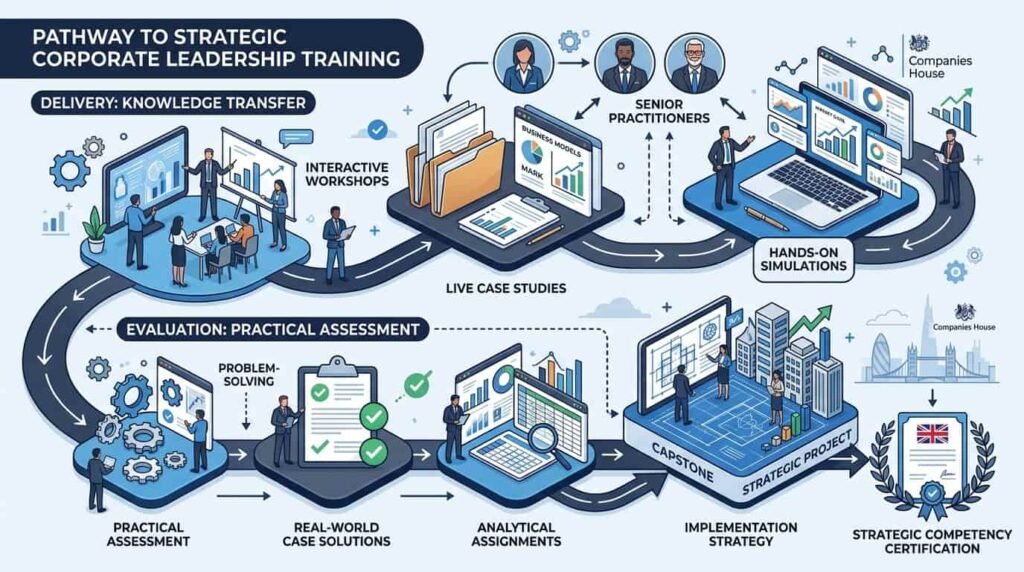
The Imperial Corporate Training Institute employs a applied learning delivery model designed to fit executive schedules without sacrificing depth. The program is offered through flexible delivery formats, including fully immersive in-person workshops, live interactive online cohorts, and tailored on-site enterprise programs for corporate teams.
Delivery focuses on active problem-solving rather than passive lecture consumption. Participants work directly with complex corporate datasets, using practical analytics environments to build models, audit financial inputs, and construct strategic recommendations under time-constrained conditions.
Evaluations reflect real workplace demands. Rather than traditional multiple-choice examinations, participants are graded on their ability to defend analytical findings, justify model parameters, and present clear strategic blueprints. The capstone project requires delegates to apply the course frameworks directly to an active challenge within their current organization, ensuring immediate return on investment for sponsoring employers.
What Specific Results and Measurable Outcomes Can Participants Expect?
Graduates gain immediate operational competency in quantitative strategy, risk modeling, and metric design. Sponsoring organizations experience improved decision accuracy, reduced strategic planning cycles, and enhanced alignment across functional departments.
Participation in the Intensive Data-Driven Strategy Training Programme yields direct, verifiable improvements in professional execution and corporate capability. By replacing speculative planning with empirical methodology, individual delegates and corporate teams establish clear, measurable metrics for success across several key business domains.
Individual Professional Outcomes
- Advanced Analytical Autonomy: The ability to independently query, evaluate, and interpret complex corporate datasets without relying exclusively on external analytics teams.
- Strategic Communication Skills: Enhanced capability to defend business proposals using rigorous statistical evidence, sensitivity analyses, and clear visual reporting.
- Risk Evaluation Expertise: Competency in identifying hidden assumptions, data flaws, and operational risks within commercial proposals.
- Leadership Advancement: Mastery of executive-level decision-making frameworks necessary for transitioning from functional management to broader enterprise leadership.
Enterprise and Organizational Outcomes
- Accelerated Decision Cycles: Streamlined strategic planning processes resulting from standardized reporting formats and clear diagnostic frameworks.
- Optimized Resource Allocation: Elimination of redundant expenditure by directing capital exclusively toward initiatives supported by verifiable predictive data.
- Enhanced HR and Talent Alignment: Human resource teams successfully integrate workforce analytics to optimize recruitment, employee retention, and leadership development pipelines.
- Cross-Functional Cohesion: Alignment of operational methodologies across finance, marketing, logistics, and management, creating a single source of strategic truth across the enterprise.
How Does Enrollment Work and What Are the Admission Requirements?
Enrollment involves an application review, professional prerequisite assessment, and formal registration. Applicants must possess a minimum of three years of management or analytical experience to ensure cohort suitability.
To maintain a high standard of peer-to-peer discussion and practical collaboration, the Imperial Corporate Training Institute enforces a rigorous admissions process. The programme is tailored for mid-to-senior managers, department heads, corporate strategists, HR leaders, and executive directors responsible for operational performance or resource distribution.
Applicants are expected to possess fundamental business acumen and basic familiarity with standard spreadsheet applications (such as Microsoft Excel or Google Sheets). Experience with advanced statistical programming languages like R or Python is not required, as the course focuses on strategic interpretation, metric architecture, and decision implementation rather than software engineering.
Applications are processed on a rolling basis, with cohort sizes capped to guarantee direct interaction with faculty and personalized feedback on capstone projects. Corporate group bookings for internal management teams undergo a pre-training alignment review to tailor practical case studies to the organization’s specific industry context and operational datasets.
The shift toward empirical, transparent management is a fundamental requirement for modern corporate survival. Organizations that continue to rely on fragmented reporting and subjective decision-making risk falling behind agile, data-driven competitors. The Intensive Data-Driven Strategy Training Programme delivers the complete structural methodology, practical toolsets, and diagnostic governance required to transform enterprise decision-making into a repeatable, high-yield competitive advantage. Professionals ready to upgrade their strategic capability, drive measurable organizational outcomes, and lead data-backed business transformations can enroll in this program to secure their place in the upcoming training cohort.
Frequently Asked Questions
What does the Data-Driven strategy course by Imperial Corporate Training Institute cover?
The Imperial Corporate Training Institute Data-Driven strategy course covers enterprise metric selection, diagnostic data auditing, dynamic risk modeling, and operational performance tracking. Participants learn to evaluate complex datasets, establish actionable KPIs, and align cross-functional business units with high-level strategic objectives. The curriculum focuses on practical commercial application rather than pure technical coding.
How does Imperial Corporate Training Institute deliver its Data-Driven strategy training?
Imperial Corporate Training Institute offers flexible delivery formats including intensive 3-day in-person workshops, 6-week live online cohorts, and customized on-site corporate training programmes. Every delivery format incorporates real-world datasets, hands-on scenario simulations, and interactive business case analyses. This structure ensures immediate workplace application for attending managers and executive teams.
Who should attend the Data-Driven training programme at Imperial Corporate Training Institute?
The programme is designed for mid-to-senior managers, department heads, HR leaders, operational directors, and corporate strategists seeking to enhance their analytical decision-making capabilities. Applicants typically possess at least three years of professional management or analytical experience. The course bridges the gap between technical data teams and commercial leadership roles.
What are the entry prerequisites for the Data-Driven course at Imperial Corporate Training Institute?
Candidates require a foundational understanding of core business operations and basic spreadsheet literacy, such as proficiency in Microsoft Excel. Programming knowledge in languages like R or Python is not required, as the curriculum focuses on strategic interpretation and metric governance. Imperial Corporate Training Institute evaluates applications individually to maintain cohort quality and peer collaboration.
What business outcomes does the Imperial Corporate Training Institute Data-Driven course deliver?
Sponsoring organizations experience reduced strategic planning cycles, improved capital allocation, and unified key performance indicators across finance, HR, and operations departments. Graduates gain the technical autonomy to audit datasets, stress-test business decisions, and present data-backed proposals to executive boards. These skills directly reduce reliance on subjective planning and enhance organizational agility.