
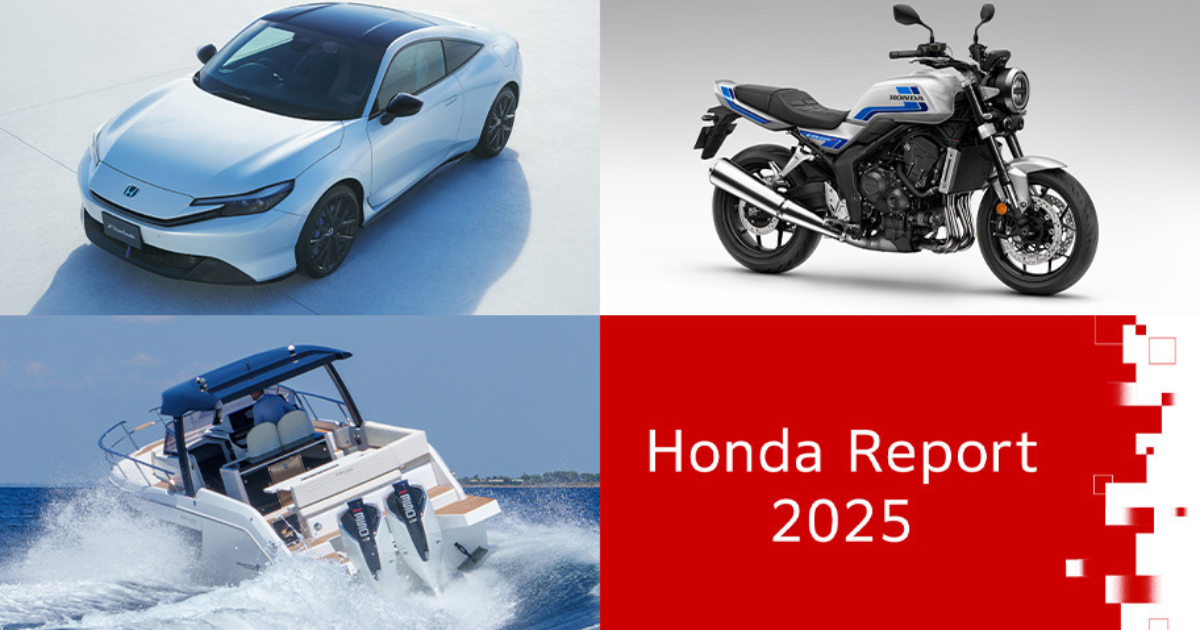
Key Points
- Honda Motor Co., Ltd. issued its integrated report titled “Honda Report 2025,” available on the company website.
- The report summarises Honda’s medium- to long-term initiatives to enhance corporate value aligned with its vision “The Power of Dreams.”
- It emphasises Honda’s strategy to adapt quickly and flexibly to a highly uncertain business environment.
- Honda remains committed to contributing to society through mobility products and services addressing environment and safety challenges.
- The report highlights Honda’s longstanding corporate culture and the “people” behind its success, embracing dreams and aspirations.
- Introduction of Honda’s management system concept with key performance indicators and company-wide targets for clarity and focus.
- The report underscores Honda’s DNA of pursuing challenges with passion and collaboration, rooted in its founding philosophy.
- Honda targets carbon neutrality by 2050 through its “Triple Action to ZERO” strategy: net zero carbon emissions, 100% carbon-free energy use, and 100% sustainable materials.
- Expansion of electric vehicle (EV) lineup aiming for 100% EV and fuel cell EV automobile sales by 2040.
- Introduction of innovations like the Honda 0 Series EV debuting in 2026, featuring advanced technology and design focus.
- Honda aims to maintain its strengths in technology and ideas while adapting to shifting market and regulatory environments.
- The company’s strategic focus includes environment, safety, and enhanced human capital management to drive future value creation.
What is the Honda Report 2025 and why was it issued?
As reported by Honda Motor Co., Ltd. on their official site, the Honda Report 2025 is the company’s latest integrated report, issued on October 10, 2025. The report provides a comprehensive overview of Honda’s medium- to long-term initiatives designed to enhance corporate value. It outlines Honda’s enduring vision to be a driving force moving people and society forward through the philosophy of “The Power of Dreams.” This annual integrated report is intended to deepen investor and stakeholder understanding of Honda’s corporate activities, increase transparency through broader information disclosure, and foster interactive communication with stakeholders. Honda has voluntarily published integrated reports since 2022, reflecting its commitment to stakeholder engagement and corporate value enhancement.
How does the report reflect Honda’s strategy for handling a changing business environment?
The 2025 report articulates how Honda is leveraging its strengths—technological innovation and unique ideas—to rapidly and flexibly adjust to a highly uncertain and shifting business environment. The report reiterates the company’s commitment to societal contributions by focusing on environmental and safety challenges through its mobility products and services. The report also explains the newly introduced concept of the Honda management system, which aligns company-wide targets and management indicators to offer clarity and simplicity in monitoring progress toward medium- to long-term goals. This system is designed to enable Honda to maintain competitiveness and speed of response amid increasing market complexities and regulatory shifts. Notably, Honda is emphasising its traditional corporate culture and the role of every member of the company, driven by their own dreams, in realising its growth strategies.
What are the key elements of Honda’s sustainability commitment outlined in the report?
Honda’s roadmap for sustainability centers on its “Triple Action to ZERO” concept, aiming for three critical environmental goals by 2050: attaining net zero carbon emissions, using 100% carbon-free energy, and utilizing 100% sustainable materials. This holistic approach covers the entire product lifecycle—from raw material procurement to vehicle disposal. As detailed in the 2025 ESG report covered by Sustainability Magazine, Honda reported total global greenhouse gas emissions of 296.86 million tonnes of CO₂ equivalent in fiscal year 2025, with 80% of these emissions linked to product use (Scope 3). To meet its climate targets, Honda is aggressively expanding its electric vehicle and power product offerings, including aiming for all new automobile sales to be battery electric vehicles (BEVs) or fuel cell electric vehicles (FCEVs) by 2040. The upcoming Honda 0 Series, set to launch in 2026, embodies the company’s vision with a lightweight, energy-efficient design integrated with advanced safety technology and IoT capabilities.
How does Honda view its corporate culture and employee role in its value creation?
The Honda Report 2025 places strong emphasis on the enduring company culture and the “people” aspect of Honda’s success. The report recounts how “Waigaya” (Y-gaya) discussions illustrate the transmission of Honda’s core DNA from its founding days—a belief in “The Power of Dreams,” the passion to take on challenges, and collaborative effort to overcome difficult obstacles. Honda portrays its workforce, from executives to associates working on the ground, as central to this culture, driven to realise the company’s strategies through their own dreams and aspirations. This people-driven value creation process underpins Honda’s corporate identity and ambition for sustainable growth.
What are Honda’s strategic goals for its products and markets?
According to statements from Honda’s Global CEO Toshihiro Mibe in the May 2025 business briefing, the company prioritises environmental sustainability and safety as core elements of its business. Honda intends to push automobile electrification aggressively, targeting carbon neutrality for all products and corporate activities by 2050, and zero traffic collision fatalities. The company faces uncertainty due to slowdowns in EV market growth affected by regulatory and trade policy changes, but remains focused on maintaining competitiveness through innovation and flexibility. Honda also plans to increase total automobile sales above the current 3.6 million units, with hybrid electric vehicle (HEV) sales targeted at 2.2 million units.
What technologies and new products does Honda highlight for future growth?
Innovations like the Honda 0 Series EV reflect Honda’s “thin, light and wise” design philosophy, combining energy efficiency, advanced driver-assistance systems (ADAS), IoT integration, and premium aesthetics. This product line represents Honda’s approach to deliver technologically advanced, environmentally responsible mobility solutions. The company’s strategy involves continuous technological advancement to sustain its competitive edge and meet evolving consumer and regulatory demands.
How does Honda link its management indicators to performance and sustainability targets?
The Honda Report 2025 introduces a consolidated summary table compiling management indicators, actual results, and numerical targets across priority issues for ease of understanding. This integrated approach facilitates transparent tracking of progress against medium- to long-term goals while supporting flexibility within a changing external environment. The management system concept underlying this framework anchors Honda’s aspirations for sustainable growth and stronger corporate governance.
As this news touches upon forward-looking corporate strategies, sustainability, human capital, and technological innovation, it resonates with learners and professionals interested in corporate governance, environmental management, and strategic business development. Training in Corporate Governance, Environmental Management, and Business Strategy & Innovation can enable individuals to engage deeply with such evolving corporate practices showcased by Honda.