
Key points
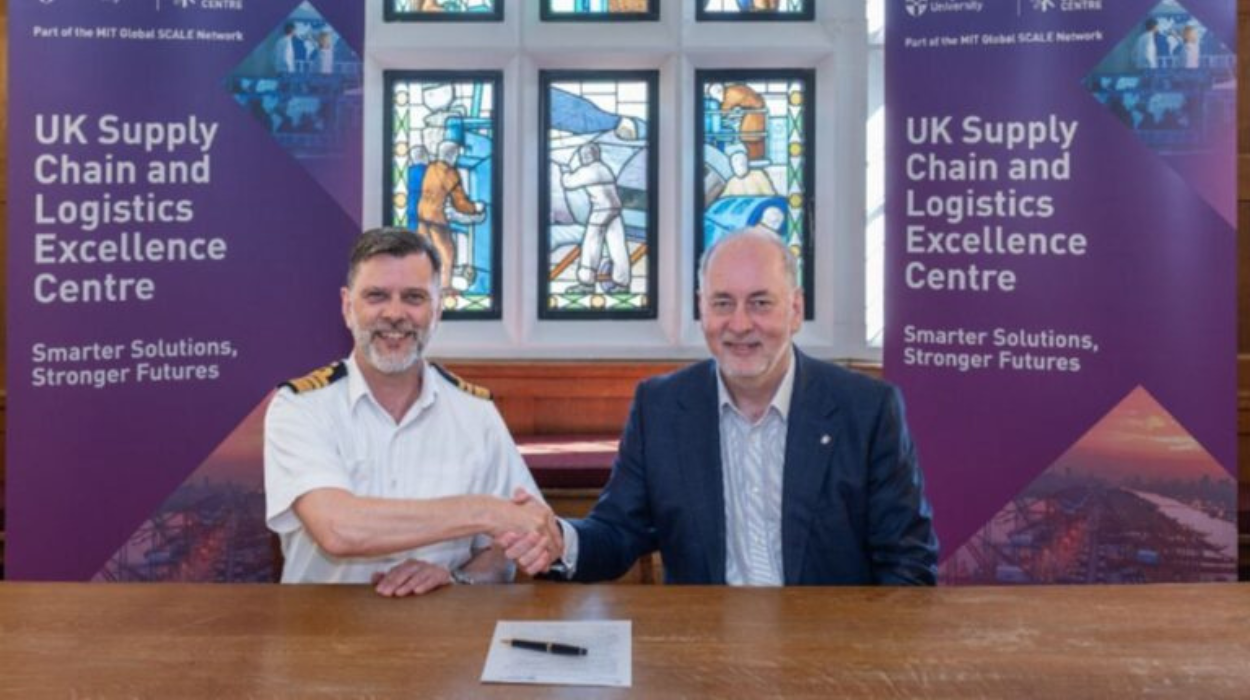
- The UK Ministry of Defence (MoD) has launched a strategic collaboration with the UK Supply Chain and Logistics Excellence (SCALE) Centre at Loughborough University to strengthen the resilience of UK defence and wider national supply chains.
- The initiative is framed as a “whole‑of‑society” effort, linking Defence, academia and industry to boost readiness, innovation, and end‑to‑end supply‑chain performance.
- Core focus areas include strategic base resilience, digital manufacturing, data and analytics, artificial intelligence, and the energy transition, all aimed at improving Defence’s ability to generate, sustain, and adapt at pace.
- Defence Logistics chief Vice Admiral Andy Kyte highlighted that the project will help the MoD stay ahead of adversaries by injecting leading‑edge research, analysis, and a trusted academic “source of advice and challenge” into decision‑making.
- Professor Jan Godsell, Director of UK SCALE, stressed that the partnership seeks to translate research into practical, deployable solutions that enhance decision‑making and operational advantage across the Defence supply base.
- The collaboration is seen by sector analysts as a necessary step, but one that must be embedded within a clearer national Defence Investment Plan and broader procurement and logistics‑reform strategy to deliver systemic change rather than isolated successes.
UK MoD and Loughborough’s SCALE Centre join forces on supply‑chain resilience
The UK Ministry of Defence and the UK Supply Chain and Logistics Excellence (SCALE) Centre at Loughborough University have pledged a new strategic collaboration aimed at strengthening the resilience of the UK’s defence supply chains and supporting broader national readiness. As reported by the Loughborough University news team, the partnership is designed to “accelerate innovation and enhance national capability” by combining academic research with the MoD’s operational insight.
UK SCALE, part of the MIT Global SCALE Network, will provide the ministry with access to leading supply‑chain research, facilities, technical expertise, and a wider network of academic and industrial partners. In parallel, the MoD will contribute operational requirements, subject‑matter knowledge, and, where appropriate, access to data and environments to ensure that outputs are closely aligned with real‑world Defence challenges.
What the MoD and SCALE partnership aims to deliver
Analysts including Philip Hicks, a Defence‑logistics specialist writing on LinkedIn, observed that the collaboration explicitly targets “end‑to‑end supply chains, from source to frontline,” a recognition that modern conflict hinges as much on logistics as on weapons or platforms. He remarked that bringing together academic expertise with operational insight “is exactly the right direction of travel” for UK defence, because supply‑chain vulnerabilities can quickly translate into operational shortfalls.
Professor Jan Godsell of the UK SCALE Centre told Loughborough’s communications team that the initiative is intended to tackle “critical end‑to‑end challenges in UK Defence supply chains,” including how materials move from raw inputs through manufacturing, storage, and distribution all the way to the front line. She added that the Centre’s role is to translate research into practical tools and frameworks that strengthen decision‑making, build resilience across the Defence supply base, and ultimately deliver “real operational advantage.”
Strategic focus on transformation and emerging technologies
The collaboration is structured around several priority domains identified by both the MoD and SCALE. These include strategic base resilience, digital manufacturing, data and analytics, artificial intelligence, and the energy transition, all of which are framed as critical to the future of Defence. As the Loughborough‑authored release explained, the intention is that research in these areas will be “directly aligned to real‑world challenges,” accelerating the adoption of deployable solutions rather than remaining confined to academic papers.
Vice Admiral Andy Kyte, Chief of Defence Logistics and Support, articulated this ambition in a statement published by Loughborough University. Kyte said the partnership “reflects our priority to strengthen Defence’s ability to generate, sustain and adapt at pace in an increasingly complex and contested environment.” He underlined that linking Defence with leading academic and industrial expertise across Loughborough “harnesses the power of the network” and represents a “whole‑of‑society effort” to turn academic insight into tangible outcomes that support warfighting readiness and UK protection.
How the MoD and SCALE are institutionalising this work
Kyte elaborated in a LinkedIn post that the new memorandum of understanding between the National Armaments Director Group and UK SCALE gives Defence “access to cutting‑edge supply chain research and analysis, a network of academic expertise, and a trusted source of advice and challenge across the MIT Global SCALE Network.” He described this as “precisely what we need” to achieve greater resilience and agility in the Defence supply chain and wider logistics enterprise, while also enabling the UK to stay ahead of adversaries in a more unstable global landscape.
In the same post, Kyte thanked the UK SCALE team—singling out Jemma Jackson and Professor Jan Godsell—for their “vision and passion,” and said the next step is to “really drive change” through concrete projects and pilots. This hands‑on emphasis aligns with the broader reform narrative that UK Defence supply chains must move beyond traditional efficiency‑driven models toward adaptability, resilience, and alignment with national security objectives.
Building on existing Defence‑supply‑chain reforms
The SCALE–MoD initiative does not start in isolation; it sits within a wider reform agenda. As noted by the UK Defence Journal in March 2026, the Ministry of Defence is “continuing to assess the strength of the UK’s defence industrial base” to ensure it meets national‑security needs. The outlet reported that recent work has focused on three main fronts: strengthening supply‑chain resilience, addressing workforce skills gaps, and deepening collaboration with allied partners.
The journal quoted a senior MoD official, who stated that recent efforts are geared toward “improving supply chain resilience, addressing workforce shortages and increasing collaboration with allied partners,” while also “fostering innovation and supporting sustainable, modern defence solutions.” This dovetails with the Government’s earlier Defence Supply Chain Strategy, published in 2022, which warned that an over‑emphasis on cost‑optimisation had eroded resilience and called for a new “value‑over‑cost” approach.
What experts say about the limits and opportunities of the collaboration
While observers broadly welcome the SCALE–MoD partnership, some are cautioning that it is necessary but not sufficient on its own. Philip Hicks argued in his LinkedIn commentary that such collaborations are “welcome and overdue,” but they risk remaining “localised successes” rather than engines of systemic change unless embedded within a clear national strategy. He pointed to the continuing absence of a published Defence Investment Plan (DIP) as a source of uncertainty for industry, investors, and reformers alike.
Hicks wrote that without “strategic clarity from the centre,” even strong collaborations can be undermined by fragmented priorities and inconsistent incentives across the Defence and industrial landscape. He also recalled that decades of prioritising efficiency and cost over resilience have left Defence logistics “brittle, slow to adapt and overly exposed to disruption,” with limited data visibility and misaligned incentives.
Logistics as a core strategic capability
In a broader commentary on the 2025–26 outlook for defence supply chains, Paul R Salmon, a senior supply‑chain and logistics professional, wrote that 2026 is a “watershed moment” in which efficiency is giving way to resilience and static plans are being replaced by adaptive systems. Salmon observed that by the mid‑2020s logistics is no longer seen as a back‑office function but as central to sustaining power under pressure, and that those nations which invest now in resilient supply‑chain design, data quality, skilled people, and integrated industry partnerships will be better prepared for an uncertain future.
Echoing this view, Kyte has repeatedly stressed that logistics is “a vital link in defence capability,” and that the MoD–SCALE collaboration is intended to ensure that Defence logistics evolves from a support role into a core strategic capability.
How this collaboration links to wider UK industrial and environmental ambitions
Beyond the purely military lens, the resilience push is intersecting with broader debates about critical materials and circular supply chains. In a cross‑sector “call to action” document circulated by Steve Green of Team Defence Information, which references UK Defence supply‑chain resilience, the authors argue that the UK faces a “stark reality” where Defence demand is too small to shape global markets for critical raw materials yet remains highly vulnerable to supply shocks.
The document proposes a “cross‑sector, dual‑purpose, scalable solution” that brings together government, industry, academia, and innovators to create an ecosystem around circular supply chains and strategic base capabilities. This aligns conceptually with the SCALE–MoD work, because both seek to align priorities across sectors, leverage data and analytics, and build long‑term resilience rather than simply reacting to crises.
Implications for professionals and organisations
For professionals in the defence, engineering procurement and supply, and project management worlds, the renewed emphasis on end‑to‑end resilience and data‑driven logistics is creating a growing demand for advanced skills in Operations Management, Supply Chain Management, and Project Management. These domains are becoming central to how organisations design, monitor, and transform their supply chains so they can respond rapidly to shocks while maintaining cost‑effectiveness and sustainability.
Professionals aiming to work within or alongside the UK Defence enterprise may find value in structured learning in Operations Management and Supply Chain Management, which can help them translate research‑driven frameworks—such as those emerging from the SCALE–MoD collaboration—into day‑to‑day practice and long‑term strategic planning.