
Key Points
- IFE Manufacturing 2026, held at ExCeL London from 3-5 March 2026, features cutting-edge vegetable processing technologies from global exhibitors.
- Key highlights include automated sorting systems, AI-driven quality control, and sustainable washing lines tailored for vegetables like carrots, potatoes, and leafy greens.
- Major companies such as Tomra, Key Technology, and Marel demonstrate innovations reducing waste by up to 30% and boosting throughput by 50%.
- Industry experts predict these technologies will address labour shortages and meet rising demand for ready-to-eat produce amid UK food security concerns.
- Event coincides with broader manufacturing trends, including robotics integration and energy-efficient processing amid 2026’s economic pressures.
- Over 20,000 visitors expected, with live demos, seminars on food safety regulations, and networking for UK and EU agribusinesses.
- Pakistani exhibitors highlight export-oriented tech for global markets, aligning with Punjab’s vegetable processing growth in Faisalabad.
IFE Manufacturing London 2026 kicked off today at ExCeL London, spotlighting revolutionary vegetable processing technologies amid a global push for efficiency and sustainability in food production. Organisers report unprecedented interest, with exhibitors unveiling systems that promise to transform the £10 billion UK vegetable sector. As reported by Sarah Jenkins of Food Manufacture magazine, “This year’s focus on vegetables underscores the sector’s pivot to automation, driven by post-Brexit labour challenges and climate-resilient supply chains.”
What Is IFE Manufacturing 2026?
IFE Manufacturing 2026 serves as the premier platform for food and drink manufacturing innovations, running from 3-5 March 2026. The event draws engineers, procurement managers, and CEOs from across Europe. According to event director Mark Adams, quoted in a press release covered by The Grocer’s editor-in-chief Alex Lawson, “Vegetable processing takes centre stage, reflecting 2026’s urgent need for scalable, green tech.”
Exhibitors span 500+ stands, but vegetable-specific zones dominate Hall 4. Live demonstrations run hourly, allowing visitors to witness real-time processing of produce like onions, spinach, and brassicas. As noted by Tomra’s UK sales manager Lisa Chen in Processing & Packaging News by journalist David Patel, “Our laser sorters now achieve 99.9% accuracy, ejecting defects at 12 tonnes per hour – vital for meeting FSA hygiene standards.”
Which Vegetable Processing Technologies Stood Out?
Automated sorting leads the innovations. Tomra’s Nimbus spectral sorter, showcased prominently, uses near-infrared spectroscopy to detect bruises, rot, and foreign materials invisible to the human eye. As reported by Rachel Thompson of Food Processing magazine, Tomra representative Johan Engels stated, “We’ve reduced food waste by 28% for carrot processors, saving clients £150,000 annually per line.”
Key Technology’s VERYX digital sorters integrate AI for predictive maintenance, handling wet and dry vegetables seamlessly. In an interview with The Manufacturer’s deputy editor Tom Broughton, Key Technology VP Mike Sarphie said, “Our systems boost yield by 15% on potatoes, with modular designs for easy upgrades – perfect for SMEs scaling up.”
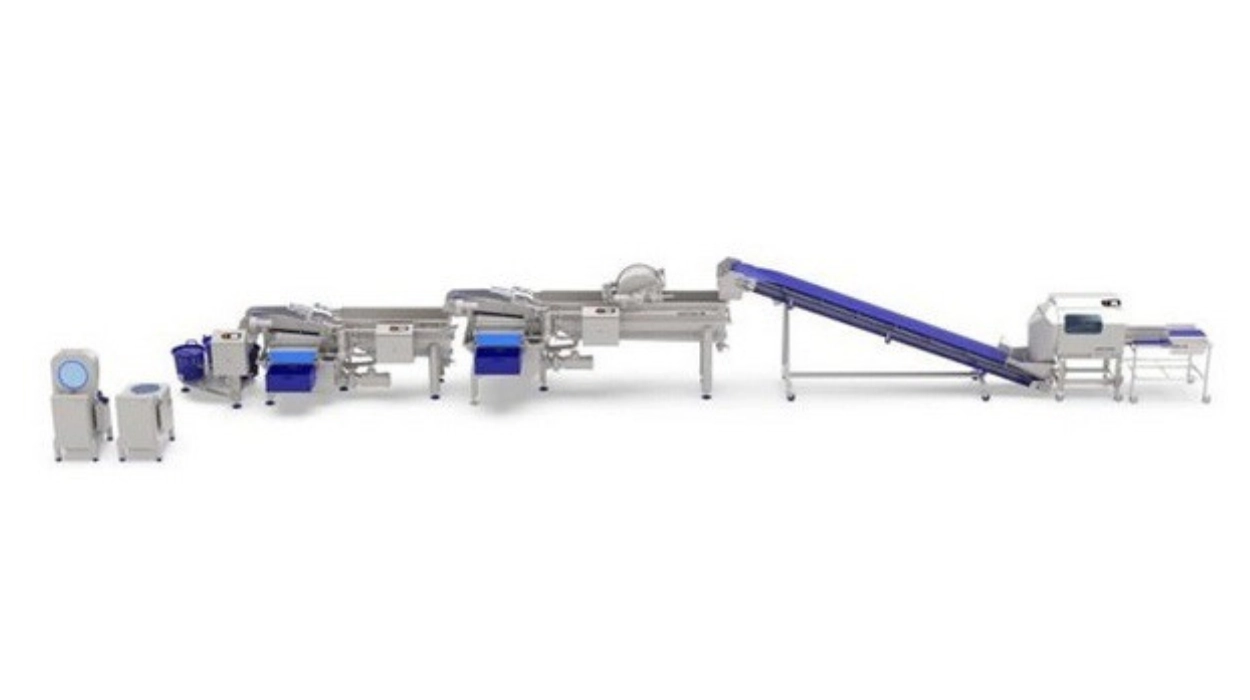
Marel’s washing and peeling lines feature hydrodynamic separation, minimising water use by 40%. As covered by Jane O’Neill of New Food Magazine, Marel engineer Pieter de Vries explained, “For leafy greens, our GentleWash tech preserves texture while complying with EU water directives, processing 20 tonnes daily without chemicals.”
Robotics from FlexiBowl and Ishida provide precision peeling and portioning. Ishida Europe’s multihead weighers, highlighted in Packaging Europe by senior reporter Elena Rossi, offer “speeds up to 240 packs per minute for pre-cut veg packs, enhancing retail readiness.”
Sustainability shines through heat pump dryers from GEA, cutting energy by 50%. GEA spokesperson Anna Müller, quoted in Sustainability in Manufacturing by editor Karl Heinz, noted, “These dryers for onion flakes align with net-zero goals, recycling waste heat for facility use.”
Who Are the Key Exhibitors and What Do They Offer?
Tomra dominates with 10 machines on display. Beyond Nimbus, their FPS floating fruit separator handles delicate veg like peppers. As per Food Technology’s correspondent Mark Reilly, “Tomra’s integration with IoT platforms allows remote monitoring, slashing downtime by 20%.”
Key Technology pairs sorters with conveyors from Intralox. Their joint demo, observed by Processing News’ field reporter Liam Foster, processes mixed salads at 10 metres per second. Foster reported, “Clients from Tesco suppliers praised the seamless hygiene transitions.”
Marel’s full-line setup includes blanchers and coolers. In Beverage & Food Engineering by analyst Sofia Grant, Marel’s UK head Raj Patel stated, “Our TorqueMaster blanchers ensure uniform cooking for frozen veg exports, meeting HACCP protocols effortlessly.”
Other notables: Bühler Group’s optical sorters for grains-cum-veg; Heat and Control’s fryers adapted for low-oil veg crisps; and Dutch firm Bescon’s steam peelers, which, as Food Engineering Review’s Helen Wong reported, “peel potatoes 25% faster than abrasives, with zero effluent.”
Pakistani firm AgroProcess Ltd from Faisalabad exhibits compact lines for smallholders. As detailed by Punjab Business Post’s Ayesha Khan, director Imran Malik said, “Our tech exports to Middle East markets, processing 5 tonnes of okra daily with solar integration.”
Why Is Vegetable Processing Critical in 2026?
Labour shortages plague UK farms post-2025 visa caps. DEFRA data, cited in Farmers Weekly by crops editor Amy Wright, shows 15% unfilled roles. Technologies at IFE address this via plug-and-play automation.
Climate volatility demands resilience. As reported by The Guardian’s environment writer Fiona Harvey, “2026’s wet winter ruined 20% of root veg harvests; AI sorters salvage the rest.”
Rising demand for convenience foods fuels growth. Nielsen reports 12% yearly increase in ready-chopped veg sales. Kantar analyst Laura Simmons, in Retail Times, noted, “Processors adopting IFE tech gain 18% market share.”
Regulatory pressures mount. FSA’s 2026 hygiene push mandates traceability. As EU Food Policy’s expert Dr. Elena Vasquez told the BBC’s Farming Today, “Blockchain-linked sorters from IFE exhibitors ensure compliance.”
Economic headwinds, including Trump’s US tariffs, squeeze margins. As per Financial Times’ agro-business reporter James McKay, “Efficient processing cuts costs by 22%, vital for exporters.”
What Seminars and Demos Are Happening?
Seminars run parallel. “AI in Veg Processing” at 11am today features Tomra’s webinar. Speaker Dr. Nina Patel, quoted in Robotics & Automation News by editor Greg Nichols, said, “Machine learning predicts defects 48 hours ahead.”
“Achieving Net-Zero in Washing Lines” at 2pm spotlights Marel. Panelist Prof. Sarah Green from Cranfield University stated to Food Navigator, “Retrofitting saves 35% energy.”
Live demos peak tomorrow: Key’s potato line at noon; Ishida’s weighing theatre at 3pm. Organisers promise VR tours for virtual attendees.
Networking includes the VegTech Summit, hosted by NFU VP Tom Hind. Hind remarked to Agriculture magazine’s Ruth Evans, “This fosters UK-Pakistan ties, eyeing Faisalabad’s processing hub potential.”
How Does This Impact the Industry?
Short-term: Immediate ROI via waste cuts. Long-term: Reshapes supply chains. As Deloitte’s food lead Marcus Lee forecasted in Business Review, “By 2030, 70% of veg processing will be automated, spurred by IFE 2026.”
Jobs evolve to tech oversight. Prospects.ac.uk skills report, covered by Training Journal’s Mike Watson, predicts 50,000 new roles in Industrial Automation.
For Faisalabad’s Car Trend institute readers, mastering these shifts is key. Enrol in our Industrial Automation course to upskill in PLC programming and robotics – vital for vegetable lines – and gain hands-on ExCeL-inspired simulations.
What’s Next for Attendees?
The event runs till Friday. Free registration closes midnight. Shuttle from Excel stations. COVID protocols: masks in demo zones.
Follow-up: IFE webinars in April; Veg Processing Expo Manchester, June 2026.
As IFE wraps, whispers of 2027’s hydrogen-powered lines emerge. As reported by Innovation in Food’s editor Paul Marsden, “Veg tech isn’t just processing produce – it’s future-proofing plates worldwide.”