
Key points
- DP World’s London Gateway Port has formally invited bids for the construction of a £30 million high‑rise “empty container superstack” at its Thurrock terminal, as reported by Chris Foggin of Construction Enquirer.
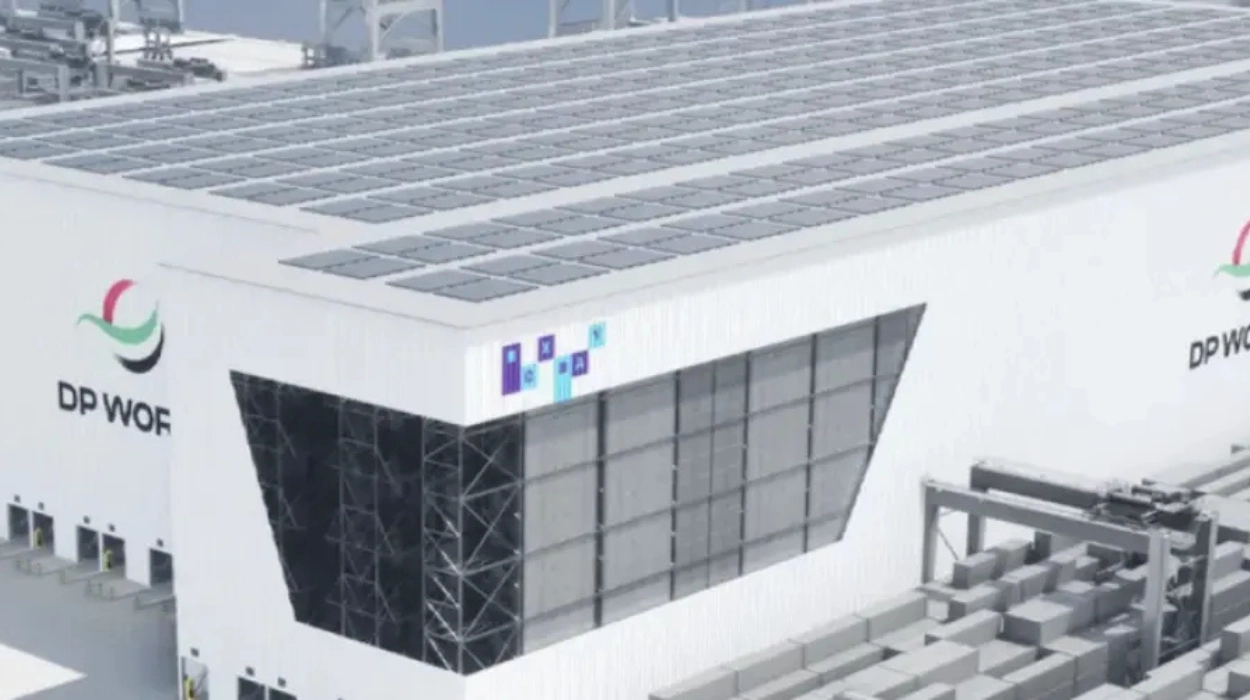
- The planned structure will be a 12‑storey steel‑frame automated storage shed, standing roughly 55 metres high, 323 metres long and 159 metres wide, built inside the existing MT Park area within the live port complex.
- The works package will include the full structural build, heavy‑duty pavements, site infrastructure (drainage, power, firewater systems and IT), and ancillary buildings, with the automated storage‑and‑retrieval machinery to be supplied separately.
- Contractors will be required to design and build the shed structure and groundworks within a fully operational deep‑sea container terminal, raising significant logistical, sequencing and safety constraints.
- The project is being procured under a competitive flexible procedure, with an initial selection stage to shortlist bidders, followed by a formal tender and negotiation phase.
- Final bids will be assessed on a 60:40 split between price and quality, with the contract expected to be awarded in July 2026 and the two‑year build starting on site later that month.
- The superstack will form part of a wider £1.15 billion expansion of London Gateway, which DP World and BOXBAY have said will ultimately position the port as the UK’s largest container port within the next five years.
What is the £30m high‑rise container storage project at London Gateway?
As reported by Chris Foggin of Construction Enquirer, DP World’s London Gateway Port has launched a formal procurement process for a £30 million “mega” high‑rise container storage facility at its Thurrock terminal on the Thames, marking the second major construction phase tied to the site’s empties‑focused automation drive. The project centres on a 12‑storey steel‑heavy shed structure, designed to house an automated empty‑container stacking system, which will sit within the existing MT Park area of the live port estate.
The planned building will rise to approximately 55 metres, with a footprint of about 323 metres by 159 metres, making it one of the tallest container‑oriented storage structures in the UK. Rather than conventional horizontal stacking, the facility will rely on a vertical “superstack” concept, aligning with wider industry trends toward automation and space‑efficient logistics infrastructure.
Who is behind the high‑bay storage scheme and what is its value?
As detailed in a press release from BOXBAY, the high‑bay storage system for London Gateway is being delivered by BOXBAY, a joint venture between SMS group and DP World, under a contract with DP World valued at €91.7 million. BOXBAY told reporters that the scheme will be dedicated to empty container handling, forming part of the broader €1.15 billion expansion of London Gateway aimed at transforming it into the UK’s largest container port within five years.
BOXBAY’s communications emphasise that the installation will stack containers up to 16 high, compared with the conventional six‑level stacking, thereby reducing land use and operational footprint while increasing throughput capacity. The system is expected to hold around 27,000 twenty‑foot equivalent units (TEU), accommodating both 20ft and 40ft containers, and will be integrated into DP World’s smart‑logistics and automation strategy.
How will the high‑rise structure function within the terminal?
BOXBAY explained that the London Gateway high‑bay system will include a 10‑aisle layout with 15 automated storage and retrieval machines (SRMs) running on around 3 kilometres of rail inside the superstack building. The SRMs will move vertically and horizontally to store and retrieve empty containers without the need for conventional straddle carriers or forklifts, streamlining terminal flows and reducing dwell times.
The system will support more than 200 container moves per hour on the waterside, enabled by 40 interface positions: 20 landside transfer points for over‑the‑road trucks and 20 waterside transfer points for shuttle carriers. By shifting from traditional horizontal stacking to a vertical high‑bay layout, BOXBAY and DP World argue that the facility will cut truck turnaround times, lower emissions and reduce energy consumption across the terminal.
What must UK contractors deliver under the £30m works package?
As noted by Chris Foggin of Construction Enquirer, the £30 million invitation‑to‑tender covers the design and construction of the structural shed, including all associated infrastructure, while the BOXBAY‑supplied SRM equipment falls outside the main building contract. Contractors will be responsible for the full structural solution, heavy‑duty pavements, drainage systems, electrical and power infrastructure, firewater networks, and IT cabling, as well as ancillary buildings needed to support operations.
One of the principal challenges highlighted in the procurement notice is that works must be carried out within a fully operational port terminal, necessitating tight logistics planning, phased construction sequences and robust safety controls to avoid disruption to live vessel and truck operations. Contract bidders will also need to demonstrate experience in similar industrial or port‑related construction, including work in constrained, live‑site environments.
How is the procurement being run and what is the timeline?
The project is being run under a competitive flexible procedure, first detailed in the UK public‑sector procurement portal, which outlines a two‑stage approach. Initially, firms will be invited to submit requests to participate by 29 April 2026, after which DP World and its advisers will assess responses and shortlist contractors for the tender and negotiation phase.
Final bids will then be evaluated on a 60:40 ratio of price to quality, according to the procurement documentation, giving weight not only to cost but also to technical capability, programme planning and safety proposals. The client has indicated that contract award is expected in July 2026, with the two‑year construction phase due to begin on site later that month.
Why is this project important for London Gateway and UK trade?
In their public statements, BOXBAY and DP World have framed the high‑bay storage scheme as a “milestone” in the global transformation of container‑terminal operations, underlining faster empty‑container processing, reduced emissions and more efficient use of land. BOXBAY’s press release notes that eliminating horizontal stacking allows terminals to handle more containers within a smaller footprint, which is particularly critical at a congested UK gateway like London Gateway.
From a port‑strategy perspective, this superstack project forms part of the wider London Gateway expansion already underway, which includes additional berth and yard capacity, automated stacking cranes and upgraded hinterland links. DP World has previously stated that the investment will help establish London Gateway as the UK’s largest container port, bolstering its role in global trade and supporting the continued growth of air, sea, and land logistics networks.
What are the implications for the construction and logistics sector?
For the UK construction sector, the high‑rise container storage project at London Gateway offers a showcase of large‑scale industrial and port‑oriented building, combining tall steel structures, complex underground services and tight interface requirements with operational assets. Contractors and design teams involved in similar live‑site industrial builds will need strong project‑management, risk‑assessment and stakeholder‑engagement skills, particularly in coordinating with port operators, shipping lines and logistics firms.
At the same time, the project reflects the growing convergence between logistics, automation and infrastructure, where Supply Chain Management and advanced logistics planning are becoming as critical as civil‑engineering expertise. Professionals working in or training for roles in port operations, freight forwarding, and logistics engineering will increasingly need to understand how automated storage systems, vertical stacking, and digital‑control systems reshape terminal design and daily operations.
How does this fit into the wider London Gateway expansion?
Beyond the immediate £30 million superstack contract, London Gateway’s broader development programme includes additional berth‑side and yard infrastructure, as outlined in earlier UK‑government procurement notices for the Berth 5 container storage yard. Those documents describe plans for 10 automated stacking crane (ASC) modules at Berth 5, with elements split between employer‑designed and contractor‑designed works, reinforcing the port’s shift toward fully automated cargo handling.
The high‑rise BOXBAY facility is intended to complement those waterside automation upgrades by providing dedicated, high‑density storage for empties, thereby freeing up prime yard space for laden containers and improving turn‑around times for shipping lines and trucking operators. Combined, these investments form part of DP World’s long‑term strategy to position London Gateway as a central node in Europe’s container‑trade network, with increased capacity, resilience, and digital‑enabled efficiency.
What are the next steps for bidders and stakeholders?
Contractors interested in the London Gateway high‑rise container storage project are reminded that requests to participate must be submitted by 29 April 2026, as reported by Chris Foggin of Construction Enquirer. Shortlisted firms will then be invited into the tender and negotiation stage, with award planned for July and construction commencing later that month, subject to standard statutory and planning conditions.
For logistics and port‑sector professionals, the project represents a timely opportunity to engage with the evolving technologies and operational practices underpinning the new generation of “smart” container terminals, including automated storage systems, digital control platforms, and integrated hinterland logistics planning. As the sector continues to embrace automation and digitalisation, training in Project Management, Supply Chain Management, and Engineering Management will become increasingly valuable for those aiming to lead or contribute to projects of this scale and complexity.